Triply Stainless Steel Cookware Categories
Explore cookware category pages for private label, wholesale, importer, retail, and HoReCa sourcing programs.

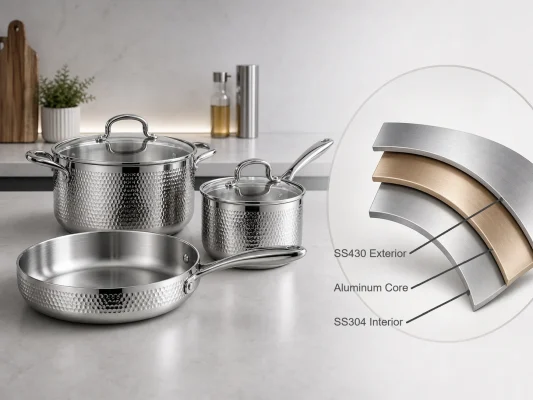
Explore practical guides on tri-ply stainless steel cookware construction, from SS304 inner layers and aluminum cores to SS430 induction bases, and learn what B2B buyers should confirm before sourcing OEM/ODM cookware.
Discuss Your Tri-ply Cookware Project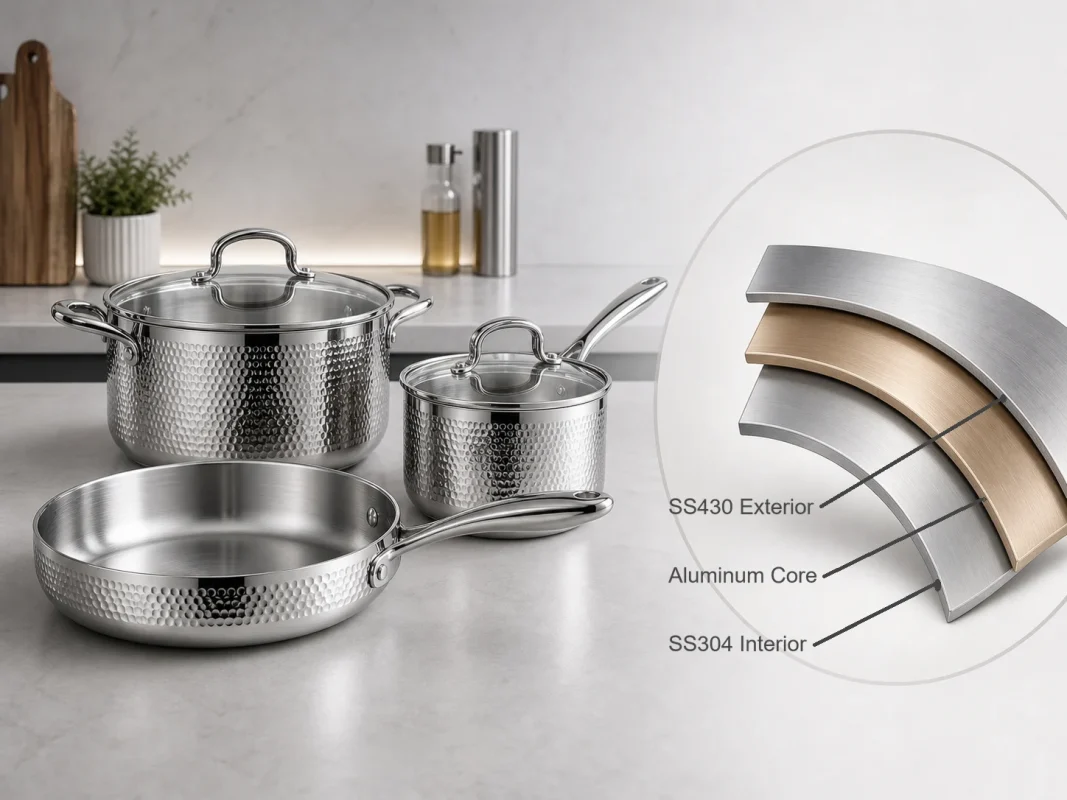
Tri-ply stainless steel cookware is a construction choice that affects heat distribution, induction compatibility, durability, weight, market positioning and long-term customer satisfaction. This guide page brings together practical articles for importers, wholesalers, private label brands, distributors and HoReCa buyers who need to understand how a 304 food-grade stainless steel interior, an aluminum heat-conducting core and a 430 magnetic stainless steel exterior work together in cookware manufacturing. Buyers can use these guides to compare full-clad and encapsulated-bottom structures, evaluate thickness and warping risk, review surface finish options, confirm handle and lid specifications, and prepare clearer RFQs for OEM/ODM tri-ply cookware projects.
Explore practical B2B guides on tri-ply construction, full-clad and encapsulated-bottom options, stainless steel grades, heat performance, and sourcing decisions.
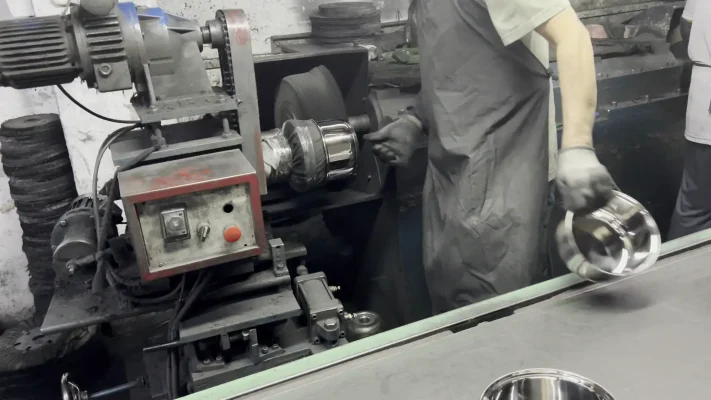
Learn how cookware is finished and assembled after body forming, with practical B2B checks for surface consistency, cleaning residues, handle attachment, lid fit and protective packing.
Review Finishing and Assembly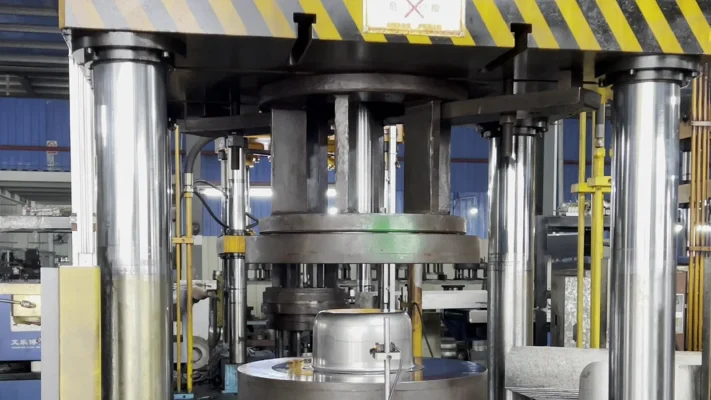
See how stainless steel cookware bodies move from blanking and deep drawing through conditional annealing, sizing and trimming—and what B2B buyers should verify before bulk production.
Review the Body Forming Process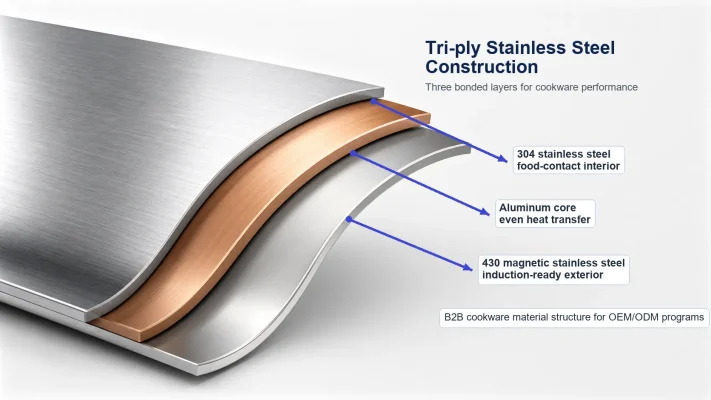
Learn what tri-ply stainless steel cookware is, how SS304, aluminum and SS430 work together, and what B2B buyers should confirm before sourcing OEM cookware.
Understand Tri-ply Construction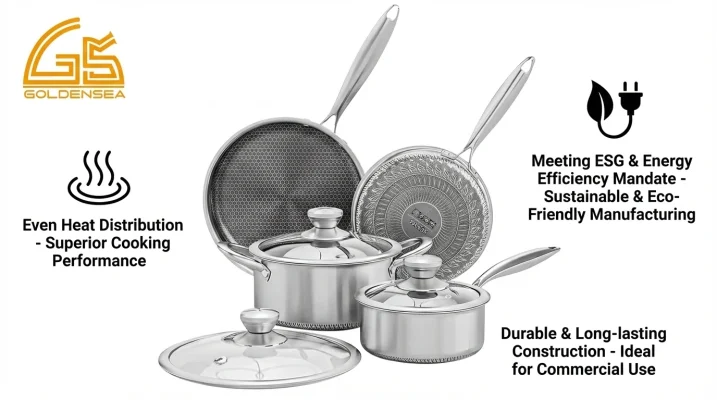
B2B guide to tri-ply stainless steel cookware. Compare structure, thickness, quality checks, MOQ, and OEM options before requesting a quote.
Explore the Tri-ply Guide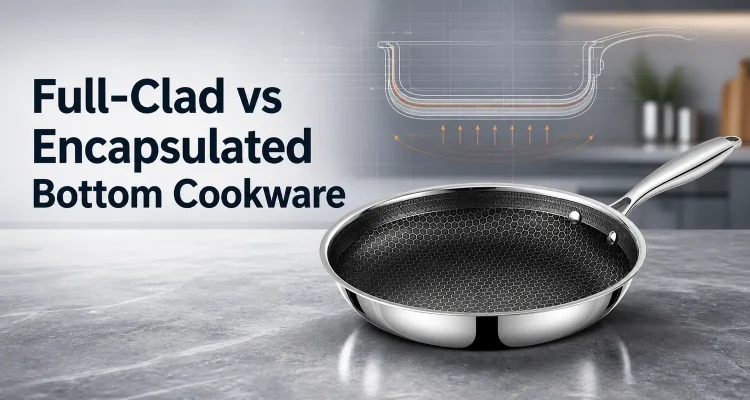
Compare full-clad vs encapsulated bottom cookware for B2B sourcing. Learn structure, heat performance, cost, and buyer selection tips from Goldensea.
Compare Cookware Structures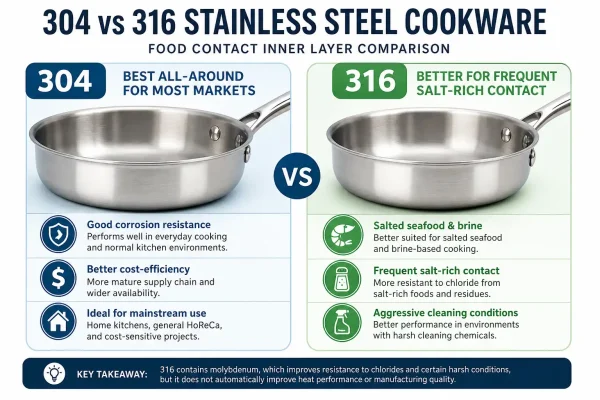
Compare 304 and 316 stainless steel food-contact inner layers by corrosion resistance, cost, market positioning and verification requirements for B2B cookware sourcing.
Compare Stainless Steel Grades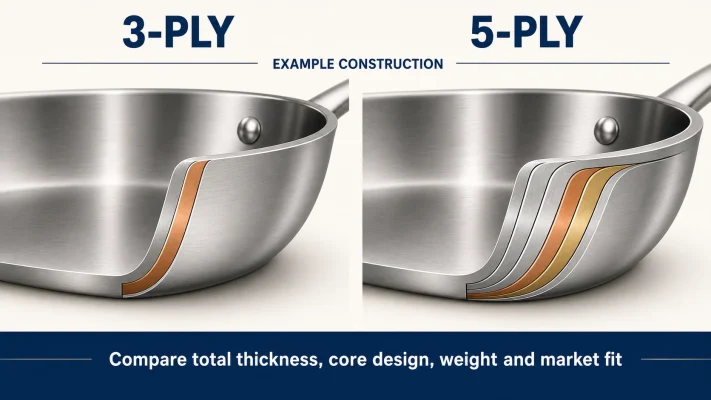
Compare 3-ply and 5-ply stainless steel cookware for B2B sourcing. Review layer stack, total thickness, weight, cost and market positioning before specifying a cookware range.
Compare 3-Ply vs 5-Ply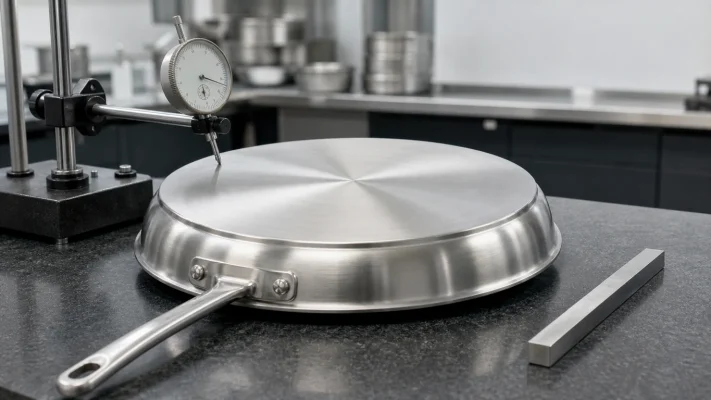
Learn how B2B buyers can define base-flatness checks, run controlled heat-cycle tests and turn sample results into production-control points for tri-ply cookware.
Check Base Flatness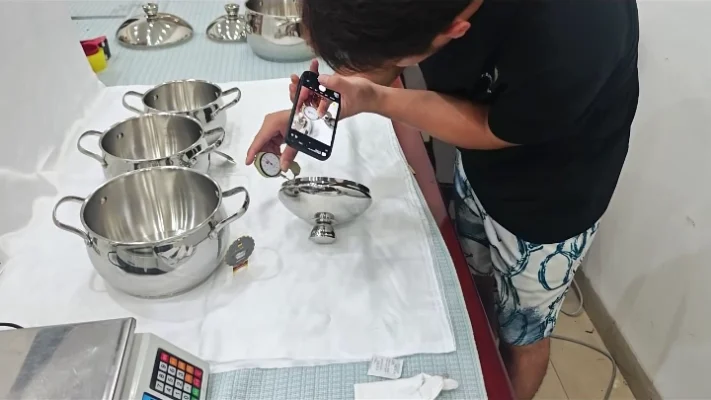
Learn how B2B buyers can compare tri-ply cookware thickness, core distribution, finished weight and sample-control requirements before production.
Compare Thickness Specs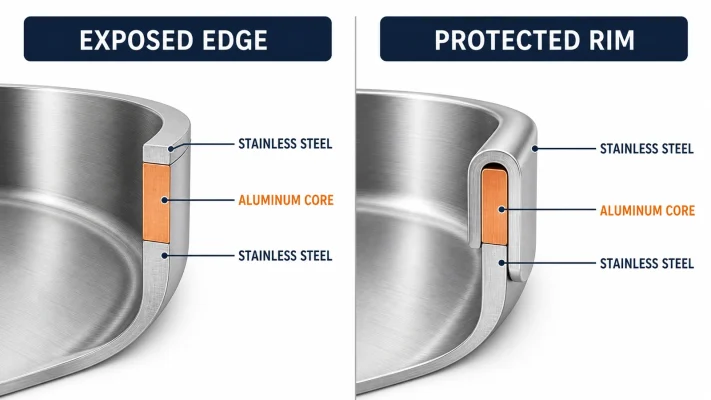
Compare sealed rims and exposed aluminum edges in tri-ply cookware, then define the right rim specification, inspection points, and validation plan before bulk production.
Compare Rim DesignsAfter reading the latest technical articles, buyers still need a clear checklist for comparing suppliers and preparing a practical RFQ. The points below summarize what importers, cookware brands, distributors, wholesalers and HoReCa buyers should confirm before requesting samples or placing a bulk order for tri-ply stainless steel cookware.
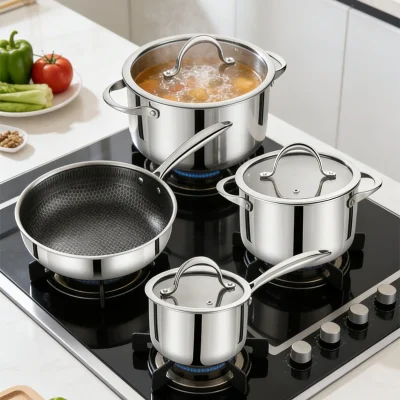
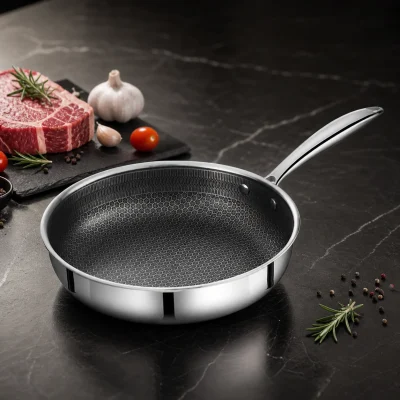
Tri-ply cookware is not the same as single-layer stainless steel cookware. A common structure uses a food-contact SS304 stainless steel interior, an aluminum core for fast and even heat transfer, and an SS430 magnetic stainless steel exterior for induction compatibility. When buyers compare prices, they should also confirm total thickness, layer consistency, cookware weight, bottom flatness, sidewall construction and whether the product is full-clad or uses an encapsulated bottom. These details affect cooking performance, durability, warping risk and the market position of the finished cookware range.
Induction-ready cookware depends on the magnetic performance and contact quality of the exterior layer. Buyers selling to Europe, North America, Southeast Asia or HoReCa channels may have different expectations for heat response, handle comfort, pan balance, dishwasher resistance, packaging and certification documents. Before sampling, confirm the target cooktop type, product size range, lid choice, handle style, rim design and expected retail or wholesale positioning. This helps the factory recommend a structure that matches the market instead of simply quoting the lowest possible specification.
OEM and private label cookware projects should lock the important details before a sample is made. Buyers should confirm logo method, handle design, glass lid or stainless steel lid, mirror or brushed finish, packaging format, carton requirements, MOQ planning, sample lead time and bulk production schedule. For cookware sets, the size combination should also match the target channel and price point. A clearer specification sheet reduces repeated sampling, improves quotation accuracy and makes quality inspection easier once bulk production starts.
A reliable tri-ply cookware project depends on factory experience, quality control, communication and long-term supply stability. Goldensea has specialized in triply stainless steel cookware since 2005 and supports B2B buyers with OEM/ODM development, private label options, flexible MOQ planning and FDA/LFGB-ready material support. Buyers can use this guide hub to prepare questions before contacting the factory, then share the target market, cookware type, size range, thickness expectations, handle and lid requirements, order quantity and packaging plan for a more useful quotation.
Share your target market, cookware type, size range, thickness, handle and lid requirements, order quantity and packaging plan. Goldensea can help review your specifications and prepare tri-ply cookware sourcing options, samples or a quotation for your OEM/ODM project.
Request a Quote Explore OEM/ODM Capabilities