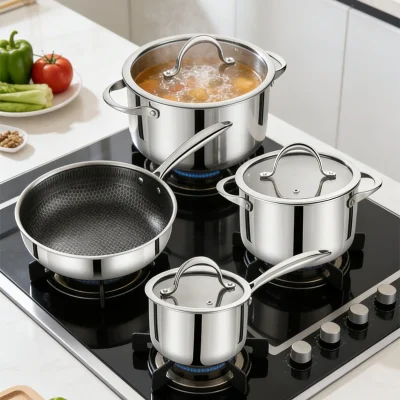
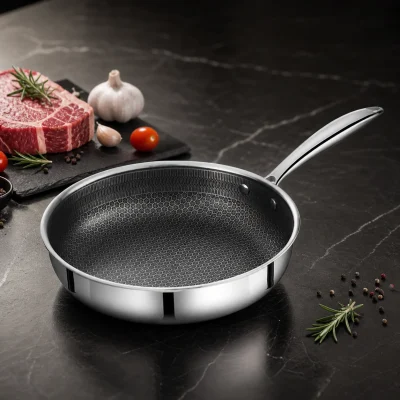
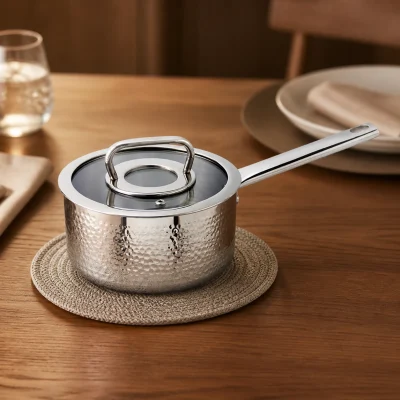
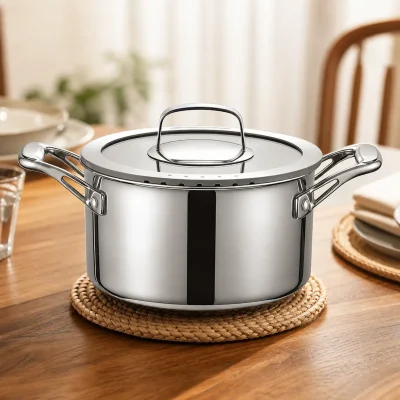
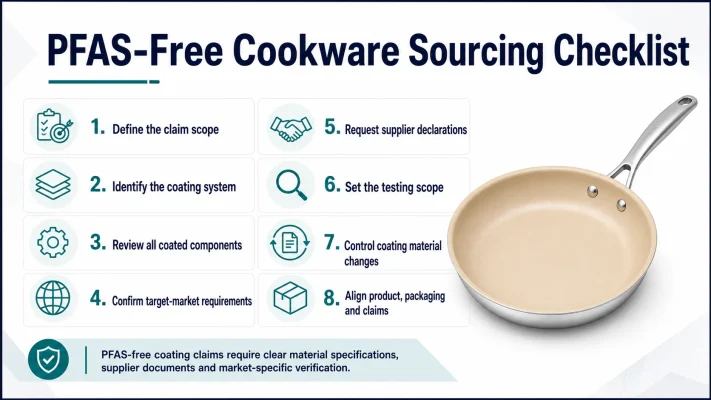
Triply Stainless Steel Cookware Categories
Explore cookware category pages for private label, wholesale, importer, retail, and HoReCa sourcing programs.

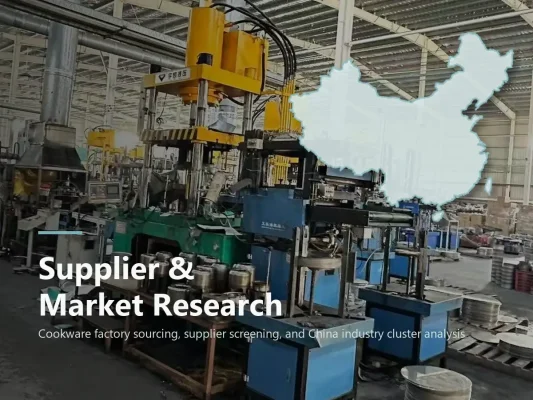
Research China cookware manufacturers, industrial clusters, supplier evaluation methods, and sourcing risks before starting an OEM/ODM or private label cookware project.
Discuss a Sourcing Project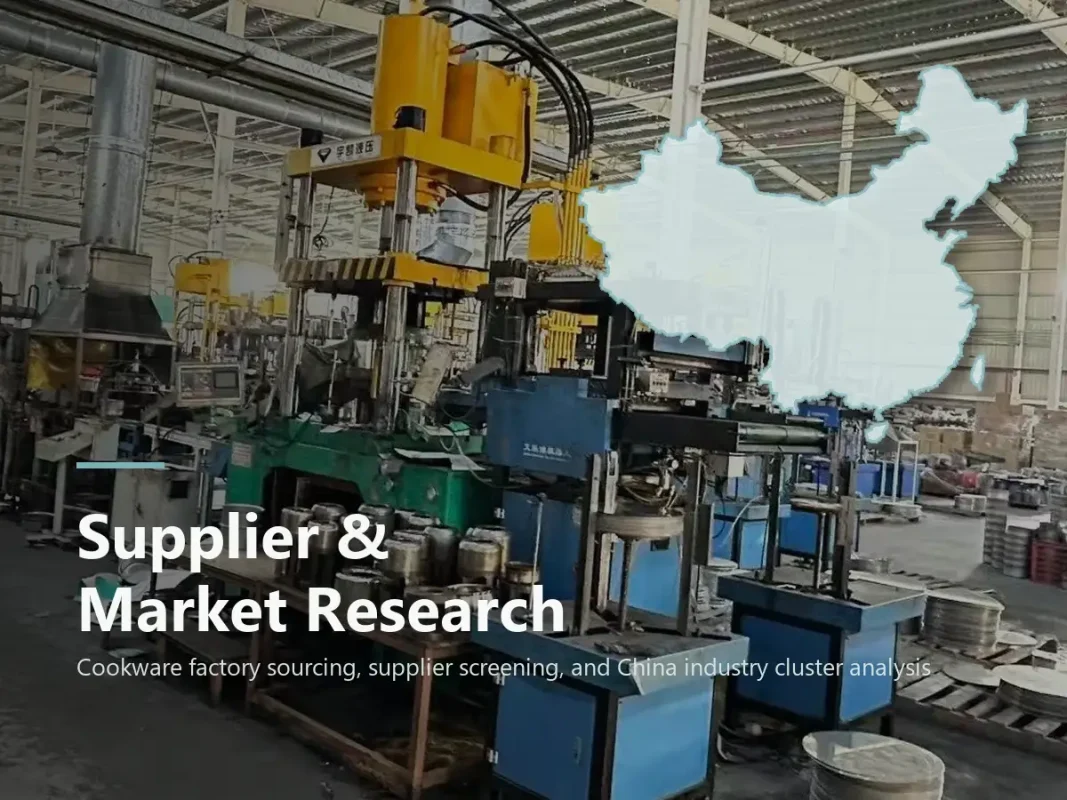
Supplier research should help buyers do more than collect a list of cookware factories. Importers, private label brands, wholesalers, distributors and HoReCa buyers need to understand whether a supplier fits the target product structure, market positioning, order volume, compliance expectations and OEM/ODM workflow. This page brings together practical research on China cookware manufacturing regions, factory verification, supplier evaluation, MOQ and lead time factors, quality control questions and sourcing risks for tri-ply stainless steel cookware projects.
Explore practical B2B guides on verifying cookware suppliers, choosing manufacturers, comparing factory and trading-company structures, researching China’s cookware supply base, and preparing stronger RFQs.
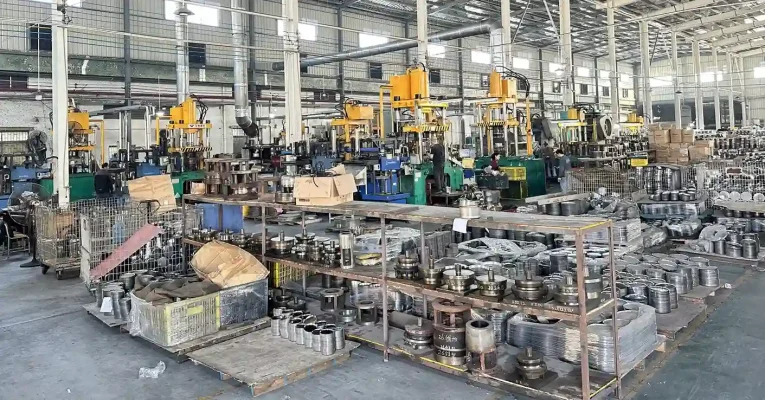
Compare cookware factories and trading companies, then verify supplier entity relationships, production capability, sample control, and documents before bulk ordering.
Verify Supplier Capability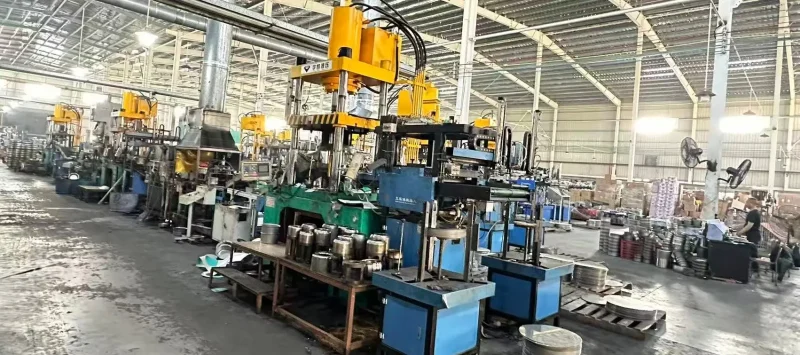
A practical B2B guide to choosing a stainless steel cookware manufacturer in China, covering factory checks, material structure, QC, compliance, MOQ and RFQ preparation.
Choose a Cookware Manufacturer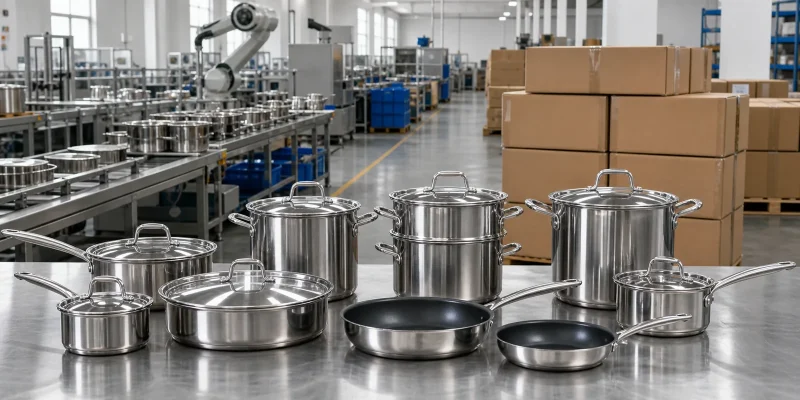
Compare stainless steel cookware manufacturers in China for 2026 by product focus, OEM/ODM capability, buyer fit, and RFQ readiness.
Compare Cookware Manufacturers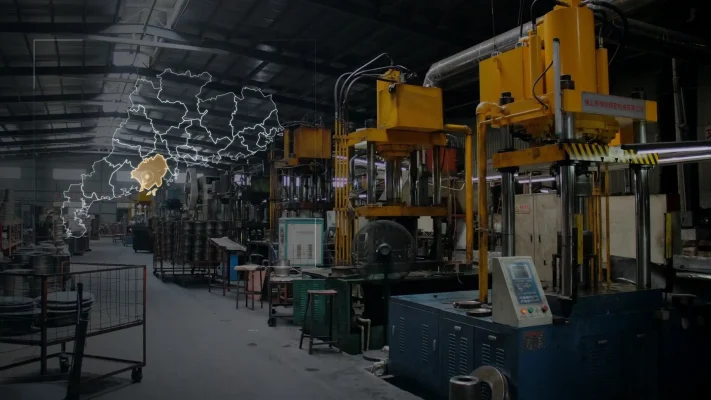
A practical Jiangmen stainless steel cookware manufacturing guide for B2B buyers comparing factory capabilities, tri-ply cookware fit, supplier checks, and RFQ details.
Explore the Jiangmen Guide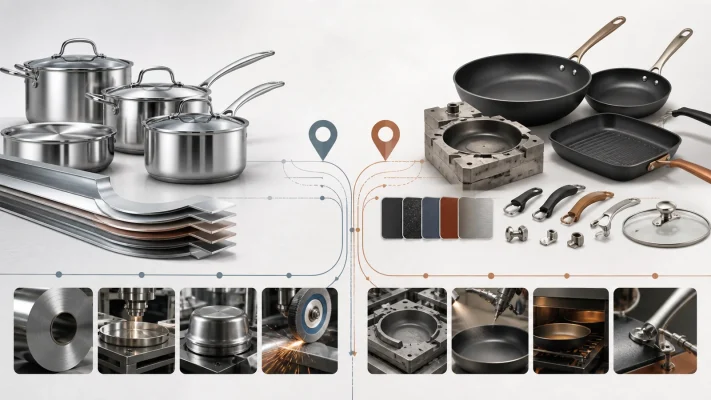
Compare Guangdong and Zhejiang for cookware sourcing by product fit, processes, channel needs, scale, and factory verification before building a supplier shortlist.
Compare Manufacturing Regions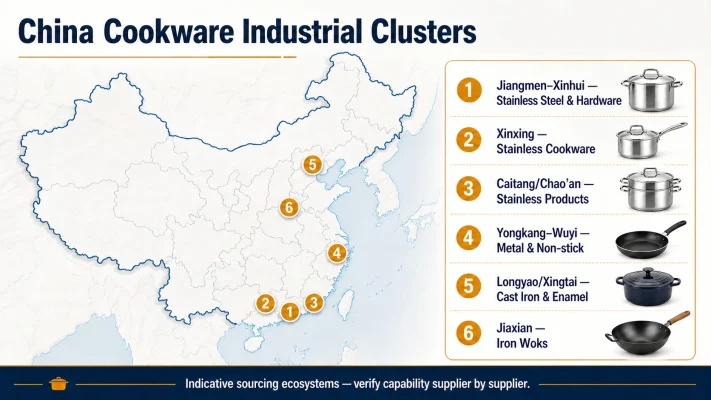
Explore six China cookware industrial clusters, compare product-fit starting points, and build a factory-level verification plan before sending RFQs.
Explore China Cookware ClustersA cookware sourcing decision should connect market needs with factory capability. Use these guides to compare manufacturing regions, check direct factory signals, prepare supplier questions and turn early research into a clearer RFQ. For a regional sourcing example, read the Jiangmen stainless steel cookware guide.
Different cookware hubs in China often serve different product and order profiles. Guangdong, including Jiangmen and Xinhui, is relevant for stainless steel and tri-ply cookware projects where material structure, polishing, bonding quality and export communication matter. Chaozhou, Zhejiang and Hebei may fit other cookware materials, price points, production styles or channel requirements. Buyers should compare regions by product category, factory specialization, compliance support, sample quality, supply chain depth and long-term project fit rather than choosing only by quoted price.
Before treating a supplier as a long-term manufacturing partner, buyers should check whether the company's business scope, product line, samples, machinery, packaging capability and export communication match the project. Useful checks include business license review, catalog consistency, factory photos or audit documents, material structure confirmation, sample workmanship, quality inspection process, test report availability and responsiveness during RFQ discussions. These signals help buyers separate real manufacturing capability from general trading introductions.
An OEM/ODM cookware project may need product engineering support, tooling discussion, material selection, logo placement, packaging development and sample iteration. A private label program may focus more on stable specifications, retail packaging and repeatable quality control. Wholesalers, large retailers, HoReCa buyers and importers may each require different documentation, MOQ planning, lead time expectations and inspection arrangements. Supplier research should identify which factory type is suitable for the buyer's channel, budget and risk tolerance.
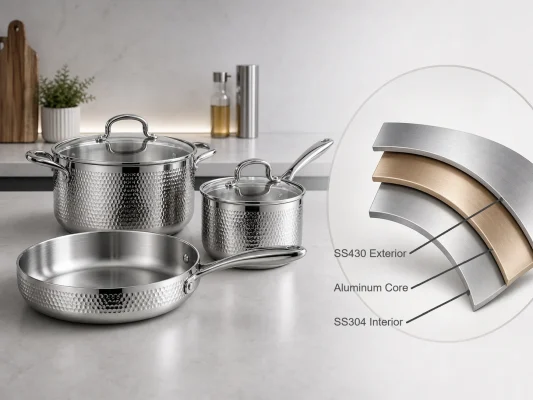
A clear RFQ makes supplier comparison faster and more reliable. Buyers should prepare cookware category, material structure, size range, body thickness, lid and handle preference, surface finish, logo position, packaging format, expected quantity, target market, compliance documents, sample expectations and project timeline. For tri-ply stainless steel cookware, it is also useful to ask about SS304 inner layer, aluminum core, SS430 induction exterior, rim finishing, base flatness, polishing standard, packaging testing and pre-shipment inspection options.
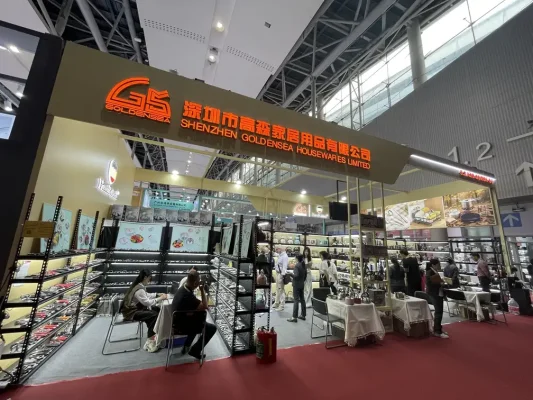
Share your target product, market, quantity, packaging plan, logo requirements, compliance expectations and sample needs. Goldensea can help review the project direction and discuss practical OEM/ODM options for tri-ply stainless steel cookware.
Contact Goldensea Explore OEM/ODM Capabilities