




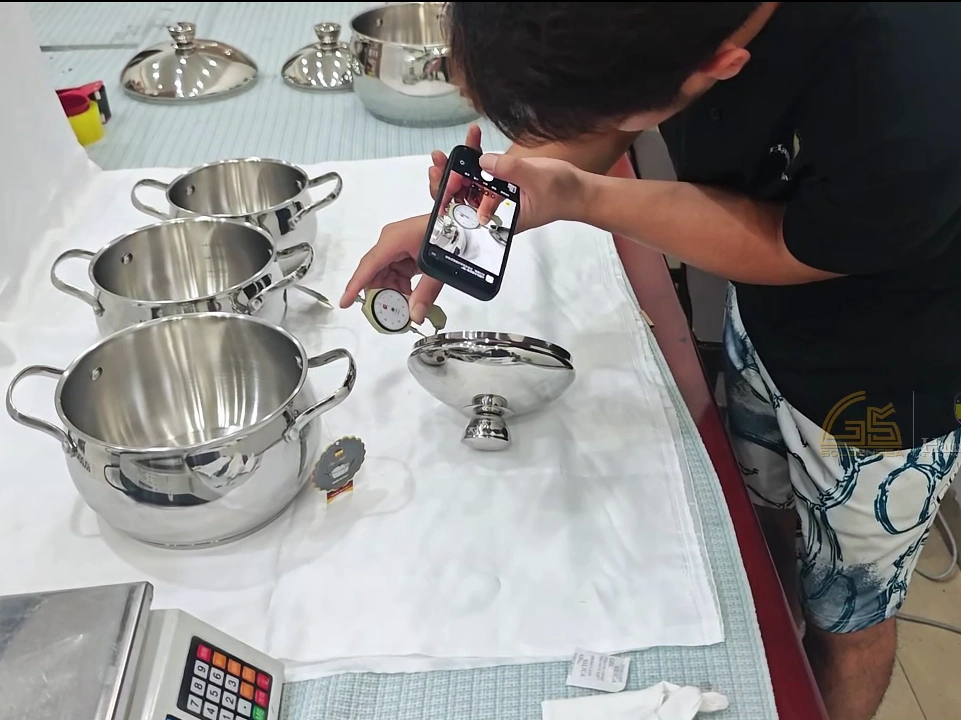
Thickness readings become useful only when the sample, measurement point, instrument and acceptance tolerance are agreed in advance.
There is no single “best” tri-ply cookware thickness for every pan, pot or cookware set. For B2B buyers, a useful tri-ply cookware thickness guide must compare more than one nominal millimetre value: it should consider the aluminum-core distribution, fully clad coverage, finished weight, cookware geometry, target cooktop and results from matched samples.
That approach turns “2.x mm” from a marketing number into a quotation, sample-approval and production-control requirement. This guide is for private label brands, importers, wholesalers and HoReCa buyers who need to compare full-clad tri-ply SKUs fairly before committing to bulk production.
Practical starting point: For many current tri-ply cookware programs, a nominal total thickness of 2.0–2.5 mm is a useful starting point for an RFQ. Custom projects may be developed within about 2.0–3.5 mm when the SKU, diameter, weight target and price position justify it. These are planning ranges, not universal performance grades; the final requirement still needs to be confirmed against the finished sample and agreed tolerance.
Buyer starting point: For most current tri-ply projects, begin the RFQ at 2.0–2.5 mm. Consider a higher total thickness only when the cookware type, diameter, target finished weight, price position and matched sample support it. Treat thickness as a project decision, not an automatic upgrade.
Key Takeaways
- Total thickness is only one specification input. Two fully clad products with the same nominal gauge can differ in aluminum-core allocation, geometry, weight and sample performance.
- Finished weight should be reviewed with the complete configuration. A pan body, lid, handles and accessories affect handling, packaging and freight—not just the cooking feel.
- Different cookware types need different priorities. Fry pans, saucepans and casserole pots should be compared against their own size, balance and intended cooktop conditions rather than one universal thickness target.
- Measurement needs a plan. Define the location, instrument, calibration, temperature, record format and tolerance before production.
- Approve a numbered golden sample. Use its thickness map, finished weight and agreed test method as the reference for first-article and bulk-order checks.
What Does “Tri-ply Cookware Thickness” Actually Mean?
In a sourcing discussion, “thickness” can refer to several different things. It may mean the nominal total thickness of the bonded blank, a reading at the finished rim, a local reading on the wall, a base measurement, or the final thickness of an individual layer after forming. These are not interchangeable values.
For full-clad construction, buyers should first confirm where the bonded structure extends and then state the measurement location. An external caliper or thickness gauge can record the total finished wall at an agreed point, but it does not automatically identify the thickness of each internal layer. If layer allocation is a controlled requirement, the RFQ should separately specify the agreed verification method.
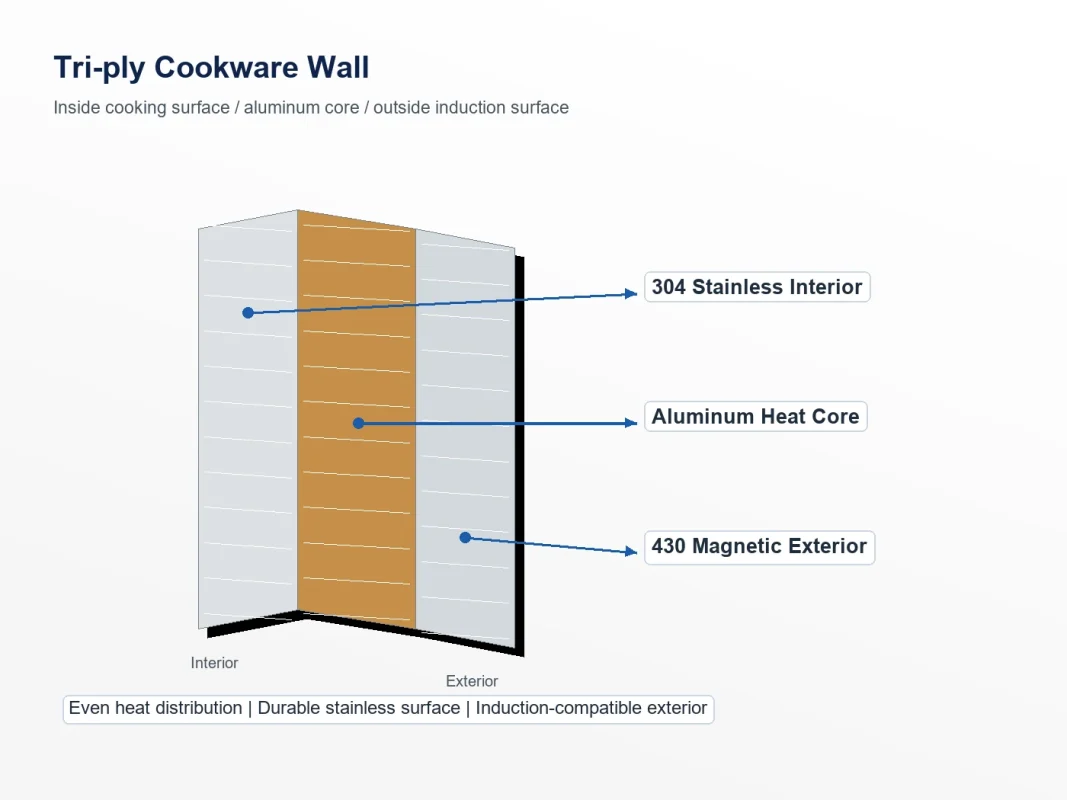
Illustrative tri-ply wall structure. The visual does not prescribe a fixed layer ratio for every SKU.
For a foundation on material roles and wall-to-wall construction, see how tri-ply stainless steel cookware is constructed. Material grade, total gauge, core distribution and finished geometry should remain separate fields in the specification.
Why the Same Total Gauge Can Perform Differently
In a common tri-ply stack, the food-contact stainless steel, aluminum core and magnetic exterior do different jobs. At approximately 295 K, the NIST reference tables list aluminum at about 235 W/(m·K) and 304 stainless steel at about 15 W/(m·K). This is why the aluminum core is the main conductive path in the structure.
That material difference does not justify a universal “more aluminum is always better” claim. A product’s response may also be affected by core distribution, pan diameter, wall height, base geometry, fully clad coverage, forming condition and the cooktop used. Numerical studies of layered saucepans and tests of pans on different cooktops support the practical need to compare the complete configuration rather than total gauge alone: layered-base temperature-distribution research and cooktop-comparison research.
Buyer rule: A nominal gauge does not, by itself, identify the final thickness of each layer after forming or predict the finished cookware’s performance under every cooking condition.
Material grade should also be confirmed independently of thickness. The food-contact grade does not replace a thickness, finished-weight or sample-validation requirement.
Thickness, Finished Weight and Handling: The Commercial Trade-off
Additional metal mass can change heat response and the feel of a finished pan, but a heavier sample is not automatically more even-heating, more durable or better positioned for every market. Buyers should compare matched samples with the same diameter, depth, handle construction and lid configuration before drawing a conclusion from weight.
Finished weight also affects commercial decisions beyond the cooktop. In a cookware set, it can change handle balance, one-hand usability, gift-box strength, master-carton loading, freight cost and the end customer’s perception of the line. Review the whole configuration, not only the pot body.
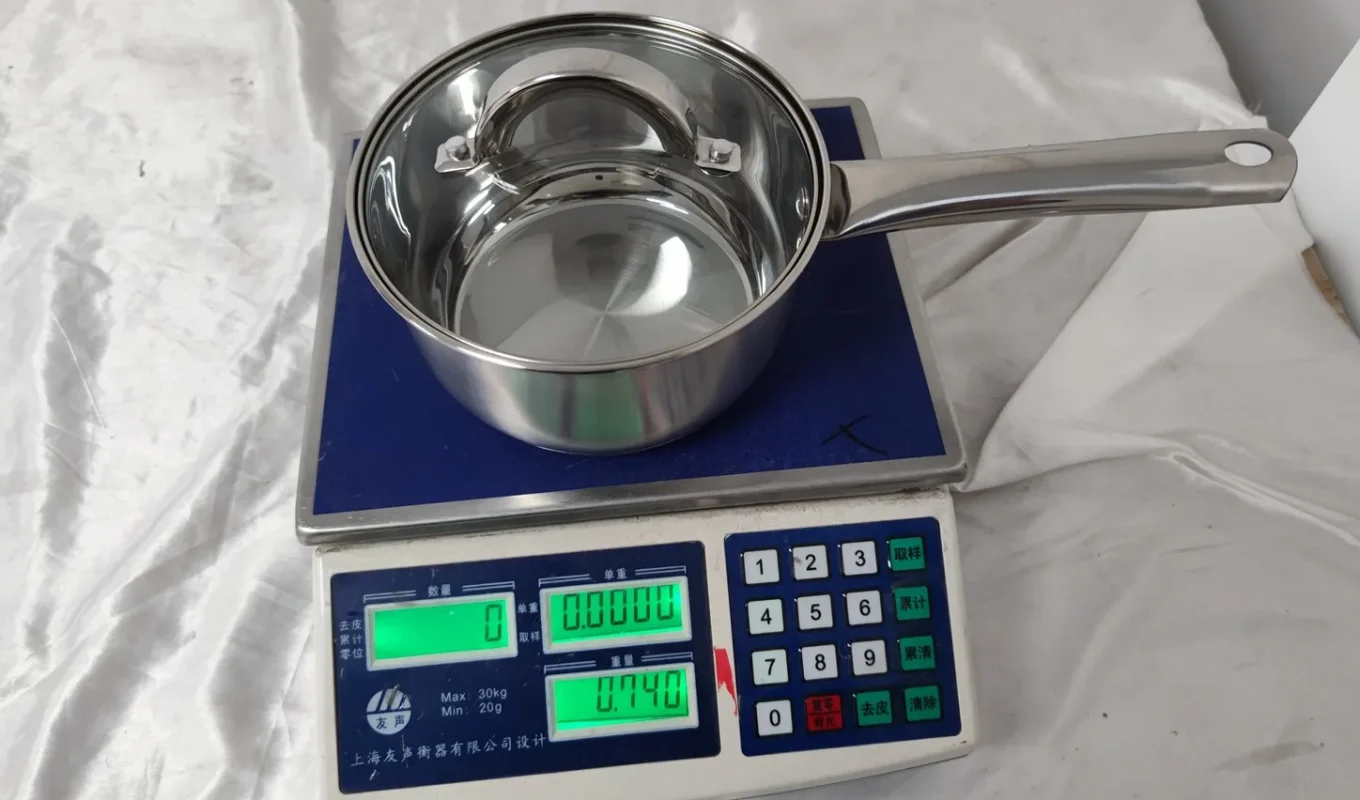
Record finished weight against a defined SKU configuration. State whether the lid, handles and accessories are included in the control value.
| Comparison point | What buyers should hold constant | Why it matters |
|---|---|---|
| Cookware geometry | Diameter, depth, base diameter and wall profile | Different geometry changes both metal mass and heat path. |
| Components | Handle, helper handle, lid and accessories | These affect actual weight, balance and packaging. |
| Construction | Full-body clad construction and declared layer stack | Two similar-looking products may not have the same bonded structure. |
| Test condition | Cooktop type, zone size, load and timing | Sample observations should be comparable and repeatable. |
| Commercial target | Retail price band, carton limits and target channel | A technically sound option must still fit the line plan. |
How Thickness Priorities Change by Cookware Type
Fry pans and sauté pans
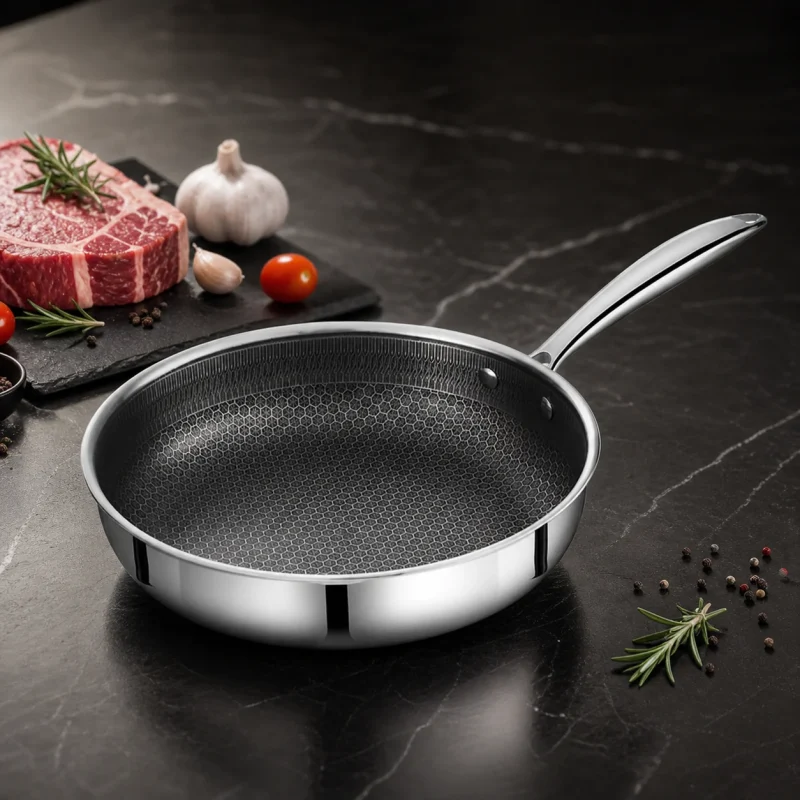
For fry pans and sauté pans, buyers should examine the heated surface, base stability after the agreed thermal cycle and handle balance. A larger pan may need a different weight and geometry discussion from a smaller SKU, even if the product family uses the same construction name.
Saucepans
For saucepans, consider bottom and wall heat response together with pouring control and one-hand operating weight. Compare matched pan-and-lid configurations; changing the lid or handle can make a weight comparison meaningless.
Casseroles, stockpots and sets
As diameter and capacity increase, total mass, cooktop match and packaging constraints become more important. A set should be reviewed as a coordinated commercial range rather than as several isolated thickness numbers.
For all types, induction suitability is more than the presence of a magnetic exterior. Confirm the intended hob, usable heating-zone range, base geometry and the project’s test condition. If a product is being assessed against a market standard or a laboratory requirement, confirm the applicable edition and method rather than making a broad compliance claim. BS EN 12983-1:2023 describes general requirements for domestic cookware used on stove, cooker or hob; the applicable scope still needs to be checked for each project.
What to Put in a Tri-ply Thickness Specification
A usable thickness requirement gives both sides the same reference. Instead of writing only “2.5 mm tri-ply,” create a specification sheet that identifies the SKU, construction, measuring plan and approval rule.
| Field | What to define |
|---|---|
| SKU and drawing version | Model, diameter, depth and current drawing date or revision. |
| Construction | Full-clad tri-ply coverage and the agreed construction description. |
| Layer stack | Food-contact layer, conductive core and magnetic exterior materials or mutually accepted material definitions. |
| Thickness | Nominal total thickness; if layer distribution is controlled, state it separately with the verification method. |
| Measurement plan | Point map, number of readings, instrument, calibration, temperature, curved-surface suitability and record format. |
| Tolerance | Accepted thickness, weight and dimensional deviation for this SKU; avoid “standard tolerance” without a value. |
| Finished weight | Pot body weight and whether lid, handles and accessories are included; define the allowable deviation. |
| Base geometry and cooktop | Base diameter, flatness or curvature condition, target hob type and relevant test conditions. |
| Sample and production control | Golden-sample number, first-article check, batch sampling, retest rule and change-control triggers. |
Turn the checklist into a comparable RFQ
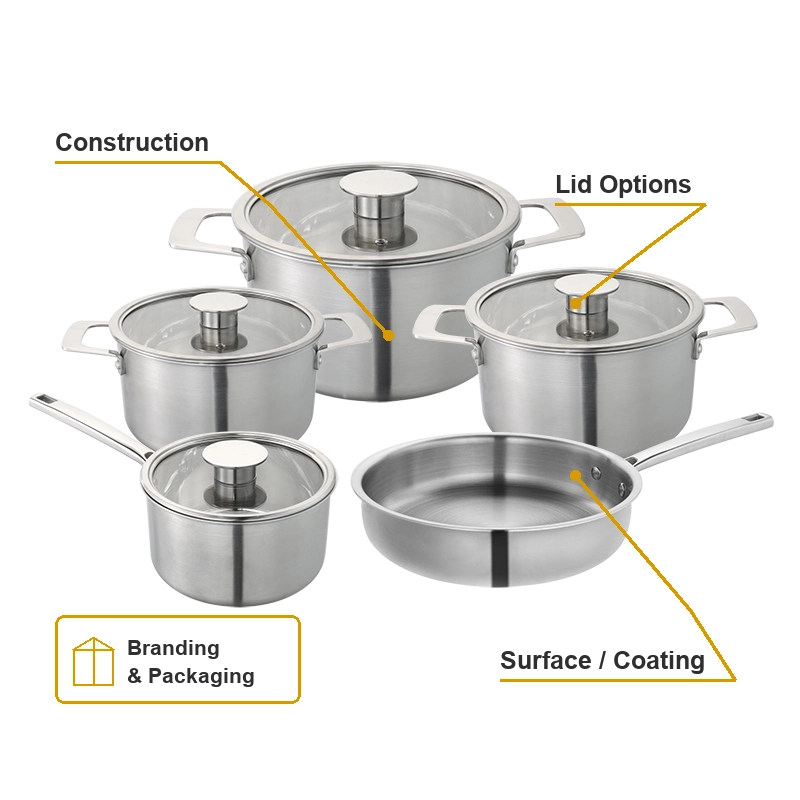
Send the target cookware type, dimensions, market, intended cooktop, target price band, estimated quantity and packaging requirement together with the fields above. This helps a supplier quote the correct construction and identify which points must be confirmed by the sample.
Thickness readings should also be interpreted with the tool and surface in mind. ASTM E797/E797M describes manual ultrasonic pulse-echo measurement and notes limitations for non-parallel or concentric surfaces. It should not be represented as a universal method for proving every individual layer in a curved finished pan.
A report, material declaration and thickness record each serve different verification purposes. Confirm which document or measurement is intended to verify each requirement before sample approval.
How to Compare and Approve Samples
- Match the samples. Compare the same cookware type, diameter, depth, handle and lid configuration wherever possible.
- Record the baseline. Capture sample number, construction, weight, measurement locations and initial observations.
- Use one agreed test condition. State the cooktop type, heating-zone size, loading condition and timing before comparing results.
- Agree the measurement method. Define the instrument, calibration, point map, temperature and tolerance before production—not after a disputed reading.
- Carry approval into bulk control. Retain the numbered golden sample and identify the first-article check, sampling basis, retest rule and changes that require re-approval.
For the broader production-inspection sequence, see how to check thickness, finished weight and base flatness before a bulk order. This article focuses on the thickness specification; the linked guide extends the review to surface finish, assembly, packaging and other production checks.
Common Buying Mistakes
- Treating ply count or total mm as the full specification. Layer count does not establish core distribution, coverage, geometry or finished weight.
- Leaving the measurement location undefined. A rim reading, wall reading and base reading may not describe the same condition.
- Comparing non-matched samples. Different pan diameters, handles or lids can distort a weight or handling comparison.
- Checking only a cold sample. The relevant conditions should reflect the intended cooktop and the agreed project test method.
- Approving an unnamed sample. Without a traceable golden sample and record, it is difficult to manage first production or engineering changes.
For B2B Buyers: Build a Thickness Plan, Not a Thickness Claim
Tri-ply cookware thickness should be evaluated together with core distribution, geometry, finished weight and sample results. The right target depends on the actual SKU, target market, cooktop, commercial positioning and packaging plan. Goldensea can discuss these fields as part of an OEM/ODM cookware project, subject to the product drawing, target price and sample confirmation.
Frequently Asked Questions
What is a good thickness for tri-ply cookware?
There is no universal best thickness. A suitable target depends on cookware type, diameter, layer distribution, finished weight, geometry, target cooktop and commercial positioning. B2B buyers should agree the thickness map and tolerance for the finished SKU, then compare matched samples under the intended conditions.
How should B2B buyers compare tri-ply cookware thickness?
Compare the nominal gauge together with the declared layer stack, full-body clad construction, finished weight, measurement locations, tolerance and sample-test result. Keep pan type, dimensions, handle and lid configuration consistent. A single total-thickness number is not enough for a reliable sourcing decision.
Can a caliper prove the thickness of every tri-ply layer?
No. A caliper or external gauge can record the total finished thickness at a defined location, but it does not automatically identify each internal layer. If layer allocation must be verified, the buyer and supplier should agree a separate, suitable verification method in the RFQ.
Does heavier tri-ply cookware always perform better?
No. More mass may change heat response and handling, but weight alone does not prove heat distribution, stability or quality. Compare matched samples with the same geometry and components, then review the result against the target cooktop, product position, packaging and end-user handling requirements.
What should be approved before bulk production?
Approve a numbered golden sample, drawing version, construction description, thickness measurement plan, tolerance, finished-weight record, target-cooktop test method and retest rule. Any significant change to material, layer distribution, geometry, components or intended use should be reviewed before mass production proceeds.
Related Tri-ply Cookware Set Examples
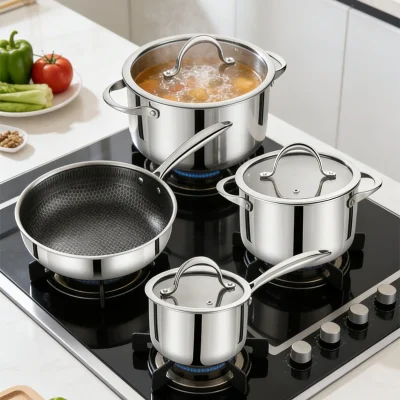
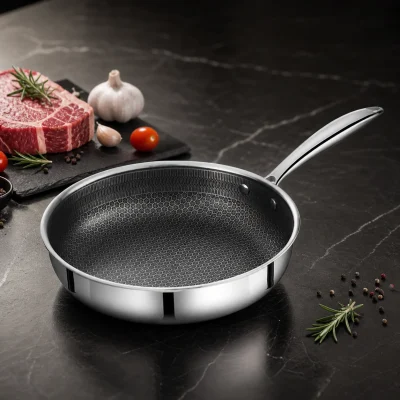
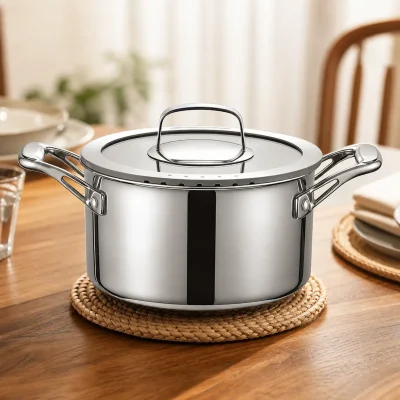
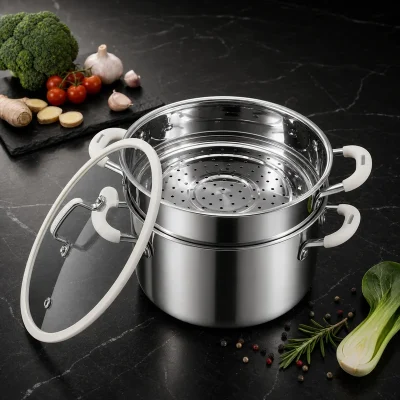
These four set examples show why body gauge should be reviewed with vessel mix, lids, handles, finished set weight and packaging—not as one universal number.
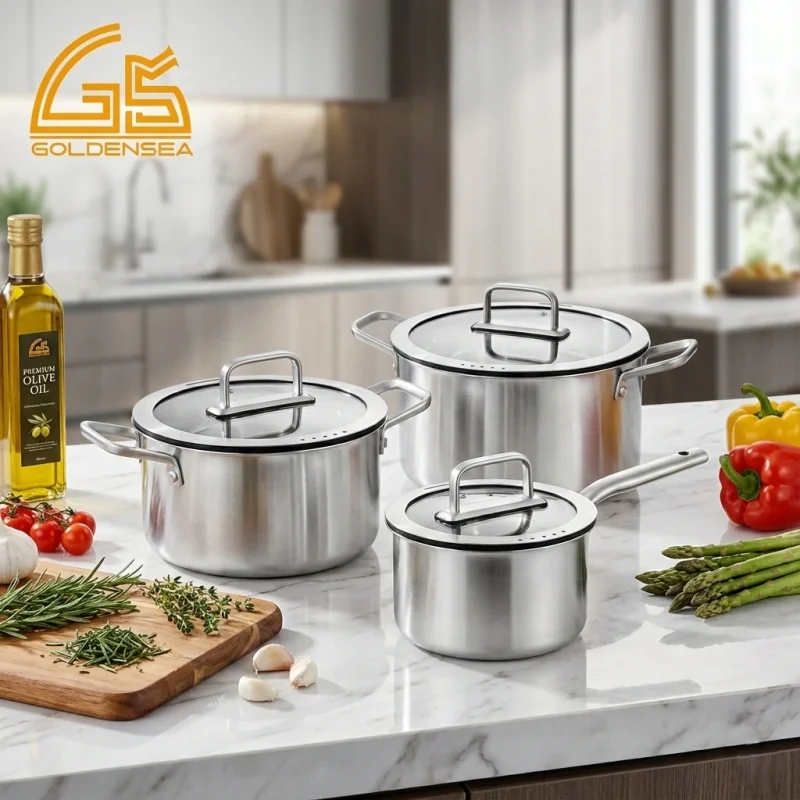
GS-01622-6PC Compact Starter Set
A three-vessel, three-lid format for compact retail assortments and starter-line planning.

GS-01602-9PCS Hammered Set
A five-vessel set for reviewing hammered finish direction, glass lids and gift-box planning.
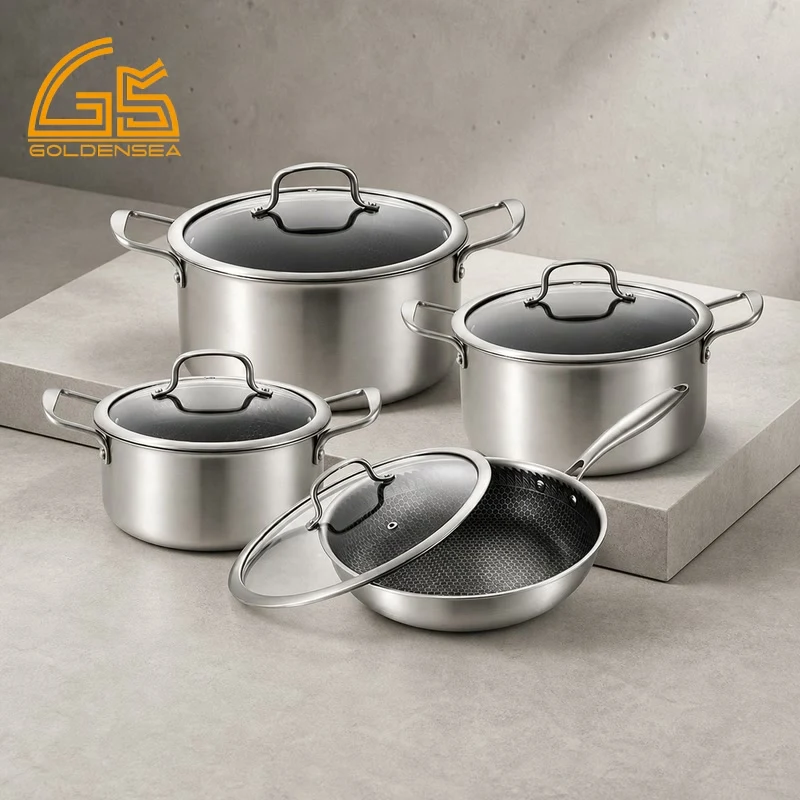
GS-01631-8PC Mixed-Vessel Set
Three covered casseroles and one lidded frying pan for mixed-vessel assortment discussion.
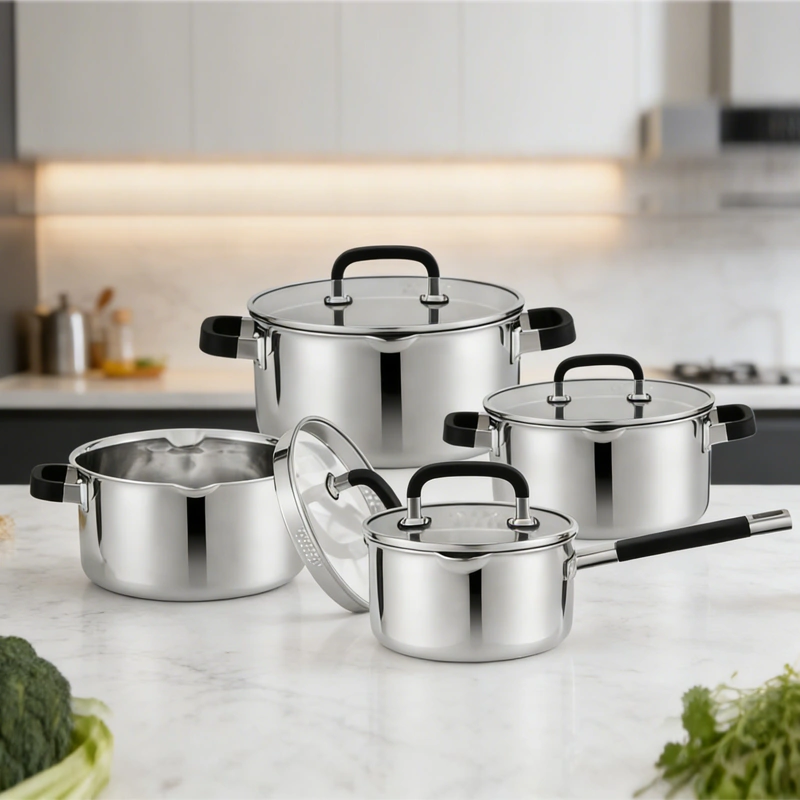
GS-01615-8PC Straining-Lid Set
An eight-piece covered-pot assortment with pouring rims, glass straining lids and black grips.
To discuss an OEM/ODM project, send Goldensea your target cookware type, dimensions, market, cooktop, estimated quantity and packaging requirements, or request a tailored quotation.

Shiva Yang is a Sales Manager at Goldensea, supporting global B2B buyers with tri-ply stainless steel cookware sourcing, private-label programs, and OEM/ODM project coordination.
Connect with Shiva on LinkedIn or contact Goldensea to discuss a cookware project.