





PFAS-free cookware sourcing is becoming a more important product-development question for importers, private label brands, wholesalers and retail buyers. The issue is not solved by choosing a stainless steel pan body alone. For coated cookware, the claim normally depends on the coating chemistry, the components included in the claim, supporting supplier documents, applicable testing and the rules of the target market.
Stainless steel still matters because it provides a durable and flexible product platform. A stainless steel or tri-ply cookware body can support a documented PFAS-free coating program, an uncoated cooking surface, or separate coated and uncoated ranges for different channels. This guide explains how buyers can evaluate those routes without treating PFOA-free, PFAS-free and uncoated stainless steel as interchangeable terms.
- What Does PFAS-Free Cookware Mean?
- Why PFAS-Free Claims Matter to B2B Buyers
- Two Stainless Steel Product Routes
- Why Stainless Steel Is a Long-Term Platform
- PFAS-Free Cookware Sourcing Checklist
- Documents Buyers Should Request
- Sample and Bulk Production Checks
- Common Sourcing Mistakes
- Choosing the Right Route
- FAQ
1. What Does PFAS-Free Cookware Mean?
PFAS-free cookware is cookware for which a defined product, coating or component scope is claimed not to contain the PFAS covered by the applicable specification or test method. Buyers should confirm the definition, test scope and covered components because PFAS is a broad chemical class and different markets or commercial policies may use different requirements.
PFAS refers to a large group of manufactured chemicals. PFOA is one individual substance within that broader discussion, while PTFE is a fluoropolymer used in some nonstick coating systems. These terms describe different things. A coating marketed as PFOA-free may still use other fluorinated chemistry, so the phrase cannot be treated as proof of a broad PFAS-free claim.
The U.S. Environmental Protection Agency describes PFAS as a large group of long-lasting manufactured chemicals. The U.S. Food and Drug Administration separately explains that certain PFAS-containing substances have authorized food-contact uses, including some nonstick coating applications. These official descriptions are one reason buyers should avoid reducing a complex sourcing question to a single label.
Before requesting a quotation, define whether the intended claim applies only to the food-contact coating, to every coating on the cookware, or to the complete finished product. Handles, colored exterior finishes, lid components, gaskets, printing inks and packaging may need to be considered when a claim is broader than the cooking surface.
2. Why PFAS-Free Claims Matter to B2B Buyers
PFAS-free claims affect more than coating selection. They can influence product specifications, supplier qualification, laboratory scope, packaging language, retailer acceptance and future inventory decisions. A vague claim at the beginning of a project often becomes an expensive problem after samples, artwork and purchase orders have been approved.
Requirements also vary by destination and continue to develop. In the European Union, the European Chemicals Agency’s universal PFAS restriction proposal was still moving through committee opinion work in June 2026. This is not the same as a universal cookware ban already being in force. Separately, all kitchenware placed on the EU market must meet applicable food-contact material requirements; the European Commission’s food-contact materials guidance provides the general regulatory starting point.
For U.S. projects, federal food-contact authorization is only one part of product review. State rules, retailer restricted-substance policies and voluntary brand standards may impose different claim or reporting expectations. Buyers should therefore give the supplier a target-market list instead of asking only whether a product is “compliant.”
A material change can also trigger new sampling, testing and artwork review. If a coating is replaced after a color box has already been printed, the buyer may face packaging rework, delayed shipment or inventory that cannot support the original claim. A controlled specification is therefore as important as the first test report.
3. Two Stainless Steel Product Routes
Stainless steel cookware programs can take two different routes. Neither route is automatically better for every buyer. The correct choice depends on cooking experience, channel positioning, durability expectations, claim strategy and target price.
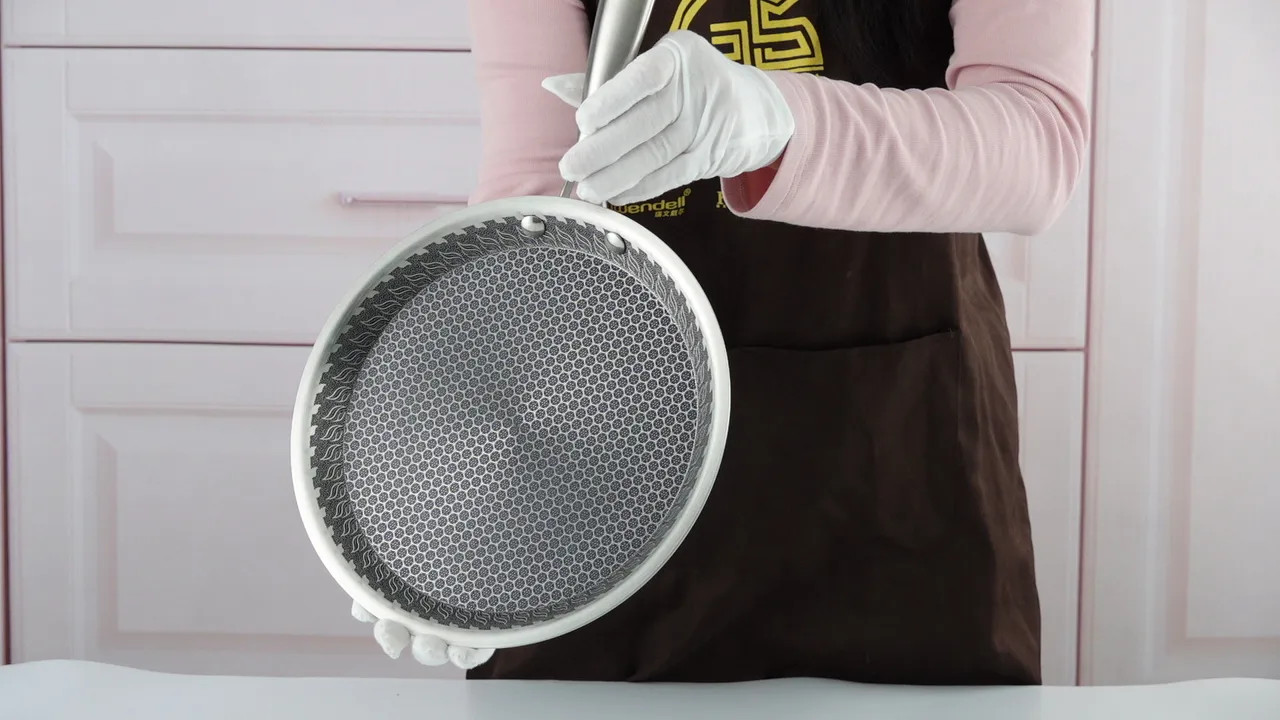
| Product route | Construction | Main advantage | Key sourcing checks | Typical fit |
|---|---|---|---|---|
| PFAS-free coated stainless steel | Stainless steel or tri-ply body with a specified nonstick coating | Easy-release cooking experience and familiar consumer positioning | Coating chemistry, claim definition, supplier documents, test scope, adhesion and wear performance | Retail and private label lines that prioritize nonstick convenience |
| Uncoated stainless steel | Stainless steel is the direct food-contact cooking surface | Durable surface without relying on a nonstick coating | Steel grade, clad structure, thickness, finish, heat performance and user education | Premium, professional, HoReCa and durability-focused ranges |
A PFAS-free coated product still needs a coating approval process. An uncoated stainless steel pan avoids reliance on a nonstick coating but has a different cooking experience and may require more heat and oil control. Buyers should not present the two routes as identical products with different marketing words.
Brands covering multiple channels may choose both. For example, an e-commerce range can offer a beige coated frying pan for easy-release cooking while a professional or premium range uses an uncoated tri-ply interior. Shared handles, body dimensions or packaging systems may still reduce development complexity, provided each SKU has its own controlled specification.
4. Why Stainless Steel Is a Long-Term Platform
This flexibility also matters for PFAS-free sourcing. If coating requirements change, a buyer working with a stainless steel platform may be able to qualify a new documented coating without rebuilding the entire cookware line, subject to surface preparation, curing and performance review.
The long-term value of stainless steel comes from structural durability and product-development flexibility, not from automatic PFAS compliance. A stable stainless steel body can be developed with different interior surfaces, exterior finishes, handles, lids and packaging while retaining a recognizable cookware family.
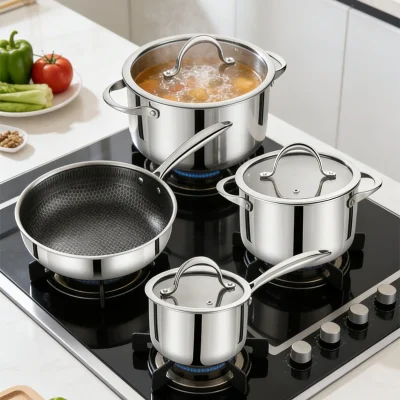
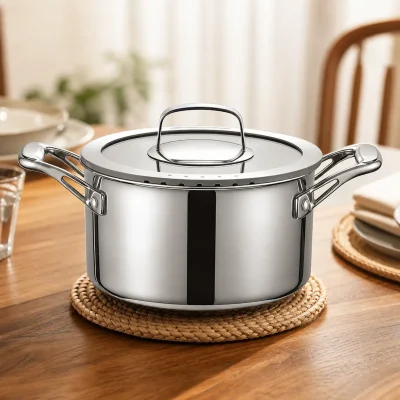
For tri-ply cookware, a common structure uses an SS304 stainless steel interior layer, an aluminum heat-distribution core and an SS430 magnetic stainless steel exterior. The aluminum helps spread heat, while the SS430 exterior supports induction compatibility. This construction typically offers more even heat distribution and better induction compatibility than a single-wall pan.
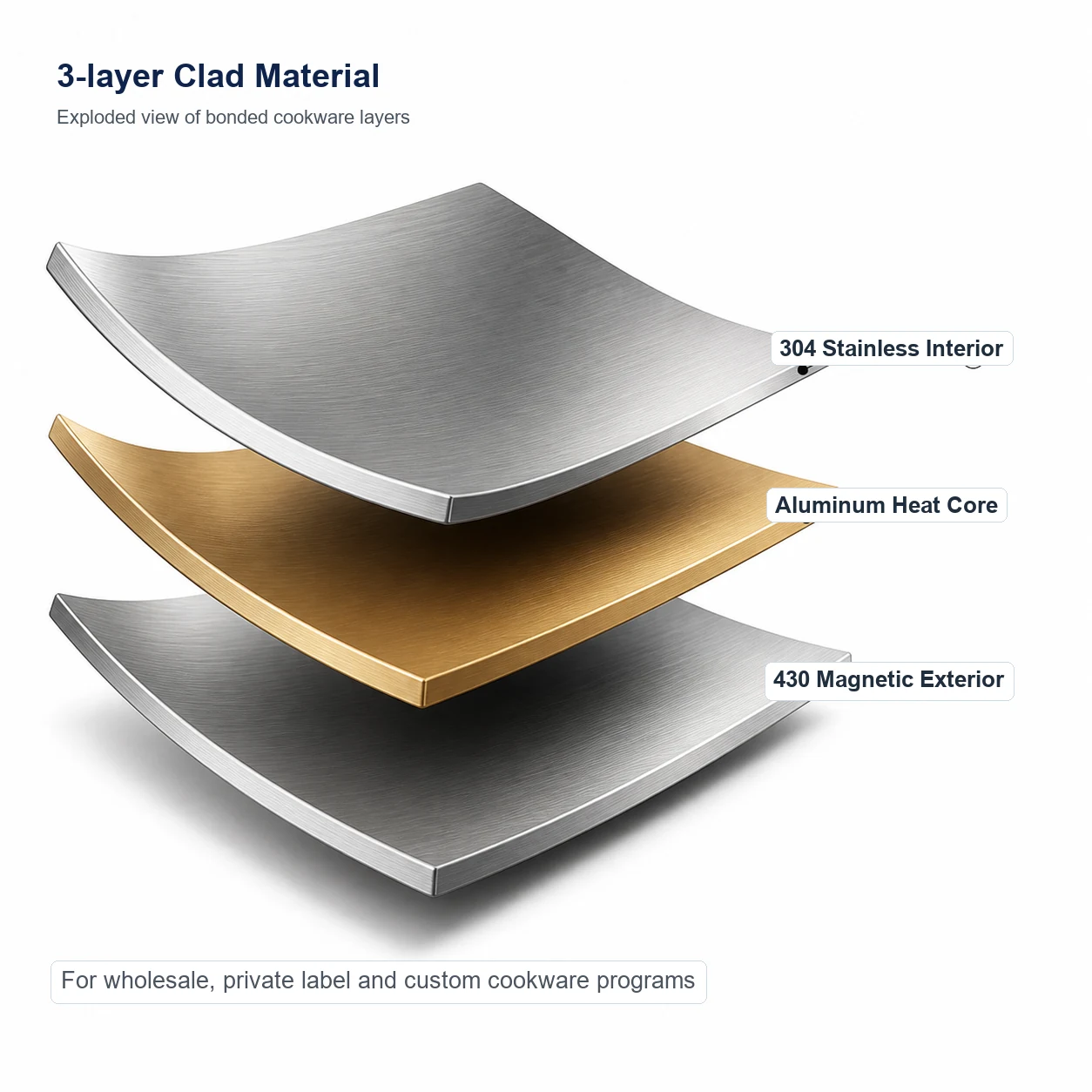
Depending on the product design and approved manufacturing process, a stainless steel platform can support an uncoated interior or a separately specified coating system. If coating requirements change, a buyer may be able to qualify a new coating without rebuilding every element of the cookware line. Feasibility still depends on surface preparation, curing temperature, forming sequence and performance testing, so any change must be reviewed with the manufacturer.
Stainless steel also supports visual differentiation through mirror, satin, hammered or colored exterior finishes. Buyers can combine these options with custom handles, lids, logos and packaging through an OEM/ODM cookware program. The practical benefit is a product platform that can evolve as channel expectations change.
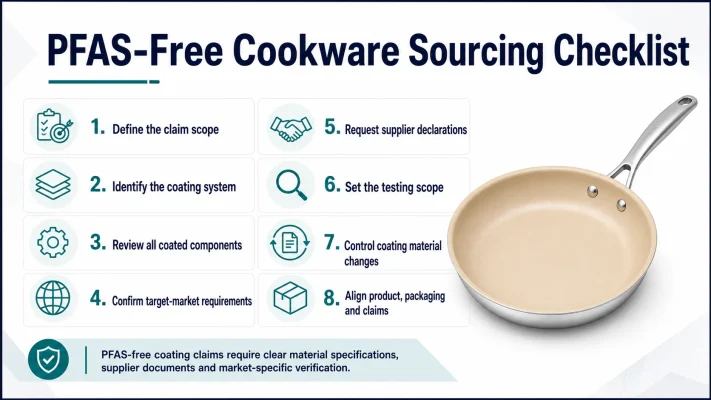
5. PFAS-Free Cookware Sourcing Checklist
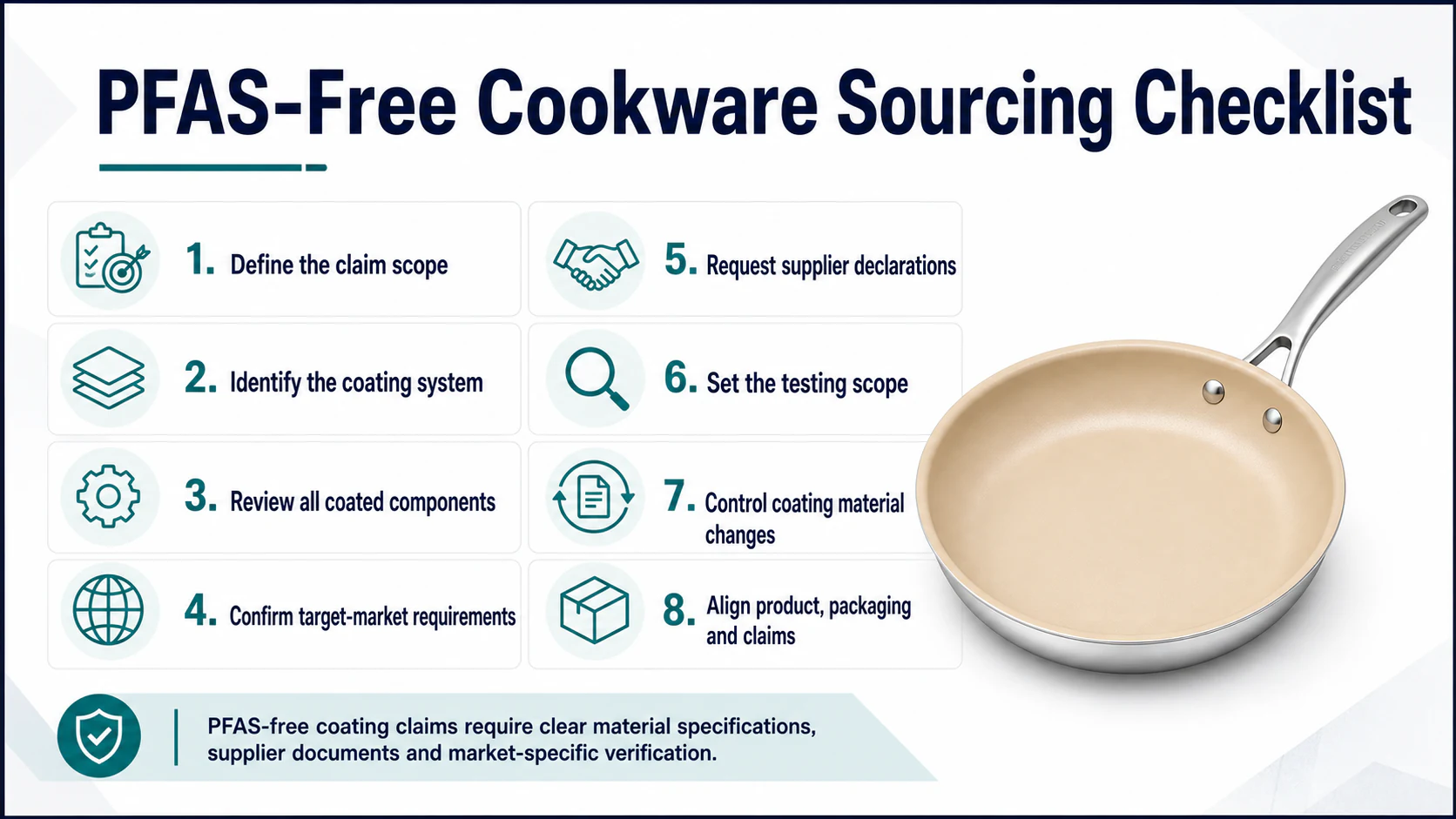
1. Define the claim scope
State whether PFAS-free applies to the food-contact coating, every coated surface or the complete finished product. This decision affects the bill of materials, supplier questions and laboratory scope. A narrow test cannot support a broader marketing claim.
2. Identify the coating system
Record the coating supplier, product code, layer system, color, application process and curing conditions. Do not approve a quotation described only as “PFAS-free coating” without a traceable material specification.
3. Review all coated components
Check the interior, exterior color coating, handle overmolding, lid parts, gaskets and printed decoration where relevant to the intended claim. The review should follow the defined scope rather than assuming only the pan interior matters.
4. Confirm target-market requirements
List every intended country, state, retailer and sales channel. The same document package may not satisfy all destinations. Market confirmation should happen before final samples and artwork, not after production.
5. Request supplier declarations
Obtain declarations linked to exact material codes and current revisions. A generic letter without a product identifier, date or chemical scope is difficult to connect to the finished cookware.
6. Set the testing scope
Agree on samples, components, analyte list, method and reporting limits with a qualified laboratory or compliance adviser. Testing should match the claim and target market. A supplier declaration and a laboratory report serve different purposes.
7. Control coating material changes
Require written approval before the coating supplier, formulation, color system or application process changes. The golden sample, purchase order and QC documents should reference the approved specification.
8. Align product, packaging and claims
Use the same scope and wording on the product page, color box, manual, marketplace listing and sales presentation. Avoid terms such as “chemical-free” or unsupported health claims. Evidence should be approved before artwork is printed.
6. Documents Buyers Should Request
No single certificate automatically proves suitability for every country and every PFAS-free claim. Build a document package that connects the raw material, finished product and target market.
- Complete bill of materials: identify the cookware body, each coating layer, handle, lid, gasket, decoration and relevant packaging material.
- Coating technical data: include the supplier, product code, intended substrate, layer system and application instructions.
- Supplier declaration: require a dated statement with a defined PFAS scope and direct reference to the supplied coating code.
- SDS or applicable safety documentation: use this for material handling and chemical review, while recognizing that an SDS alone is not a finished-product compliance certificate.
- Target-market test reports: reports should identify the sample, method, tested substances, results and laboratory.
- Food-contact documentation: confirm the documents needed for the destination and intended food-contact conditions.
- Sample-to-production confirmation: connect the approved sample material codes to the bulk purchase order and QC checklist.
- Change-notification agreement: define when the supplier must disclose formulation, source or process changes.
Goldensea can support document preparation and testing coordination based on product scope and target market, but buyers should not assume that every product automatically carries every certificate. Requirements must be confirmed for the specific project.
7. Sample and Bulk Production Checks
PFAS documentation does not replace normal cookware quality control. A coating may meet a chemical specification but still fail the product program because of poor adhesion, uneven color, scratches or inconsistent application.
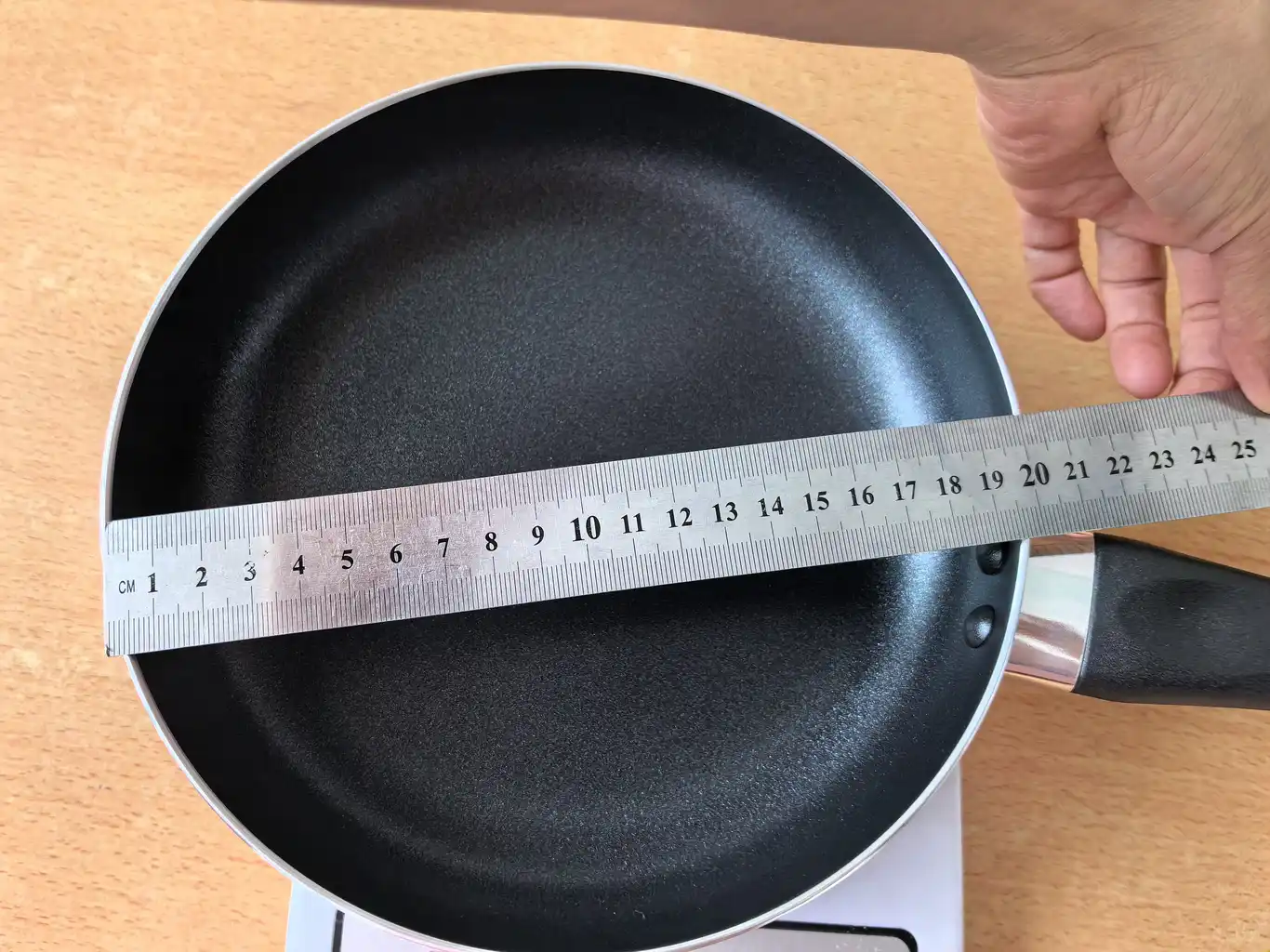
- Compare coating color, gloss, texture and coverage against the approved golden sample.
- Confirm adhesion, abrasion or other durability tests appropriate to the coating system and buyer specification.
- Check base flatness, induction performance and heat behavior for the target cookware construction.
- Measure diameter, height, wall thickness, weight, handle dimensions and lid fit.
- Verify that the sample and production batch use the same approved coating code and application process.
- Review color box, manual and online claims against the final document scope.
- Include surface inspection and specification verification in pre-shipment inspection.
Buyers can use Goldensea’s guide to checking stainless steel cookware quality before a bulk order as a broader sample and inspection reference.
8. Common Sourcing Mistakes
Treating PFOA-free as a complete PFAS-free claim
PFOA-free addresses one substance and does not by itself establish that the coating or finished cookware meets a broader PFAS-free definition.
Asking only the finished-product factory
The cookware manufacturer should coordinate the project, but traceable information from the coating supplier is also important. The documentation chain should connect coating code, application and finished sample.
Leaving the claim scope undefined
A report for the cooking surface cannot automatically support a claim covering the complete pan, handle, lid and packaging. Define scope before testing.
Using a report that does not match the destination
A report can be technically valid yet irrelevant to a particular retailer policy or target market. Confirm applicable requirements before choosing the test package.
Printing PFAS-free packaging before verification
Early artwork printing creates rework and inventory risk if the final evidence supports different wording or a narrower scope.
Changing coatings between sample and bulk production
A visually similar coating may use a different formulation or supplier code. Any substitution should require buyer approval and compliance review.
Ignoring coating durability
Chemical documentation does not establish scratch resistance, adhesion or service life. Performance testing should be specified separately.
Confusing uncoated stainless steel with PFAS-free coated cookware
Uncoated cookware removes the nonstick coating from the product design. PFAS-free coated cookware retains a coating and therefore requires coating-specific evidence. They are separate sourcing routes.
9. Choosing the Right Route
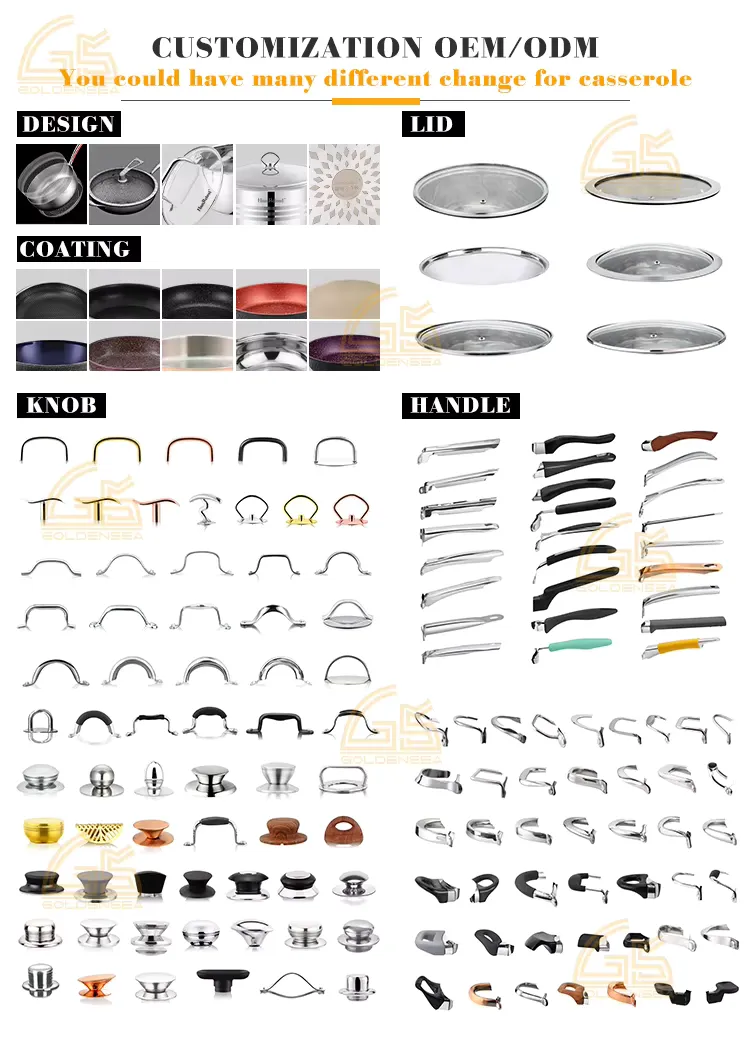
Choose a documented PFAS-free coating route when the product needs easy food release, a familiar nonstick consumer experience, distinctive coating colors or a retail story built around coating performance. Confirm the target market and evidence package before choosing the final coating.
Choose uncoated tri-ply stainless steel when durability, professional positioning and reduced dependence on nonstick coatings are more important than effortless release. This route still requires food-contact, material and product-quality review.
Use both routes when a brand serves multiple channels. A coated frying pan can address convenience-led retail demand, while an uncoated saucepan, casserole or cookware set supports premium and professional positioning. Review Goldensea’s tri-ply stainless steel cookware range and tri-ply frying pan options when planning the product architecture.
10. Frequently Asked Questions
Is PFOA-free cookware also PFAS-free?
No. PFOA is one substance associated with the broader PFAS category. A PFOA-free statement does not establish that a coating or finished cookware is free from all PFAS covered by a particular claim, specification or test method.
Does a stainless steel body make coated cookware PFAS-free?
No. The stainless steel body and the applied coating are separate parts of the product specification. For coated cookware, buyers must review the coating chemistry, relevant components, supplier documents and applicable testing before making a PFAS-free claim.
Can tri-ply stainless steel cookware have a PFAS-free coating?
Yes, a tri-ply body may be developed with a coating represented and documented for a defined PFAS-free scope. The coating must be compatible with the substrate and manufacturing process, and the final claim requires project-specific supplier evidence and market review.
What documents should buyers request from a cookware supplier?
Buyers should request a bill of materials, exact coating code, technical data, supplier declaration, applicable safety documentation, target-market test reports, food-contact documents, sample-to-production confirmation and a written material change-notification process.
Is uncoated stainless steel a replacement for nonstick cookware?
Not in every use case. Uncoated stainless steel is durable and does not rely on a nonstick coating, but it requires different cooking technique. Coated cookware may remain preferable when easy release and consumer convenience are primary product requirements.
Can Goldensea support coated and uncoated private label cookware?
Goldensea can discuss coated and uncoated stainless steel cookware projects, including body structure, coating or finish, handles, lids, logos and packaging. Available documentation, testing, MOQ and lead time depend on the selected specification and target market.
Conclusion
PFAS-free cookware sourcing begins with a defined claim, not with a marketing phrase. Buyers need to identify the coating system, review all relevant components, confirm destination requirements, control material changes and align the evidence with packaging and online claims.
Stainless steel remains a practical long-term platform because it can support both coated and uncoated product strategies. For a tailored project review, send Goldensea your target market, cookware type, dimensions, quantity, coating or surface requirements, packaging and required compliance documents.

Mei is a dedicated Sales Specialist at Goldensea with over 10 years of experience in the B2B kitchenware industry. Possessing deep technical knowledge of manufacturing and sourcing, she has successfully helped global clients navigate complex supply chain challenges and develop suitable cookware solutions.
Connect with Mei on LinkedIn or reach out for professional kitchenware advice.