
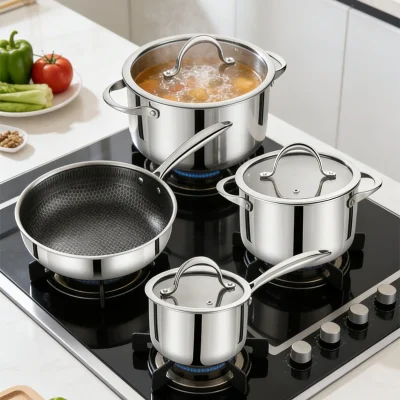
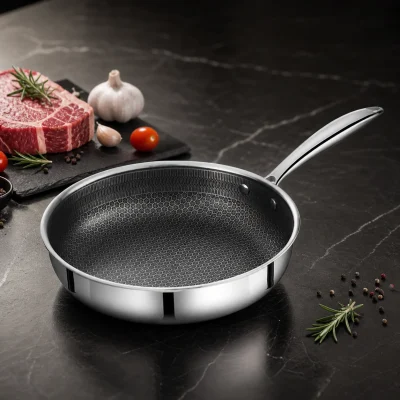
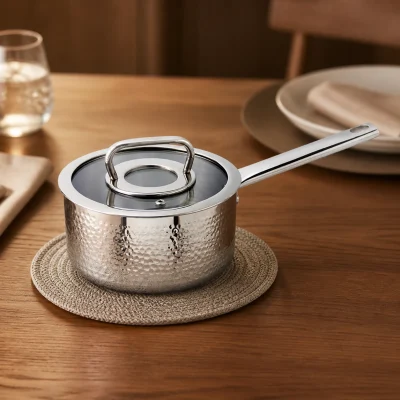
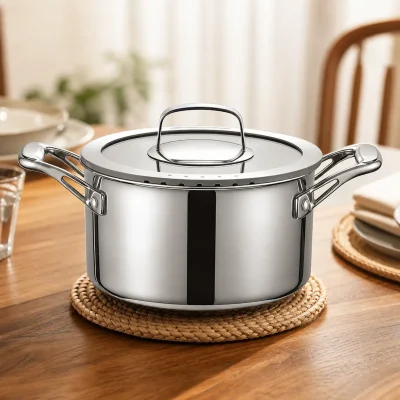
Jiangmen stainless steel cookware manufacturing is a useful topic for B2B buyers comparing China cookware suppliers, especially when the project involves stainless steel pots, pans, cookware sets, or OEM/ODM private label development. Jiangmen sits inside Guangdong’s broader metal products and export manufacturing network, with local support for cookware forming, polishing, component assembly, packaging, inspection, and shipment preparation.
This guide looks at Jiangmen from a buyer’s point of view. It explains what Xinhui and Siqian mean in sourcing conversations, where the regional supply chain can help, which cookware projects are a good fit, and what buyers should verify before moving from quotation to sample and bulk order.
Key Takeaways
- Jiangmen is worth considering for stainless steel cookware, cookware components, and export-oriented OEM/ODM projects, but location alone does not qualify a supplier.
- Xinhui and Siqian help buyers narrow the search inside Jiangmen because these names often appear in local hardware, stainless steel products, and factory address information.
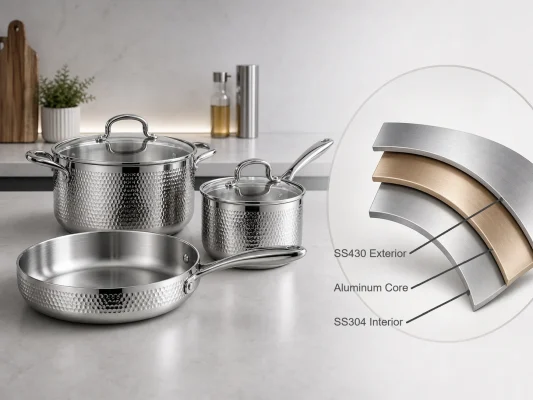
- For tri-ply stainless steel cookware, buyers should confirm the SS304 inner layer, aluminum core, SS430 magnetic outer layer, total thickness, rim design, handle assembly, and induction performance.
- Supplier checks should cover business identity, production site, material control, approved sample records, packaging requirements, and quality inspection before shipment.
- Goldensea is one Jiangmen-based example for buyers looking at tri-ply stainless steel cookware, OEM/ODM customization, private label support, and flexible B2B project planning.
Why Jiangmen Matters for Stainless Steel Cookware Sourcing
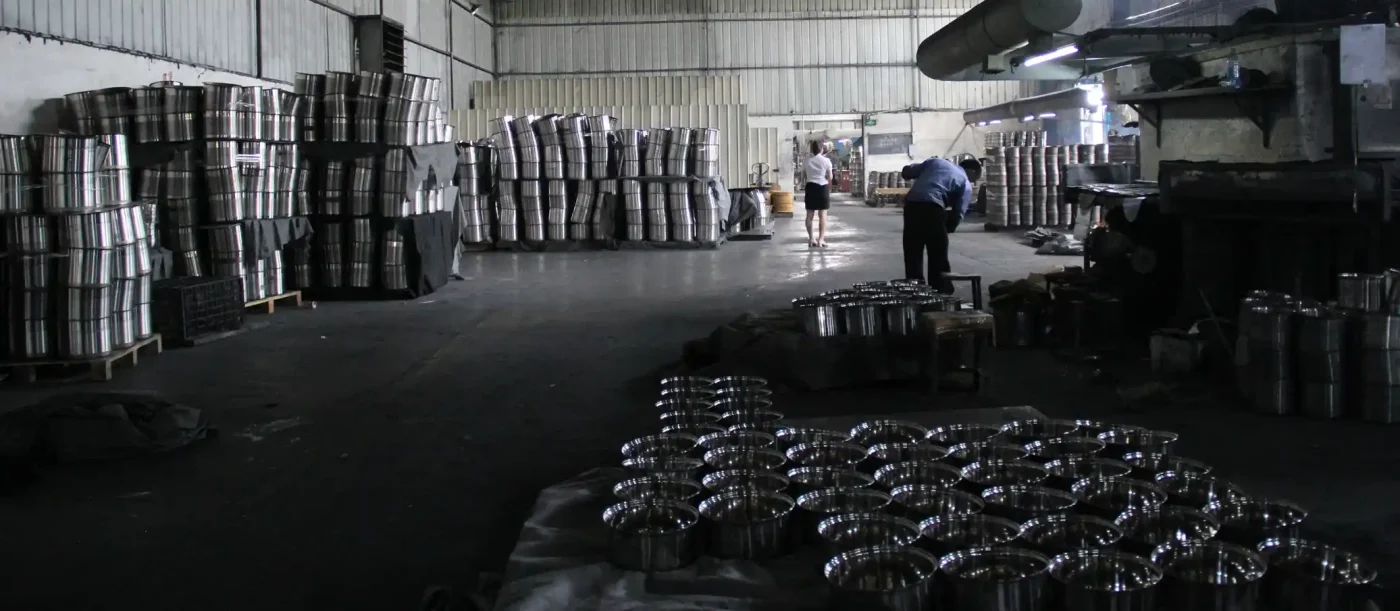
Jiangmen sits in Guangdong’s Pearl River Delta manufacturing network, within reach of Shenzhen, Guangzhou, Foshan, Zhongshan, Zhuhai, and export logistics channels in South China. That location matters because stainless steel cookware is not usually the output of one isolated workshop. A finished order may involve stainless steel material preparation, body forming, polishing, handle and lid components, logo treatment, retail packaging, carton packing, inspection, and container loading.
Jiangmen government materials describe the city’s metal products sector as part of a chain-based industrial cluster, while Xinhui and Siqian continue to appear in public updates about advanced manufacturing and hardware or stainless steel products. For overseas buyers, those references do not replace factory due diligence, but they do help explain why the area is relevant to cookware sourcing.
In practice, Jiangmen is most useful when a cookware project needs more than a stock item: repeated sampling, handle or lid changes, finish adjustments, packaging development, and clear quality standards before bulk production.
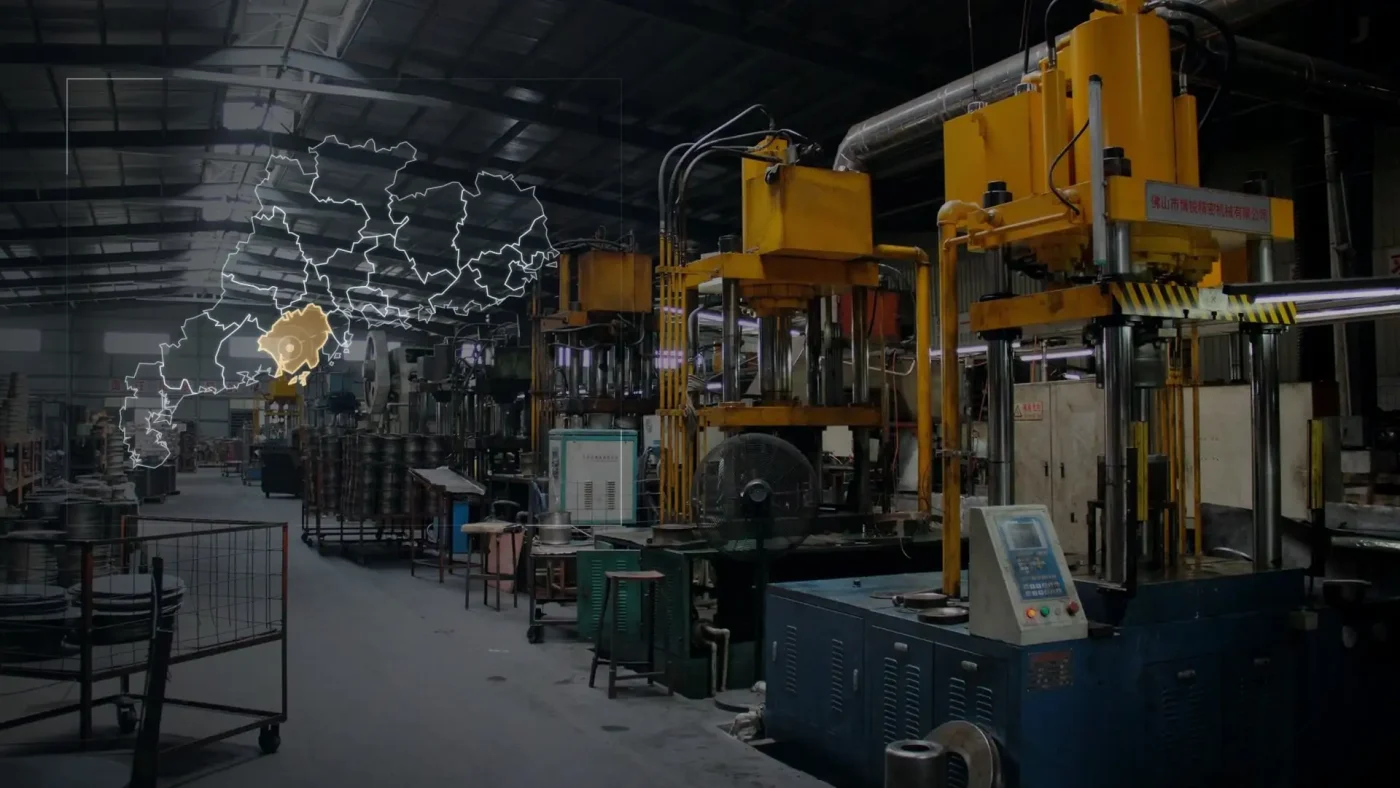
Jiangmen, Xinhui and Siqian: Manufacturing Context Buyers Should Know
Jiangmen is the city name many overseas buyers see first. Xinhui is one of its districts, and Siqian is a town in Xinhui that is often associated with hardware and stainless steel products. When a supplier says it is based in Jiangmen, buyers should ask for the full factory address, business license name, production site photos, and whether the factory is in Xinhui, Siqian, or another district.
This is not about treating one town as the sole place for cookware production. It is about knowing whether the supplier is a direct manufacturing base, a trading office, or a company coordinating production through partner workshops. A serious supplier should be able to explain where forming, polishing, assembly, inspection, and packing take place, even when components such as glass lids, handles, cartons, or surface treatments come from nearby partners.
What the Local Cookware Cluster Is Good At
The value of a cookware cluster is not that every supplier can do everything. It is that related processes are close enough to coordinate. For stainless steel cookware, buyer requirements often change after the first sample: thickness, weight, lid style, handle feel, polishing finish, carton structure, logo placement, and compliance paperwork may all need adjustment before mass production.
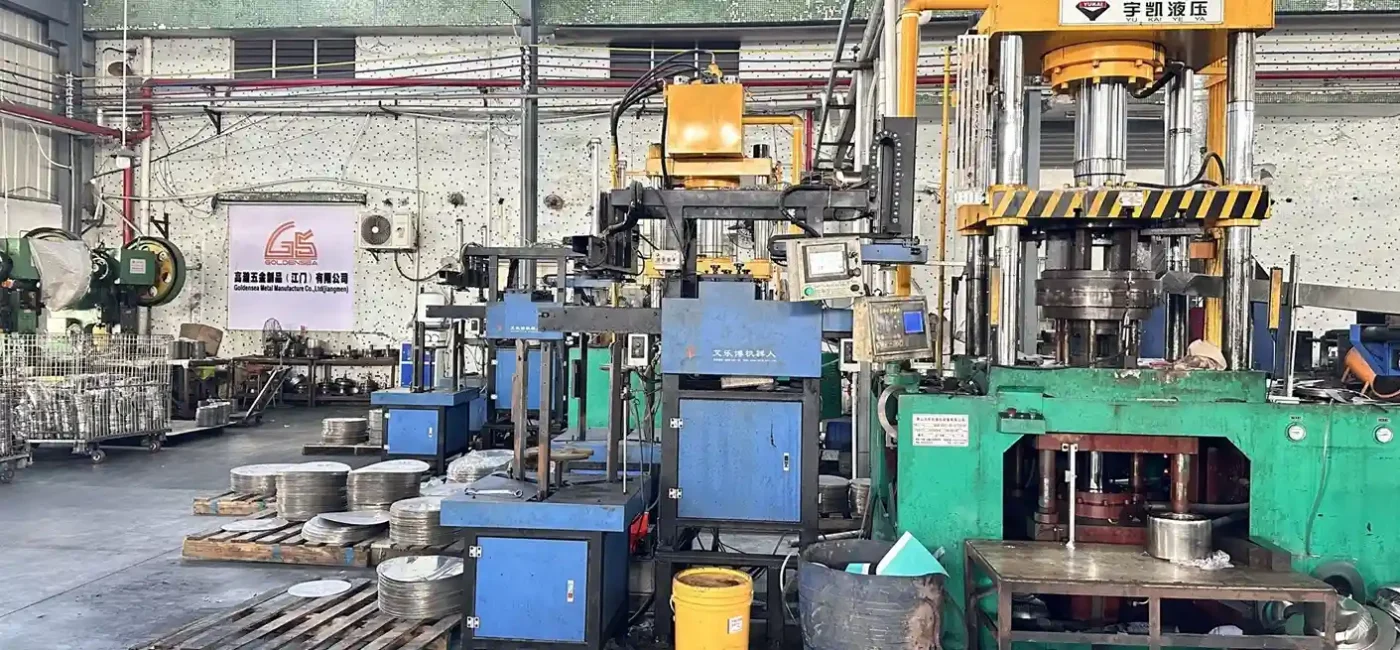
Metal forming and cookware body production
Stainless steel cookware starts with material selection and forming stability. For tri-ply projects, buyers should confirm whether the product uses full-body clad construction or only an encapsulated disc bottom. Full-body tri-ply cookware normally uses a bonded SS304 inner layer, aluminum core, and SS430 magnetic outer layer through the vessel body. Encapsulated-bottom cookware has a different structure and should be quoted, tested, and marketed separately.
Polishing, finishing and visible workmanship
For private label and retail cookware, surface finish is a commercial decision as much as a production detail. Mirror polish, satin finish, hammered texture, inner capacity marking, rim finishing, and base branding all affect perceived value, cleaning expectations, and inspection standards. Buyers should request finish references and approve a golden sample before bulk production.
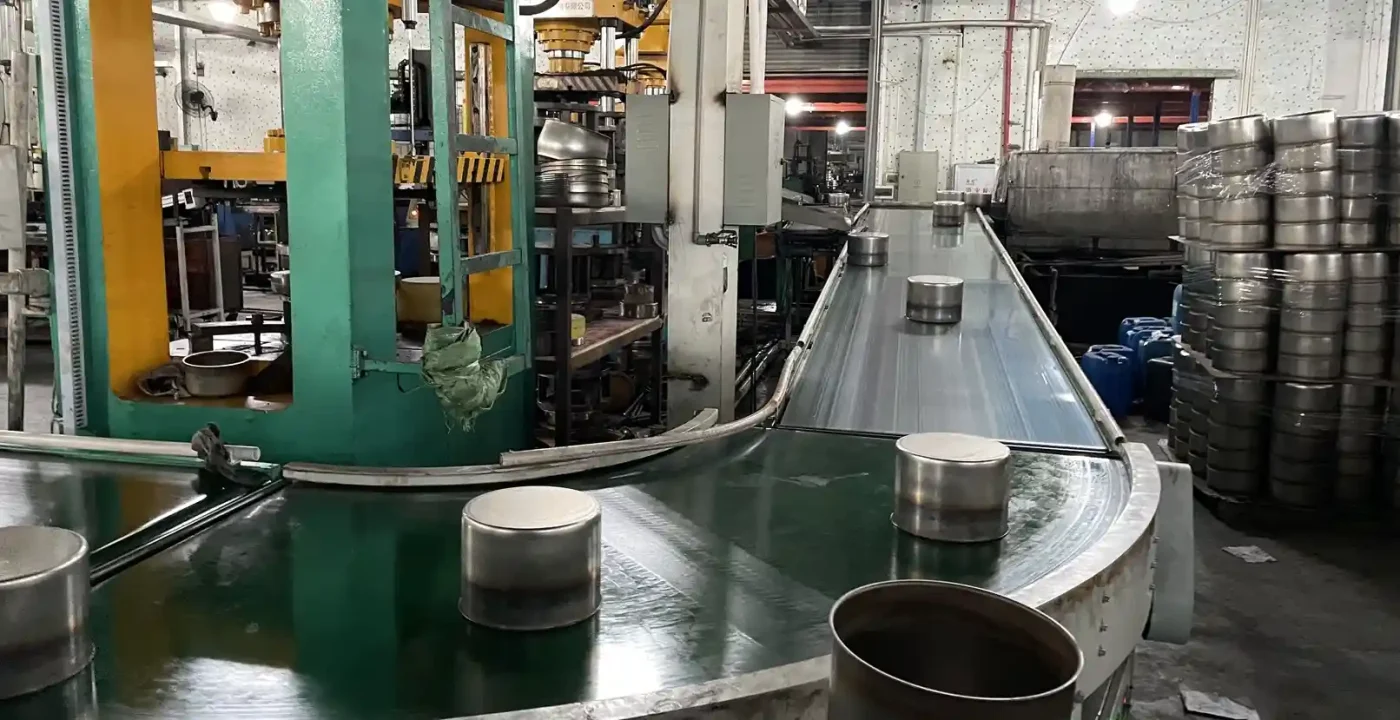
Handles, lids, components and assembly
Components deserve early attention. Handle design can affect carton size, heat-resistance expectations, assembly method, replacement risk, and retail presentation. Glass lids, stainless steel lids, riveted handles, welded handles, hollow handles, soft-touch handles, and detachable handles should be specified clearly in the RFQ instead of being decided after price negotiation.
Packaging and export preparation
Many B2B cookware issues appear after the cookware has already passed basic visual inspection. Retail box strength, carton drop resistance, barcode labels, manual language, warning labels, pallet planning, and container loading all affect shipment quality. For private label projects, packaging artwork and carton specifications should be treated as part of the product, not an afterthought.
Which Buyer Projects Fit Jiangmen Factories?
| Buyer project | Why Jiangmen may fit | What to verify |
|---|---|---|
| Tri-ply stainless steel cookware | Metal forming, polishing, and export cookware experience support higher-spec products. | SS304/Al/SS430 structure, thickness, induction base flatness, rim finish, and sample consistency. |
| Private label cookware sets | Local suppliers can coordinate pot sizes, lids, handles, logo, color box, and carton packing. | Set combination, packaging artwork, barcode labels, MOQ, and approved golden sample. |
| Wholesale stainless steel pots and pans | Standard cookware shapes can be adapted for distributors, retailers, and HoReCa buyers. | Material grade, weight tolerance, finish level, carton packing, and repeat order stability. |
| OEM/ODM cookware development | Buyers can discuss mold, handle, lid, finish, size, structure, and branding in one project workflow. | Tooling cost, prototype timeline, mold ownership terms, drawings, and confidentiality expectations. |
How to Evaluate a Jiangmen Cookware Supplier
Use Jiangmen as a sourcing filter, not as proof of capability. Before moving from inquiry to sample order, review the supplier through evidence you can keep on file.
1. Confirm the business and factory address
Ask for the business license, export company name, factory address, and production site photos or video. If the trading company and factory are separate entities, ask how responsibility is handled for sampling, quality control, claims, and repeat orders.
2. Check product specialization
A supplier that mainly makes aluminum nonstick cookware, pressure cookers, kitchen tools, or general household goods may still be useful for some projects, but it is not the right match by default for tri-ply stainless steel cookware. Ask for current product lines, sample room photos, product catalog, and similar export cases.
3. Verify material structure
For tri-ply cookware, confirm the inner stainless steel grade, aluminum layer, magnetic stainless steel outer layer, total thickness, and whether the body is fully clad. For regular stainless steel cookware, confirm whether the structure is single-wall stainless steel, encapsulated bottom, or another construction.
4. Review quality control before mass production
Quality control should start with sample approval. Buyers should confirm the approved sample, dimensions, thickness, weight, base flatness, handle assembly, lid fit, surface finish, inner capacity marking, and packaging before bulk production starts.
5. Ask for realistic MOQ and lead time conditions
MOQ and lead time depend on cookware structure, tooling, packaging, logo work, material availability, and the factory’s order schedule. Be careful with quotes that look unusually low but do not ask about target market, packaging, compliance documents, or product specification.
Goldensea as a Jiangmen Tri-ply Cookware Manufacturing Example
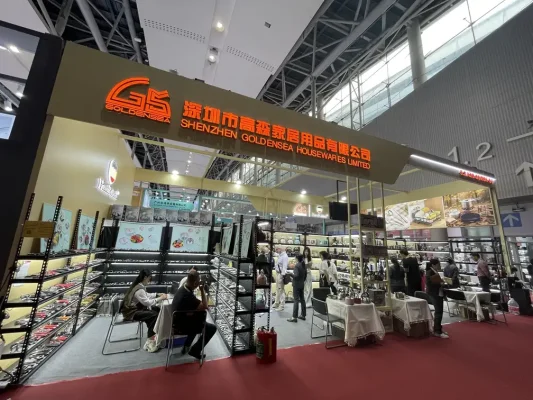
Goldensea / GS Kitchenware operates its cookware manufacturing base in Baimiao Industrial Zone, Siqian Town, Xinhui District, Jiangmen City, Guangdong. The company focuses on tri-ply stainless steel cookware for global B2B buyers, including private label brands, importers, wholesalers, distributors, retailers, and HoReCa procurement teams.
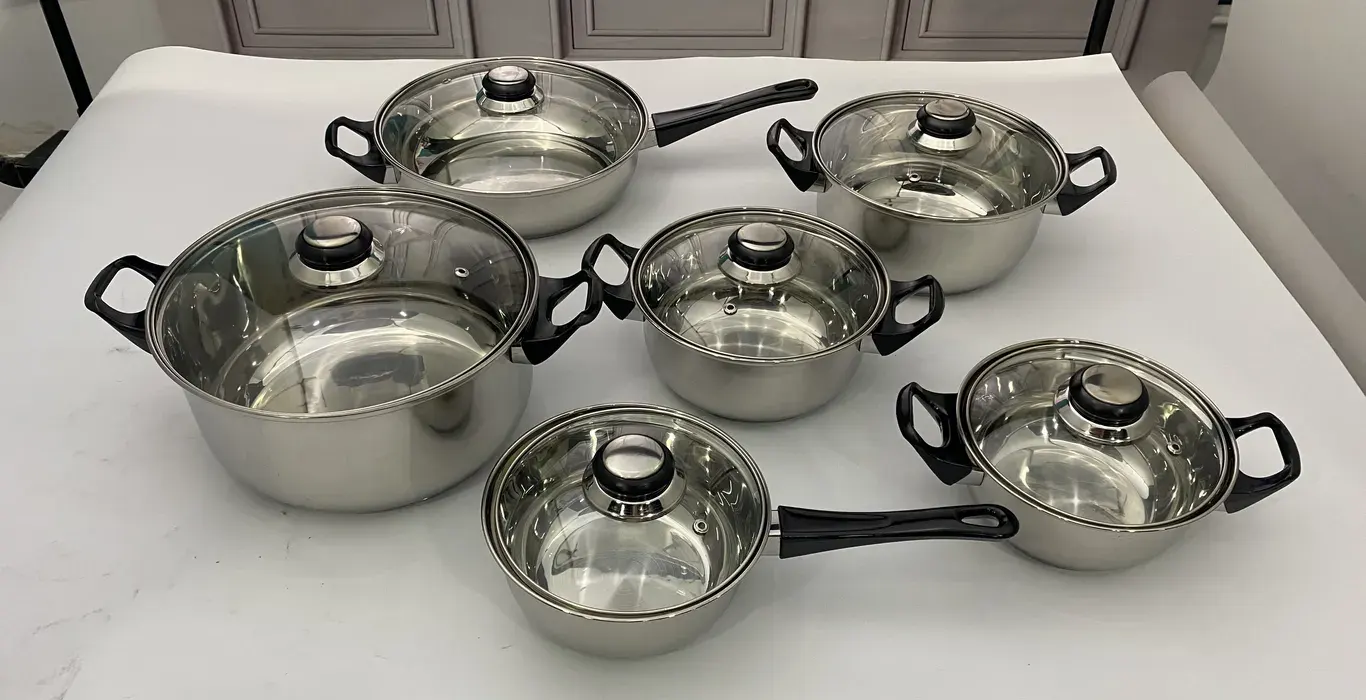
Established in 2005, Goldensea supports OEM/ODM cookware projects through material selection, cookware set planning, handle and lid options, surface finish choices, logo application, packaging customization, sample development, and bulk production coordination. Buyers planning a custom product line can review the company’s OEM/ODM custom cookware solutions or learn more about its background on the About Us page.
RFQ Checklist for Jiangmen Stainless Steel Cookware Projects
To get a useful quotation from a Jiangmen cookware factory, buyers should prepare more than a product name. A clear RFQ helps the supplier estimate material cost, tooling needs, packaging cost, sample feasibility, and production schedule.
- Target market and sales channel: retail, wholesale, HoReCa, e-commerce, distributor, or private label brand.
- Cookware type: frypan, saucepan, casserole, stock pot, steamer, cookware set, or custom shape.
- Material structure: tri-ply SS304/Al/SS430, encapsulated bottom, single stainless steel, or another specification.
- Size and thickness: diameter, height, capacity, total thickness, weight target, and tolerance.
- Surface finish: mirror, satin, brushed, hammered, color coating, or mixed finish.
- Handle and lid: riveted, welded, hollow, cast, soft-touch, glass lid, stainless steel lid, or detachable option.
- Logo and branding: bottom stamp, laser etching, handle mark, carton design, or retail box artwork.
- Packaging: color box, mailer box, master carton, drop-test expectations, barcode, manual, and warning labels.
- Compliance documents: food-contact test report requirements and target market document expectations.
- Quantity and timeline: sample quantity, bulk order quantity, expected shipment window, and repeat order plan.
For a deeper quality review workflow, buyers can also read Goldensea’s guide on checking stainless steel cookware quality before bulk order.
Common Sourcing Mistakes Buyers Should Avoid
- Only asking for the lowest price. Stainless steel grade, thickness, polishing level, packaging, and inspection standards all affect cost.
- Using vague product names. “Stainless steel pot” is not enough. Specify structure, size, thickness, handle, lid, finish, and packaging.
- Assuming Jiangmen location means equal capability. The regional cluster helps, but individual factories still differ in equipment, management, and product focus.
- Approving a sample without recording details. Keep approved sample photos, measurements, weight, material notes, packaging details, and written confirmation.
- Leaving packaging until the end. Retail box artwork, carton strength, barcode labels, and manual language can delay shipment if not confirmed early.
Useful Jiangmen Government References
For buyers researching the regional manufacturing background, these Jiangmen government pages provide context on local industrial clusters, Xinhui development, and Siqian manufacturing:
For broader regional supplier comparison, buyers can also review Goldensea's open-source China cookware industrial clusters research.
- Jiangmen metal products chain-based industrial cluster reference
- Xinhui and Siqian advanced manufacturing development reference
- Siqian hardware and stainless steel products manufacturing reference
Frequently Asked Questions
Is Jiangmen a good place to source stainless steel cookware?
Yes, Jiangmen is a practical sourcing region for stainless steel cookware, especially when buyers need metal forming, polishing, assembly, packaging, and export support. Buyers should still verify each supplier’s product specialization, factory address, sample consistency, and quality control process before placing a bulk order.
What cookware products are Jiangmen factories commonly suited for?
Jiangmen factories are commonly suited for stainless steel pots, pans, casseroles, saucepans, cookware sets, and tri-ply stainless steel cookware projects. The right fit depends on the factory’s equipment, material sourcing, engineering support, MOQ, and experience with the buyer’s target market.
How can buyers verify a real cookware factory in Jiangmen?
Buyers should request a business license, full factory address, production site photos or video, sample room images, product catalog, and quality control records. For larger orders, a third-party factory audit or on-site visit can help confirm production capacity and management consistency.
What should buyers confirm for tri-ply cookware from Jiangmen?
Buyers should confirm whether the cookware is fully clad tri-ply, the SS304/Al/SS430 material structure, total thickness, base flatness, rim treatment, handle assembly, lid fit, induction performance, and approved sample specifications. These details affect cost, performance, and return risk.
Can Goldensea support private label tri-ply cookware projects?
Yes. Goldensea supports private label tri-ply stainless steel cookware projects with options for cookware set planning, logo application, handle and lid choices, surface finish, packaging customization, samples, and OEM/ODM project discussion. Buyers can contact Goldensea with target size, quantity, market, packaging, and compliance requirements.
Plan Your Jiangmen Stainless Steel Cookware Project
Jiangmen is a practical place to consider when a stainless steel cookware project needs repeatable quality, realistic customization, and export-oriented communication. The right supplier should help buyers move from a clear RFQ to sample confirmation, quality control, packaging approval, and bulk shipment with the main specifications documented.
Send Goldensea your target cookware type, material structure, size, quantity, market, packaging plan, and certification requirements to request a quotation, catalog, specification sheet, or OEM/ODM project discussion.

Mei is a dedicated Sales Specialist at Goldensea with over 10 years of experience in the B2B kitchenware industry. Possessing deep technical knowledge of manufacturing and sourcing, she has successfully helped countless global clients navigate complex supply chain challenges and find the perfect culinary solutions.
Connect with Mei on LinkedIn or reach out for professional kitchenware advice.