
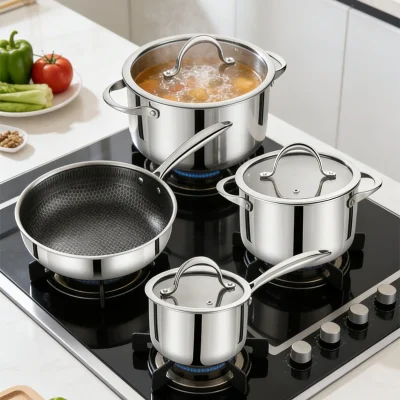
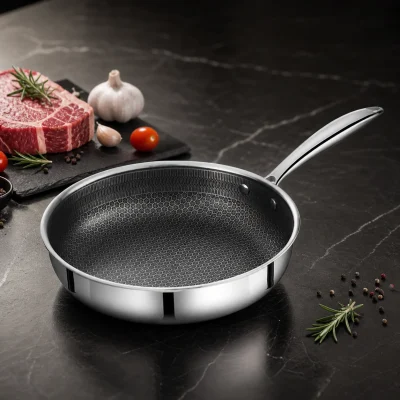
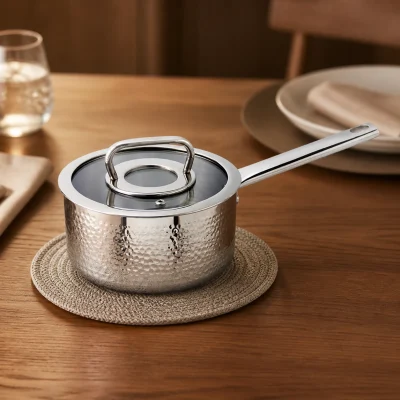
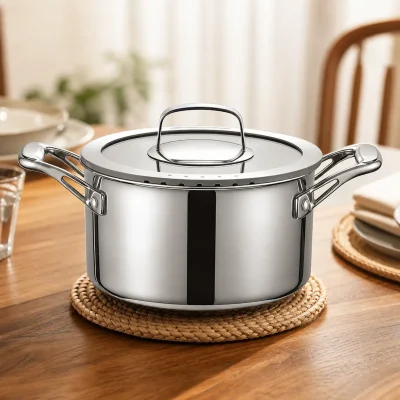
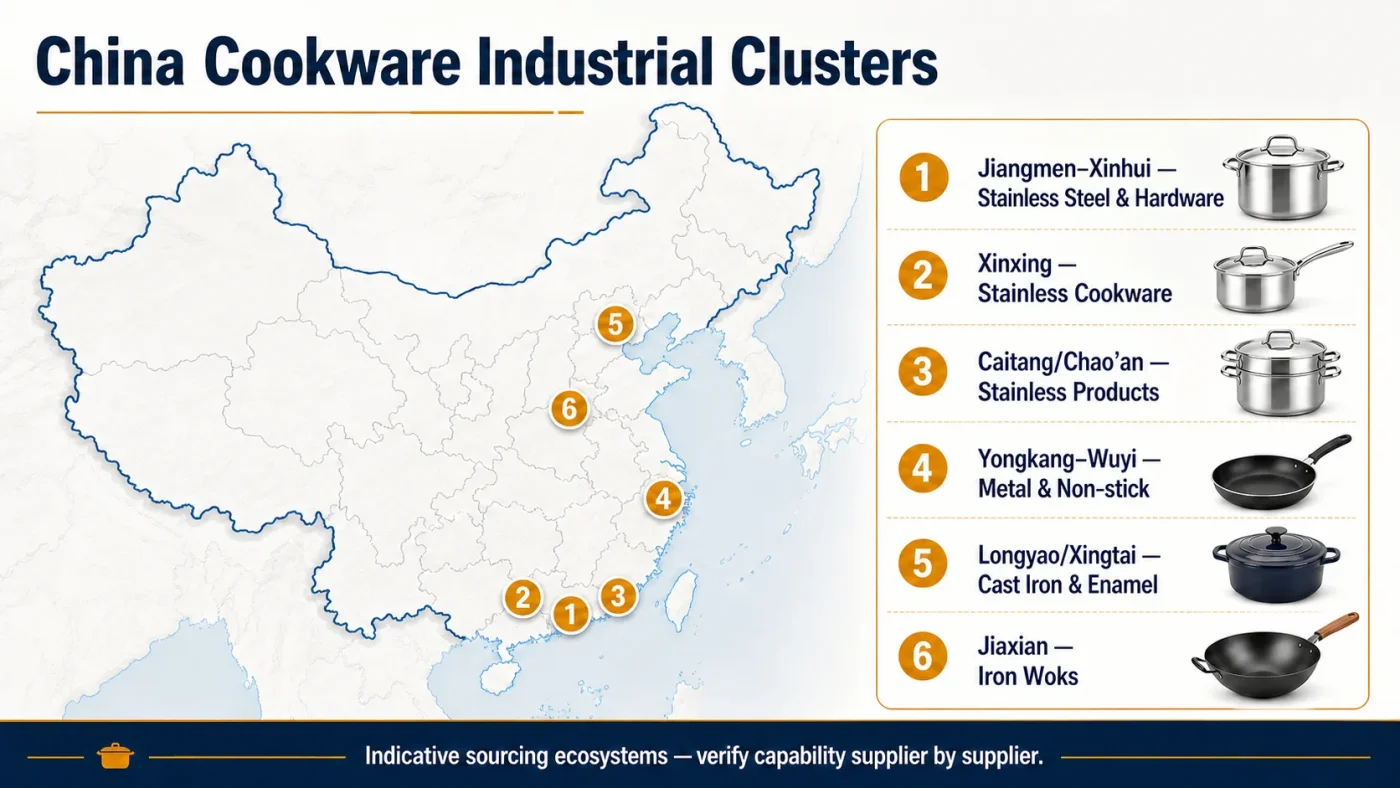
Searching for cookware manufacturers in China often produces a long, undifferentiated supplier list. In practice, China’s cookware industry is organized around several overlapping manufacturing ecosystems. Each brings together different combinations of metalworking skills, component suppliers, finishing processes, testing services, labor, logistics and export support.
For an overseas importer, private-label brand, wholesaler, retailer or HoReCa procurement team, the useful question is not “Which Chinese city is best for cookware?” It is “Which regional ecosystem is the most sensible place to start for this product architecture and process?” This overview maps six important China cookware industrial clusters and explains what buyers must still verify at factory and SKU level. For more sourcing research, visit our Supplier & Market Research center.
Key Takeaways
- China’s cookware supply base is a network of overlapping regional ecosystems, not a simple province-by-product map.
- Jiangmen–Xinhui, Xinxing and Caitang/Chao’an are important stainless-steel ecosystems; Yongkang–Wuyi is strong in broader metal cookware; Longyao/Xingtai and Jiaxian serve different cast-iron and wok projects.
- A cluster address helps buyers build a shortlist, but material, process ownership, quality, compliance, capacity, price and MOQ still require factory- and SKU-level verification.
How to Read the Cluster Map
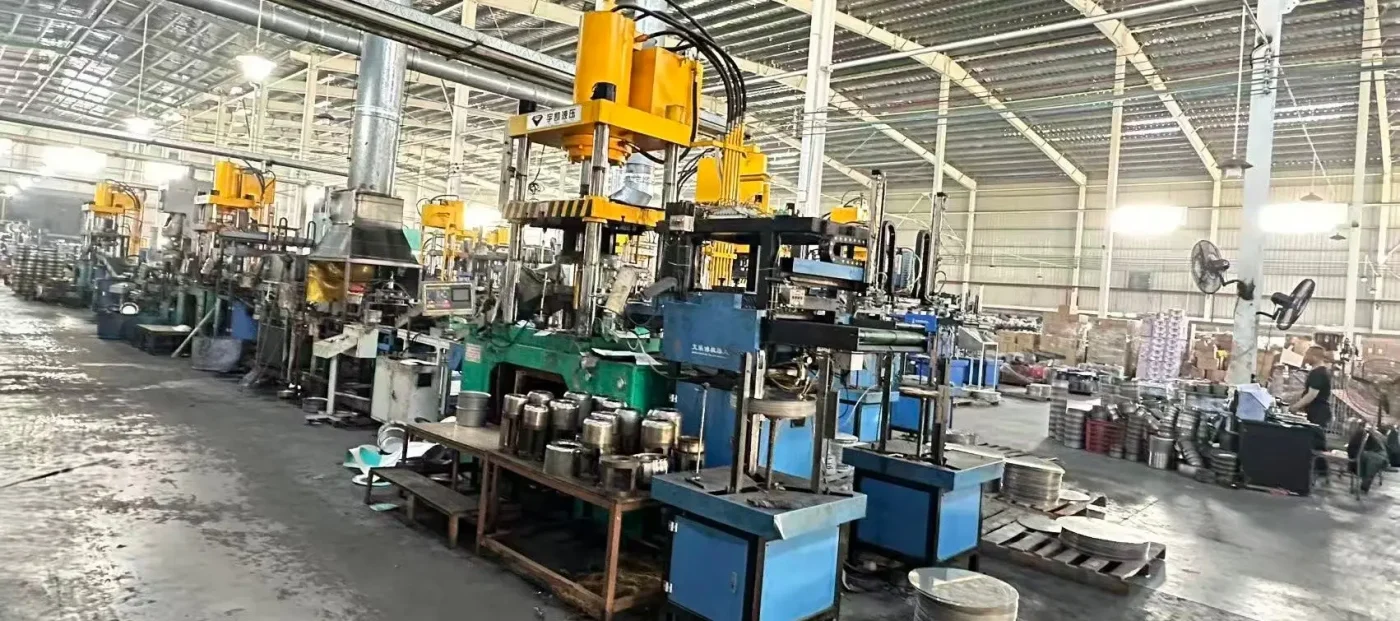
An industrial cluster concentrates manufacturers, component makers, processors, service providers and experienced workers in one area. That can make supplier research more efficient, but it is not a quality grade or certification. Two factories in the same town may use different materials, own different equipment and subcontract different processes. Before treating a supplier as a factory, confirm the registered entity, physical site, critical production steps and control of samples and bulk orders. Our cookware factory vs. trading company guide provides a practical verification framework.
Quick Comparison of Six China Cookware Industrial Clusters
| Regional ecosystem | Useful first-search product fit | What buyers must still verify |
|---|---|---|
| Jiangmen–Xinhui, Guangdong | Stainless-steel cookware; selected fully clad and multi-ply projects | Layer stack, bonding route, thickness, rim, flatness and induction performance |
| Xinxing, Yunfu, Guangdong | Stainless pots, steamers, soup pots, composite-bottom cookware and tableware families | Steel grade, gauge, base design, finish, welds and product-specific reports |
| Caitang/Chao’an, Guangdong | Broad conventional stainless cookware, dining and kitchen articles | Actual production site, material identity, process control, traceability and export documents |
| Yongkang–Wuyi, Zhejiang | Non-stick, aluminum and iron pans, pressure cookers, enamel pots and related containers | Substrate, forming route, coating system, curing, performance tests and restricted substances |
| Longyao/Xingtai and wider Hebei | Cast-iron and enameled cast-iron casseroles, skillets, grills and bakeware | Foundry defects, machining, enamel system, firing, thermal shock and heavy-product packaging |
| Jiaxian, Henan | High-volume traditional iron woks and related iron cookware | Material and process definition, deformation, handle attachment, rust protection and packaging |
This is a starting map, not a city ranking. Buyers comparing Guangdong and Zhejiang in more detail can also read Guangdong vs Zhejiang Cookware Manufacturers.
Six Cookware Manufacturing Ecosystems Buyers Should Know
1. Jiangmen–Xinhui, Guangdong: Stainless-Steel and Hardware Ecosystem
Xinhui District, particularly Siqian Town and Huicheng Subdistrict, has a documented stainless-steel and hardware-products cluster. A Jiangmen government report describes a local chain covering raw-material processing and supply, finished products, components and sales. Xinhui has also received national and provincial recognition as a stainless-steel-products production and foreign-trade upgrading base.
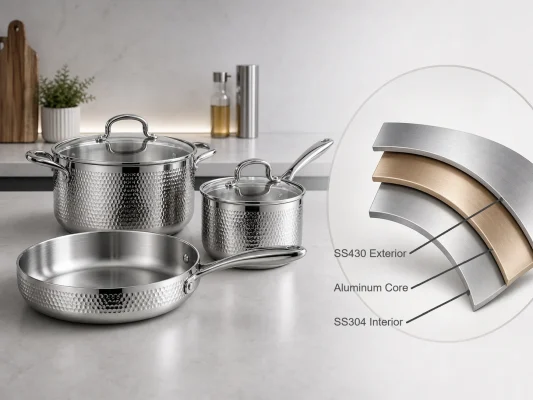
For fully clad or multi-ply stainless-steel projects, Jiangmen–Xinhui is a sensible region to investigate, but the capability remains factory-specific. Ask how clad material is sourced or produced, confirm the layer stack and measurement points, and review flatness, rim finishing, handle attachment and induction performance. GS Kitchenware’s Jiangmen location and tri-ply focus make this our local manufacturing context; our Jiangmen stainless steel cookware guide provides more detailed RFQ questions.
2. Xinxing, Yunfu, Guangdong: Stainless Cookware and Tableware
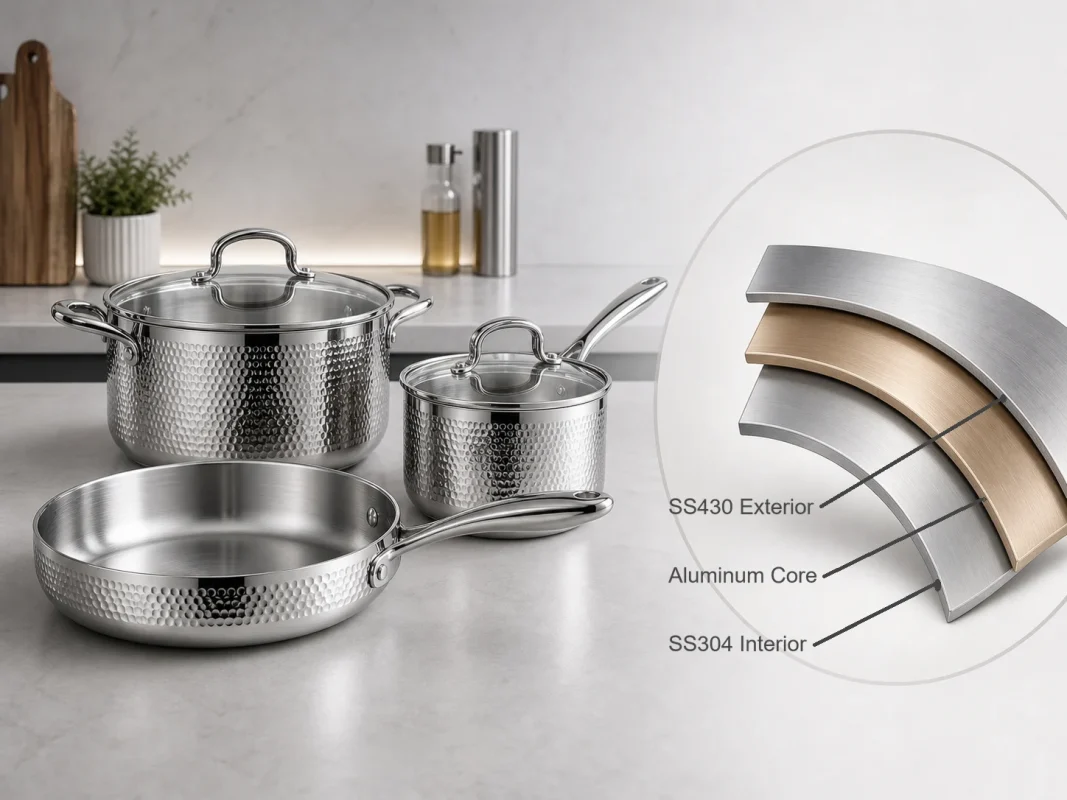
Xinxing is a separate stainless-steel cookware and tableware ecosystem rather than an extension of Jiangmen. The Yunfu government identifies the county as a center for stainless-steel cookware and tableware, while a 2023 Guangdong tax authority report cited more than 100 stainless-steel-products and supporting enterprises.
The area is worth comparing for stainless-steel pots, steamers, soup pots, composite-bottom cookware and related tableware. An RFQ should define grade, gauge, body and base construction, induction design, finish, lid, handle, testing method and packaging rather than relying on the cluster’s reputation.
3. Caitang/Chao’an, Chaozhou: Broad Stainless-Steel Products Ecosystem
Caitang in Chao’an District has a broad stainless-steel-products ecosystem covering cookware, steamers, soup pots, bowls, chopsticks and other dining or kitchen articles. The Chaozhou government reported about RMB 22.18 billion in town-wide industrial output for Caitang in 2024 and highlighted automation, digital management and higher-value development. The figure covers the town’s industry, not cookware alone.
Caitang offers a wide supplier pool for conventional stainless cookware and adjacent product families, so filtering matters. Confirm the production site, steel grade, thickness tolerances, welding and handle integrity, surface finish, food-contact evidence, traceability and export documents. Avoid unsupported regional generalizations about 201 stainless steel, thin gauges or audit performance.
4. Yongkang–Wuyi, Zhejiang: Metal Cookware and Food-Contact Products
Yongkang and Wuyi form a broad hardware and food-contact product manufacturing belt. An official Wuyi development-zone profile identifies stainless vacuum containers, non-stick pans, pressure cookers and enamel pots, supported by product design, parts processing, private-label manufacturing, packaging, sales and logistics.
According to the Jinhua market-regulation system, Yongkang introduced China’s first standards system for daily-use cookware hardware in 2025. For coated-pan projects, specify the substrate, forming route, coating supplier and system, dry-film thickness, curing profile, performance tests and food-contact documentation. Ningbo may serve as a logistics gateway, but the available evidence does not place it inside this manufacturing cluster.
5. Longyao/Xingtai and Wider Hebei: Cast Iron and Enameled Cast Iron
Longyao County in Xingtai sits within a wider Hebei casting ecosystem. A 2025 Hebei industry report describes a green and smart casting cluster that includes cast-iron cookware alongside valves, auto parts and fasteners. Its overall capacity and revenue figures should not be treated as cookware-only data.
The area is a logical place to investigate cast-iron casseroles, skillets, grills, bakeware and enameled products. Factory qualification should cover melt chemistry, casting method, porosity and defect criteria, machining, enamel system, firing parameters, adhesion, appearance limits, food-contact testing, thermal shock, weight tolerance and protective packaging.
6. Jiaxian, Henan: Specialized Iron-Wok Cluster
Jiaxian in Pingdingshan is a distinct iron-wok cluster. A 2024 local-government report cited 69 iron-wok and supporting enterprises in the Guangtian Modern Kitchenware Industrial Park, annual production of more than 70 million cast-iron woks and output exceeding RMB 5 billion. These are dated local figures, not national totals.
Jiaxian fits high-volume traditional iron-wok briefs, while Hebei’s enameled cast-iron ecosystem serves a different process and product category. Define the metal and forming or casting route, heat treatment, nitriding or seasoning where applicable, dimensional tolerances, deformation criteria, handle attachment, rust protection and shipment packaging before comparing quotations.
Choose the Cluster by Product Architecture, Not City Reputation
- Fully clad or multi-ply stainless: begin with Jiangmen–Xinhui and compare selected Xinxing suppliers, then verify the material stack and bonding route.
- Stainless pots, steamers and cookware/tableware families: investigate Xinxing, Jiangmen–Xinhui and Caitang using the same written specification.
- Non-stick, aluminum, iron, pressure-cooker or enamel-pot projects: investigate Yongkang–Wuyi and make coating or substrate requirements measurable.
- Enameled cast iron: investigate Longyao/Xingtai and the wider Hebei casting belt with foundry and enamel controls in the audit plan.
- Traditional iron woks: investigate Jiaxian, then compare suppliers only after material and process definitions are aligned.
Always request like-for-like quotations after the product specification is fixed. A lower quotation from a different region may reflect a different gauge, coating, process, component, packaging or inspection scope rather than a genuine regional cost advantage.
Five Questions to Ask Before Sending an RFQ
1. What is the exact product architecture?
Define whether the product is fully clad, impact bonded, cast, stamped, spun, forged, coated, seasoned or enameled. Include size, thickness, target weight, handle, lid and induction requirements.
2. Which material, finish and test standard apply?
State the food-contact layer, core or substrate, exterior, coating or enamel system, finish and destination market. Request reports that match the material, product and intended use.
3. Does the supplier control the critical process?
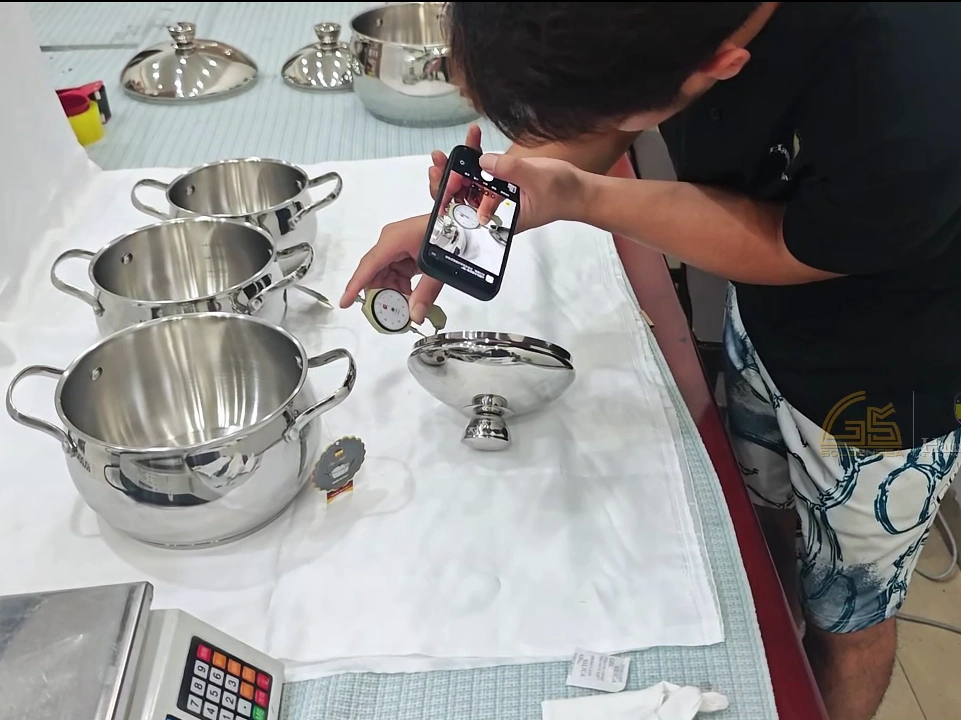
Identify which steps are completed on site and which are subcontracted. Clarify traceability, incoming inspection and responsibility for corrective action.
4. What evidence will approve the sample and bulk order?
Use a numbered golden sample, written specification, test plan, inspection criteria and packaging approval. Record measurement points, tolerances and permitted appearance limits.
5. Which commercial details must be quoted against the same specification?
Request MOQ, tooling, sample terms, production lead time, packaging, inspection, payment and shipment conditions against one controlled specification.
Why Compliance Evidence Belongs in the First RFQ
Target-market requirements apply to the finished product and its intended use, not to a city name. The European Commission treats kitchenware and tableware as food-contact materials subject to general safety and good-manufacturing-practice principles. The U.S. FDA likewise includes cookware in its food-contact framework.
Build the document list into the RFQ, then confirm it against the actual material, coating or enamel system, test method and destination market. Do not rely on phrases such as “FDA-approved cookware,” “LFGB-certified factory” or “export-quality region” without product-specific evidence. Our Certification & Quality Control resources explain how to review reports and pre-shipment controls.
Where GS Kitchenware Fits
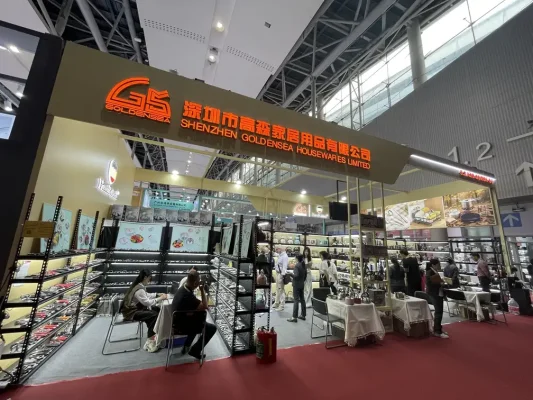
Goldensea / GS Kitchenware is based in Jiangmen’s Xinhui District and specializes in tri-ply stainless steel cookware for global B2B buyers. Our local address provides relevant Jiangmen manufacturing context, but our material structures, equipment, samples, quality records and compliance support must still be evaluated as factory-specific evidence.
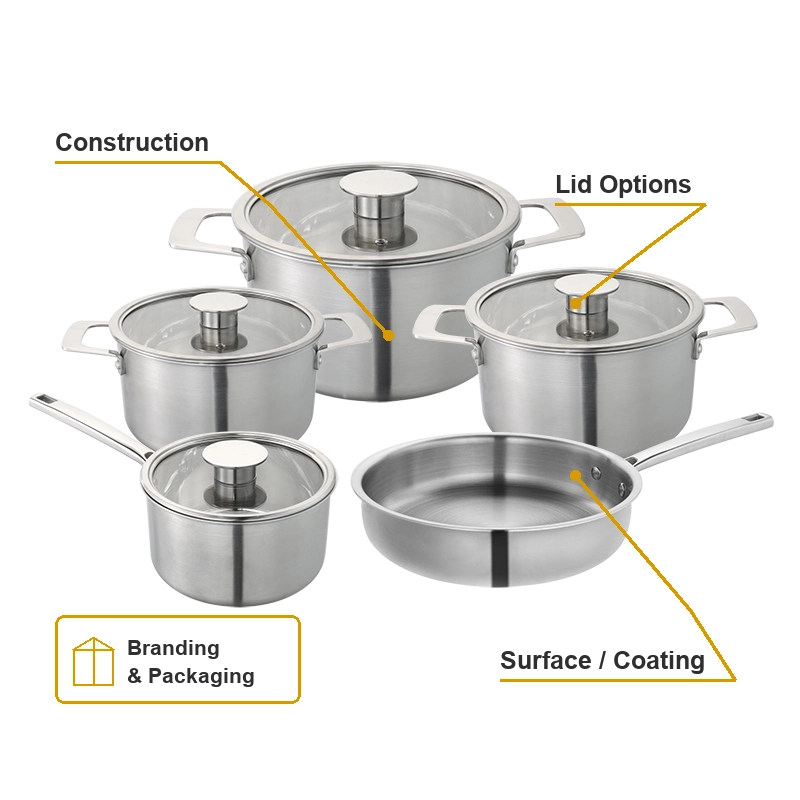
For private-label projects, buyers can discuss construction, thickness, size, handle, lid, surface finish, logo and packaging through our OEM/ODM custom cookware process. The regional cluster is the starting filter; the approved specification and controlled production process determine whether a supplier fits the project.
Frequently Asked Questions
What are the main cookware manufacturing clusters in China?
Six useful ecosystems for an initial B2B search are Jiangmen–Xinhui, Xinxing and Caitang/Chao’an in Guangdong; Yongkang–Wuyi in Zhejiang; Longyao/Xingtai and the wider Hebei casting belt; and Jiaxian in Henan. They overlap, so the product architecture should guide the shortlist.
Which Chinese cluster is best for stainless steel cookware?
There is no universal best region. Jiangmen–Xinhui, Xinxing and Caitang all have documented stainless-steel-products ecosystems. Fully clad or multi-ply capability, material control, finish, testing and export support must be compared factory by factory.
Where are non-stick cookware manufacturers concentrated in China?
Yongkang–Wuyi is a practical first-search belt for non-stick pans and related metal cookware. Buyers still need to verify the substrate, coating system, curing controls, performance tests and food-contact documentation for the specific SKU.
Where should buyers investigate cast-iron cookware suppliers?
Longyao/Xingtai and the wider Hebei casting belt are logical for cast iron and enameled cast iron. Jiaxian is a separate specialized cluster for traditional iron woks. Compare the regions only after confirming that the product and process are actually comparable.
Does an industrial-cluster address guarantee quality or compliance?
No. A cluster can indicate access to skills, components and supporting services, but it does not prove a factory’s material, process ownership, test reports, capacity or compliance. Audit the supplier, approve samples and define inspection evidence before bulk production.
Selected Official Sources
- Jiangmen Government: Xinhui stainless-steel and hardware base
- China National Hardware Association: Xinhui production-base review
- Yunfu Government: Xinxing stainless-steel industry
- Chaozhou Government: Caitang industrial development
- Zhejiang Department of Commerce: Wuyi development-zone profile
- Jinhua Market Regulation: Yongkang pot-utensil standards system
- Hebei Department of Industry and Information Technology: Longyao casting cluster
- Pingdingshan government-affiliated report: Jiaxian iron-wok industry
- European Commission: Food Contact Materials
- U.S. FDA: Food-contact substances and cookware
Use the Map to Shortlist, Then Validate Factory by Factory
Start with the ecosystem that matches the product architecture, then verify each supplier’s legal entity, production site, critical processes, materials, samples, reports, inspection criteria and delivery controls. Planning a tri-ply stainless steel cookware project? Send Goldensea your target construction, sizes, quantity, destination market and packaging requirements, then contact GS Kitchenware to discuss samples, a specification sheet and an OEM/ODM quotation.

Shiva Yang is a Sales Manager at Goldensea, supporting global B2B buyers with tri-ply stainless steel cookware sourcing, private-label programs, and OEM/ODM project coordination.
Connect with Shiva on LinkedIn or contact Goldensea to discuss a cookware project.