
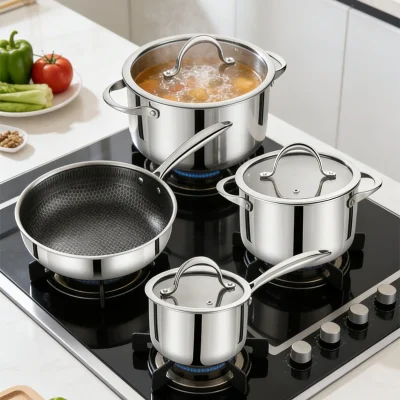
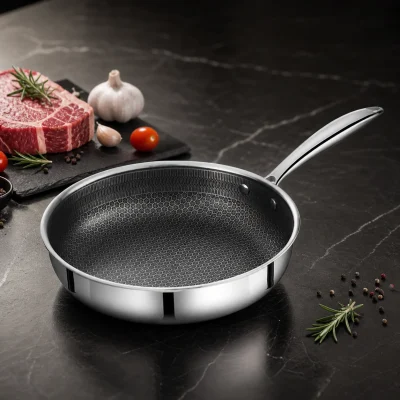
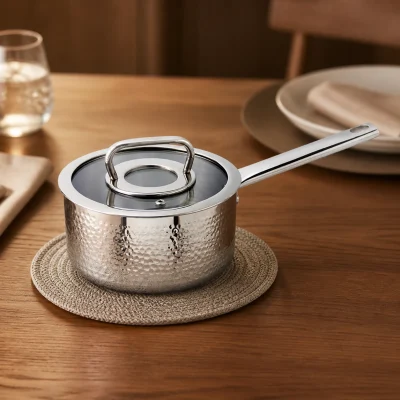
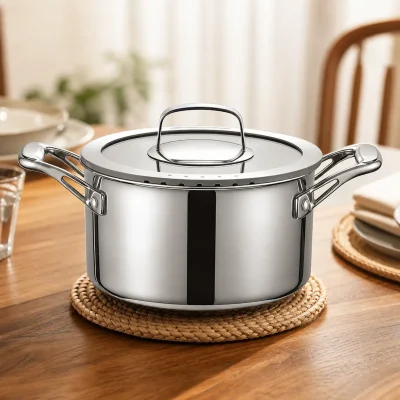
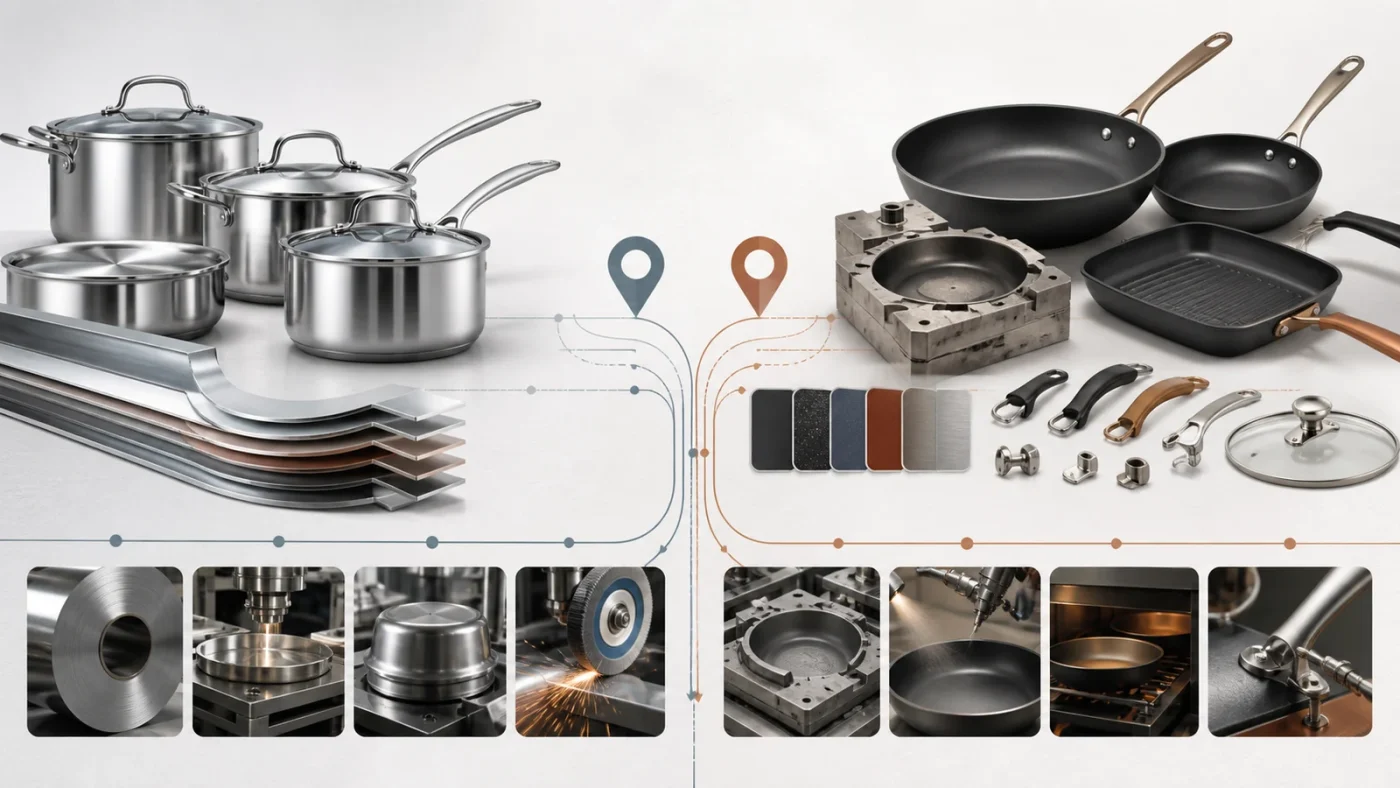
Guangdong vs Zhejiang cookware manufacturers is not a contest between a “premium province” and a “low-cost province.” It is a way for importers, private label brands, wholesalers, retailers and HoReCa buyers to build a more focused initial supplier list. Guangdong—especially Jiangmen, Xinhui and Siqian—is a logical starting point for stainless steel and fully clad tri-ply programs. Zhejiang—especially Yongkang and Wuyi—is a practical starting point for non-stick and multi-material projects that depend on a broader hardware and component network.
Neither location proves that a factory owns the required equipment, controls material specifications and traceability, has capacity in your order window or holds documents that cover your SKU. The final decision should be made at factory, process and product level.
Key Takeaways
- Jiangmen, Xinhui and Siqian should enter the first shortlist for many stainless steel and fully clad tri-ply cookware projects.
- Yongkang and Wuyi provide a broad search pool for aluminum or iron non-stick cookware, different forming routes, components and multi-category development.
- Existing tooling, shared handles and lids, coating changeover quantities and packaging requirements often affect MOQ more than the province in a supplier’s address.
- A mixed cookware line may be safer when divided between a stainless specialist and a non-stick specialist.
- Compliance follows the product’s material stack, intended use and destination market—not the manufacturing province.
Quick Verdict: Guangdong or Zhejiang?
| Project factor | Guangdong / Jiangmen | Zhejiang / Yongkang-Wuyi | Still verify |
|---|---|---|---|
| Best initial fit | Fully clad tri-ply, single-wall or encapsulated-bottom stainless steel cookware, coordinated sets, steamers and polished metalware | Aluminum or iron non-stick, multiple materials, colors, components and adjacent kitchenware | Actual product line, equipment and recent production cases |
| Process focus | Metal forming, rim work, welding or riveting, mirror/satin/hammered finishes and set consistency | Pressed, forged or die-cast bodies, pretreatment, coating, curing, induction bases and component integration | Which processes are in-house and which are outsourced |
| SKU range | Strong fit for related stainless cookware families | Broad ecosystem for different materials, hardware and price bands | Tooling, changeover cost and QC responsibility for every SKU |
| MOQ and scale | May be flexible when existing tooling and components fit | May offer many options, but coating, molding and packaging minimums still apply | The MOQ breakdown—not a regional average |
| Compliance | Determined by materials, coatings, intended use, supporting documents and destination market | Report scope, applicant, manufacturer, model and test date | |
China cookware manufacturing regions are geographic supply networks for materials, forming, finishing, components, tooling, testing, packaging and export services. A cluster can improve the probability of finding a suitable process partner. It cannot confirm the capability of every company registered there. Buyers should use regional knowledge to shorten the search, then use specifications, samples, audits and production records to select the factory.
Before comparing quotations, normalize the product definition. Two pans that look similar may use different substrates, layer stacks, body gauges, handles, lids, coatings, induction structures and packaging. Ask each supplier to quote the same specification and identify assumptions or exclusions. A useful regional comparison starts only after the target market, sales channel, material, construction, sizes, performance requirements and expected quantity per SKU are clear.
Guangdong Cookware Manufacturing: Jiangmen, Xinhui and Siqian
Jiangmen cookware manufacturers operate within Guangdong’s wider metal-products and export-manufacturing network. Xinhui’s hardware and stainless steel industry has developed since the 1970s, and Siqian is one of its important production centers. A Jiangmen government industry reference reported 193 hardware and stainless steel products enterprises in Xinhui in 2019, including 72 above the designated size. Those dated figures demonstrate an established cluster; they do not describe every supplier’s 2026 equipment or capacity.
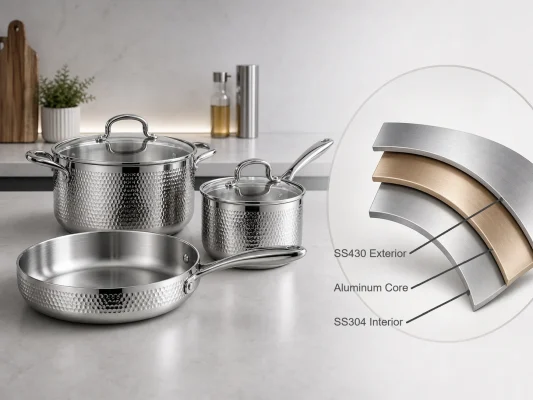
The area is a practical starting point for fully clad tri-ply cookware, single-wall or encapsulated-bottom stainless steel cookware, coordinated cookware sets, steamers and projects in which visible finish is part of the retail value. Mirror, satin and hammered surfaces, rim finishing, internal capacity markings, handle assembly, lid fit and packaging presentation all need repeatable standards. Buyers should still confirm the source of the clad sheet or coil, layer specification, forming route, total thickness, base stability, polishing limits and approved golden sample.
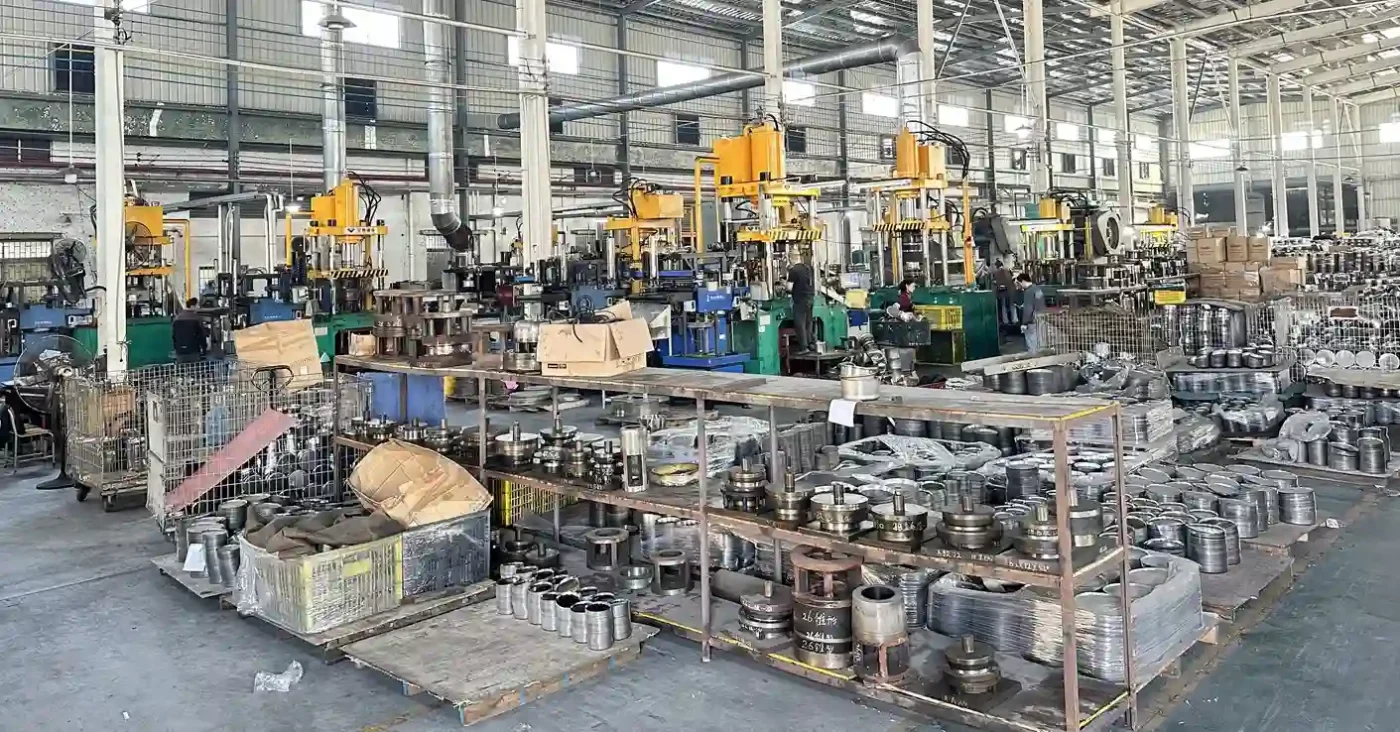
A 2026 high-performance composite-material and cookware project in Jiangmen is evidence of continued regional investment, but it had only begun construction at the time of this research. Planned output must not be treated as operational capacity. Buyers who have already selected a stainless or tri-ply route can use the more detailed Jiangmen stainless steel cookware guide for factory-level questions.
Zhejiang Cookware Manufacturing: Yongkang and Wuyi
Yongkang cookware manufacturers sit inside a broad hardware ecosystem rather than a single-material cookware cluster. Historical official records cover aluminum, iron and die-cast non-stick cookware, stainless products, insulated drinkware and small appliances. This makes Yongkang a useful first search pool when a project needs several body-forming routes, handles, lids, molds, colors, hardware parts or adjacent kitchen products. It does not mean that every Yongkang supplier owns casting, coating and assembly lines.
The regional advantage also includes shared quality infrastructure. In 2025, Zhejiang market-regulation authorities reported that Yongkang had issued a cookware standards system covering six sub-systems, 16 professional modules and 265 national, industry and group standards. The framework covers components, products, production, testing, packaging and recycling, with room for emerging products. This Yongkang cookware standards reference shows public infrastructure; a local address does not prove that one supplier implements every standard.
Wuyi is connected to Yongkang through the wider Yongkang-Wuyi-Jinyun hardware network. Official 2021 data described Wuyi as an export-oriented, multi-category kitchenware base with 135 enterprises in the base and more than 300 supporting producers. Its products included pressure cookers, frying pans, vacuum-insulated drinkware, kettles, coffee ware, stainless kitchenware and barbecue equipment. The Wuyi Yearbook record therefore does not support the stereotype that Wuyi only makes aluminum non-stick pans.
This breadth can improve access to molds, handles, lids, metal parts, plastic or bakelite components, packaging and testing support. It can also make the supply chain harder to see. A supplier with a wide catalog may coordinate several specialized factories rather than run every process. Buyers should request a process map and name the responsible production site for each important SKU.
For a non-stick project, verify the substrate and whether the body is pressed, forged, die-cast or made by another route. Request the exact coating system and technical data, pretreatment controls, application method, curing records, adhesion and abrasion criteria, approved boundary samples for acceptable defects and food-contact documentation. For induction-ready aluminum cookware, also confirm the base structure, flatness and stability after heat cycling.
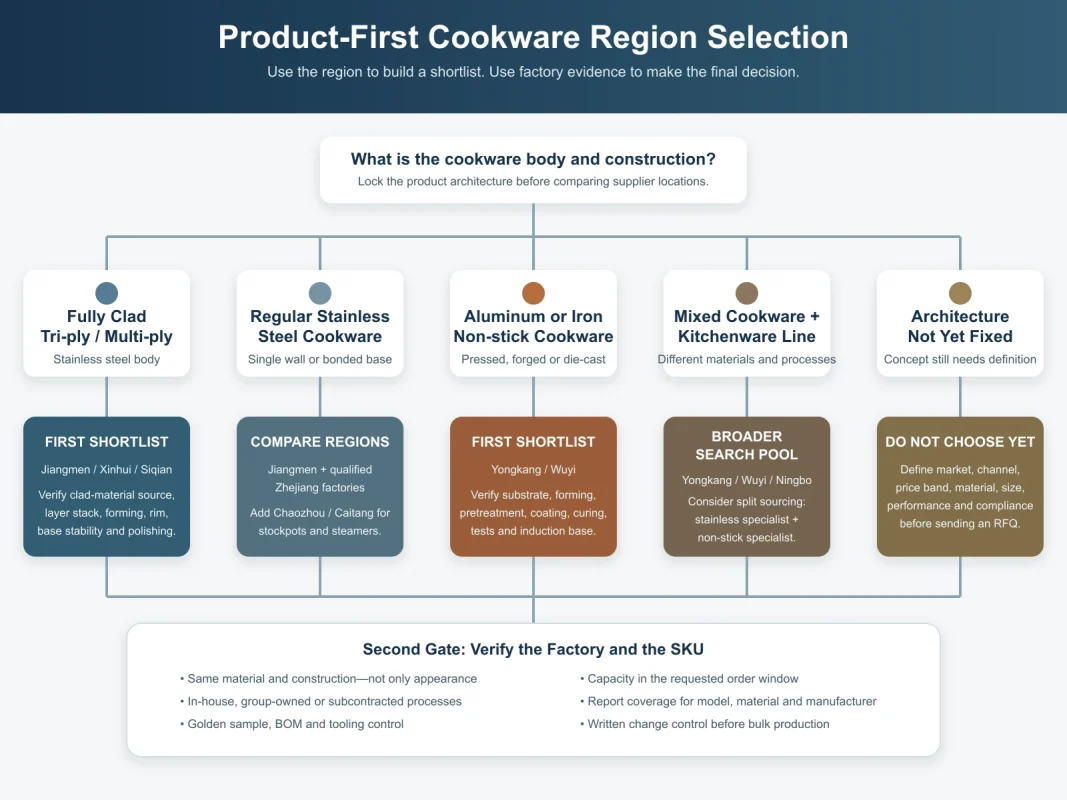
Guangdong vs Zhejiang by Product Type
| Product architecture | Suggested first search | Reason | Critical checks |
|---|---|---|---|
| Fully clad tri-ply or multi-ply stainless steel | Jiangmen / Xinhui / Siqian | Relevant metal-forming, finishing, component and export coordination | Clad source, layer stack, thickness, rim, base stability, induction and polishing |
| Single-wall or encapsulated-bottom stainless steel | Compare Jiangmen with qualified Zhejiang factories | Both regions may serve different structures and price bands | Material grade, bonded-base construction, welding, weight and heat-cycle tests |
| Stockpots, steamers and broader stainless metalware | Compare Jiangmen with Chaozhou/Caitang | Both have relevant stainless steel products networks | Grade, thickness, rim, welds, handles, finish and packing |
| Aluminum or iron non-stick cookware | Yongkang / Wuyi; add Ningbo when relevant | Broad forming, coating, component and hardware ecosystem | Substrate, forming, pretreatment, coating, curing, durability and induction base |
| Mixed cookware, kitchenware and small appliances | Yongkang / Wuyi / Ningbo or split sourcing | Wider first search pool for different processes | One QC owner, consistent documents, consolidated packing and claims responsibility |
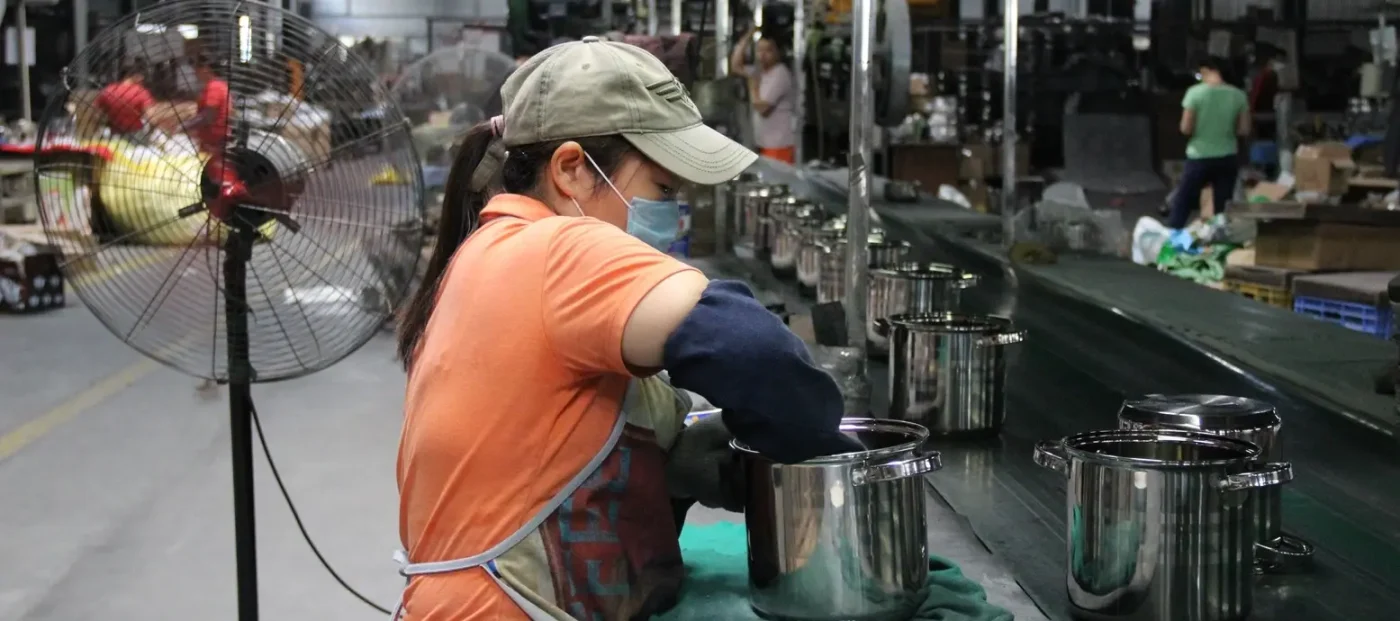
The best region is usually the one that supports the project’s bottleneck process. In tri-ply cookware, the bottleneck may be clad-material control, forming, rim treatment, base stability or polishing consistency. In non-stick cookware, it may be body forming, pretreatment, coating application, curing or durability testing. For e-commerce, the bottleneck may instead be cosmetic-defect control, individual shipping packaging and repeat-order consistency.
For a mixed line, convenience should not override technical fit. A stainless specialist may control tri-ply forming and polishing well but buy coated aluminum pans from a partner. A non-stick specialist may have strong coating and curing controls but outsource fully clad cookware. Split sourcing can reduce process risk when specifications, inspection rules, packaging language, shipment coordination and claims responsibility are documented across both suppliers.
Which Region Fits Your Sales Channel and Project Size?
Premium private label and department-store programs should emphasize material evidence, finish limits, weight, handle and lid details, gift-box presentation and bulk consistency. Jiangmen is a natural first search for tri-ply programs, while Yongkang and Wuyi are natural starting points for coated non-stick, multi-material and component-intensive projects.
E-commerce brands should choose by material and risk rather than a claim of regional low MOQ. Existing molds, shared components, single-unit packaging, replenishment capacity and defects likely to trigger customer returns may matter more. Mass retail should verify line speed, shifts, peak-season scheduling, audit requirements and backup plans. HoReCa buyers should prioritize durability, cleaning, handle strength, replacement continuity and stable repeat orders.
Large orders do not automatically belong in Zhejiang, and pilot orders do not automatically belong in Guangdong. The quantity per SKU, tooling status, coating changeover, component minimums, printed-packaging requirements and production schedule determine the economic fit.
For a pilot, ask which existing body molds, handles, lids and packaging structures can be shared without changing the product promise. For a repeat program, verify raw-material continuity, batch traceability, preventive maintenance, peak-season capacity and a procedure for approving substitutions. The right first order should test the factory’s ability to reproduce a documented specification, not only its willingness to accept a small quantity.
Other China Cookware Manufacturing Regions to Consider
Chaozhou/Caitang is a supplementary search region for stainless steel steamers, stockpots, tableware and broader household or commercial metalware. Buyers must still verify grade, thickness, structure, polish, welds and target-market documents. Ningbo is useful when cookware is part of a wider kitchenware, appliance, design or export-service program. Neither region should be reduced to one product label.
Why Factory Location Does Not Prove Capability
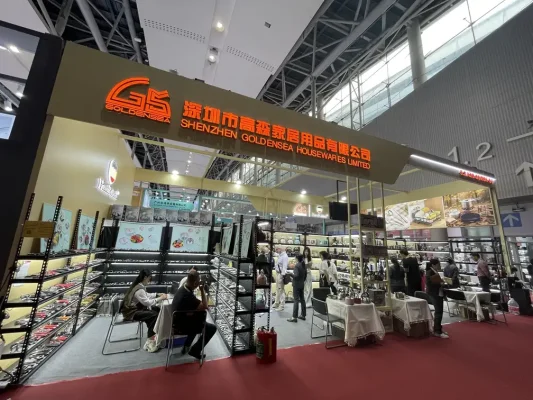
A supplier may have a sales office in Shenzhen, Guangzhou, Hangzhou, Yiwu or Ningbo while production occurs elsewhere. The registered company, showroom, contract party, payment recipient, export entity, plant and subcontractors may not be identical. A business scope that includes cookware manufacturing is not evidence of operating equipment or available capacity.
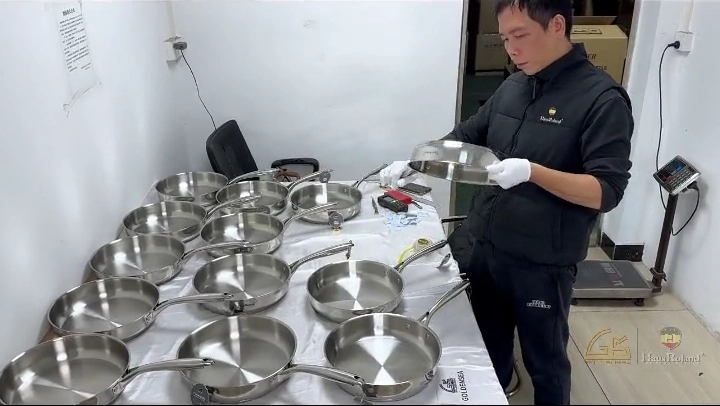
Factory Audit Questions Before You Choose
- Where is the actual production plant for this SKU, and which legal entity controls it?
- When did the supplier last produce the same material and construction, and can it show records from that production run?
- Which steps are performed in-house, handled by a group-owned facility, assigned to a fixed subcontractor or sourced case by case?
- Can the sample’s material, coating, handles, lids, logo and packaging be replicated in bulk?
- What existing molds and common components are available, and who owns new tooling?
- What creates the MOQ for this SKU: raw material, coating, components, packaging or line scheduling?
- Does each test report match the applicant, manufacturer, model, material, date and destination market?
- How are the golden sample, BOM, finish limits, packaging sample and later changes controlled?
Collect the answers as an evidence pack: legal entities, factory addresses and production responsibilities, process flow, equipment or current-production evidence, material declarations, coating documents where relevant, sample measurements, inspection records and packaging specifications. The purpose is not to request every possible certificate. It is to connect each commercial claim to the correct SKU, manufacturing entity and target market before the purchase order is released.
Food-contact compliance follows the material stack, coating, intended use and destination market. For example, EU kitchenware falls under the general food-contact materials framework and good manufacturing practice rules, while material-specific requirements may also apply. The European Commission food-contact materials overview is a useful starting point, but buyers still need product-specific review.
Common Regional Sourcing Mistakes
- Treating Guangdong as uniformly premium or Zhejiang as uniformly cheap.
- Using a Jiangmen address as proof of tri-ply capability or a Yongkang address as proof of non-stick capability.
- Comparing one headline MOQ without separating tooling, coating, components and packaging.
- Approving showroom samples without recording the BOM, measurements, finish and packaging.
- Presenting planned project capacity as current output, or one factory’s process as a regional standard.
- Accepting a test report without checking whether it covers the target SKU and manufacturing entity.
For additional regional research, buyers can review Goldensea’s open-source China Cookware Industrial Clusters Research.
Frequently Asked Questions
Is Guangdong better than Zhejiang for cookware manufacturing?
No region is universally better. Guangdong is a logical first shortlist for many stainless and tri-ply programs, while Zhejiang is a practical starting point for non-stick and multi-material projects that depend on broader hardware and component networks. The factory decision still depends on construction, tooling, samples, production control, capacity and target-market documentation.
What are Jiangmen cookware manufacturers best known for?
Jiangmen, Xinhui and Siqian have documented strength in hardware and stainless steel products, metal forming, finishing, components and export coordination. This makes the area relevant to stainless steel cookware and tri-ply projects. Buyers must still verify the material source, layer structure, equipment, workmanship and quality records of each factory.
What products do Yongkang cookware manufacturers make?
The regional product spectrum includes aluminum, iron and die-cast non-stick cookware, stainless products, cups, small appliances and hardware components. Individual suppliers may specialize in only one part of that range. Buyers should confirm the actual body-forming route, coating capability, component network and recent production cases before sampling.
Is Wuyi part of the Yongkang cookware supply chain?
Administratively they are different places, but official market-regulation materials describe Yongkang, Wuyi and Jinyun as a connected hardware cluster with shared quality and testing resources. Buyers searching for Yongkang suppliers may therefore find suitable factories in Wuyi or nearby areas, subject to normal factory-level verification.
Which region is better for low-MOQ private label cookware?
Low MOQ cannot be assigned to a province. Existing molds, common handles and lids, coating changeover quantities, raw-material minimums, printed packaging and the factory’s schedule usually determine the workable quantity. Ask the supplier to break down the MOQ by SKU and customization item instead of accepting one regional claim.
Can one factory supply both tri-ply stainless steel and non-stick cookware?
Yes, but buyers should verify whether both manufacturing routes are genuinely controlled by that factory or coordinated through partners. Review the equipment, subcontractors, material and coating records, quality ownership and test reports for each line. For technically different or high-risk SKUs, split sourcing between specialists may reduce execution risk.
Choose the Region, Then Verify the Factory
Use Guangdong and Zhejiang to improve the first supplier shortlist, not to replace due diligence. If your decision tree points to a tri-ply stainless steel program, Goldensea can discuss material structure, cookware-set planning, finish, handle, lid, packaging, target quantity and market requirements from its Jiangmen manufacturing base. Review the Supplier & Market Research hub, discuss an OEM/ODM cookware project, or contact Goldensea with your product type, material, size, quantity, market, packaging and compliance requirements.

Shiva Yang is a Sales Manager at Goldensea, supporting global B2B buyers with tri-ply stainless steel cookware sourcing, private-label programs, and OEM/ODM project coordination.
Connect with Shiva on LinkedIn or contact Goldensea to discuss a cookware project.