
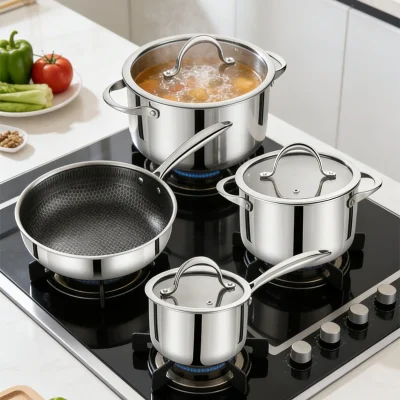
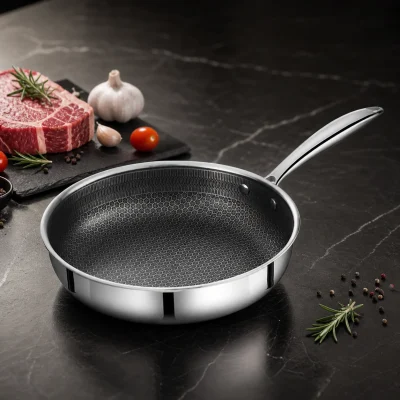
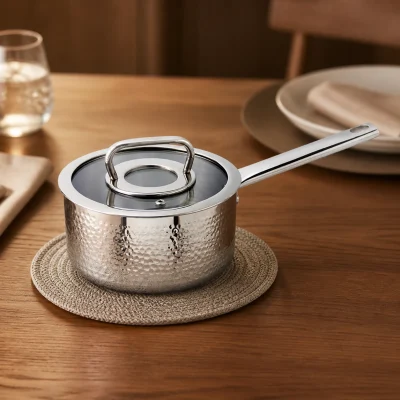
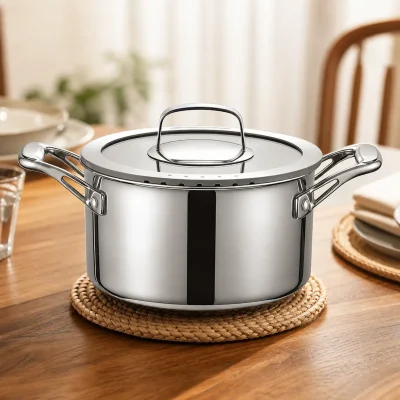
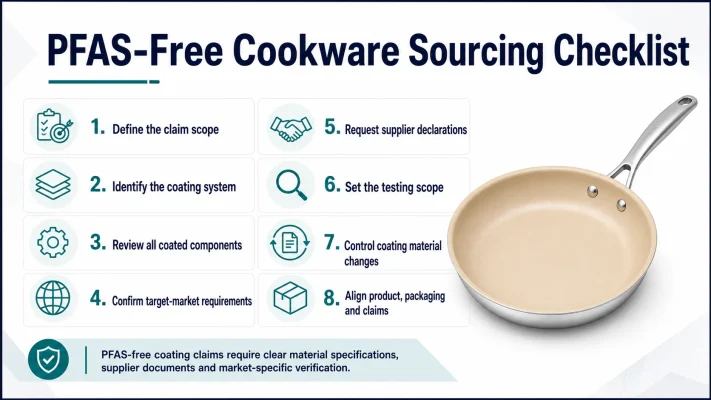
For B2B cookware sourcing, the question is not simply whether a supplier calls itself a factory. Importers need to know who controls the product specification, production decisions, quality checks, and delivery records behind an order. That distinction matters most when a project involves tri-ply construction, custom tooling, private-label packaging, or a repeat program where the approved sample must match bulk production.
A trading company is not automatically the wrong choice. It can be useful when a buyer needs several product categories, a small consolidated shipment, or one commercial contact across multiple factories. A direct factory can be a better fit when the project needs close engineering communication and consistent control of one cookware range. This guide explains how to verify the actual supplier structure before sampling or placing a bulk order. For more buyer research, explore our Supplier & Market Research hub.
Key Takeaways
- A trading company can be suitable for mixed-category sourcing, while a direct factory is often a stronger fit for focused OEM/ODM cookware projects that require technical control.
- A business license, factory address, audit report, invoice party, and shipment documents should form one consistent evidence trail. No single document proves the whole supplier story.
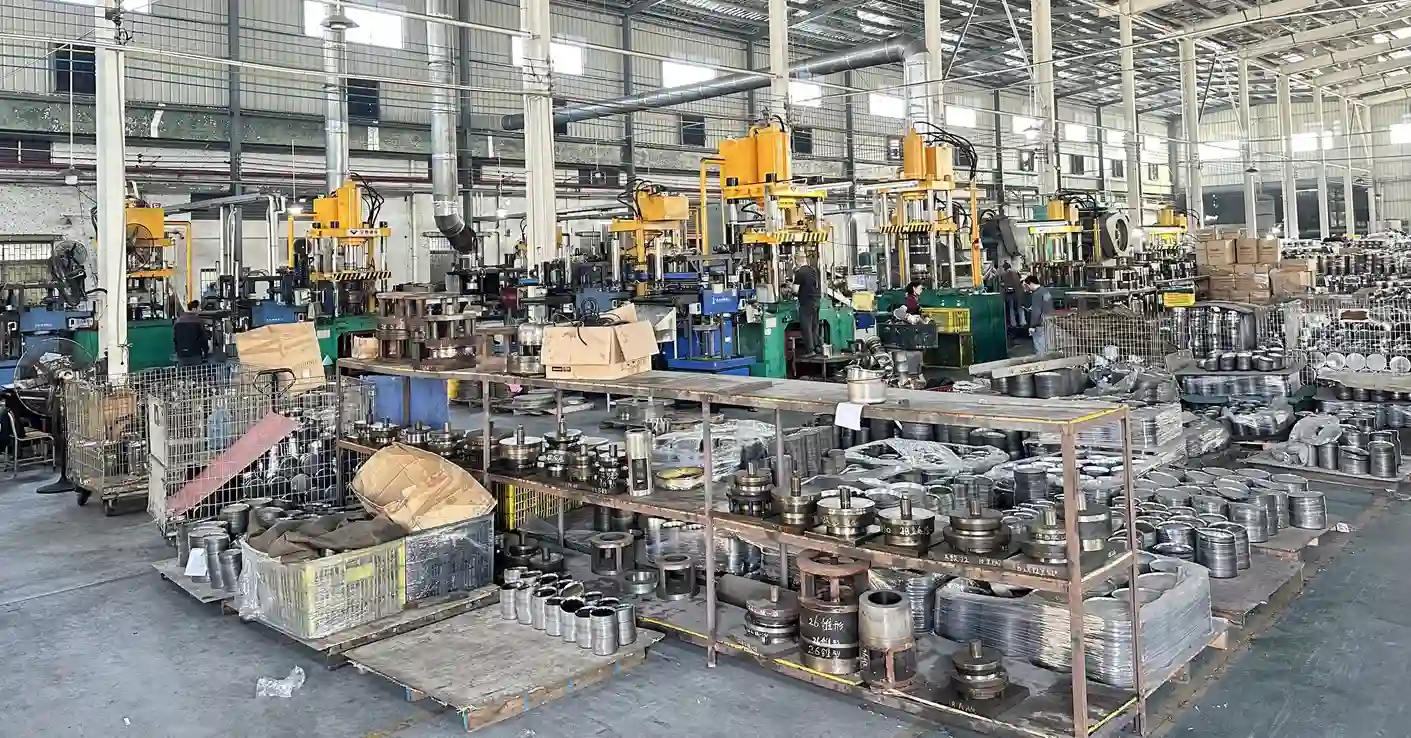
- For stainless steel cookware, a real-time walkthrough should show the equipment and work flow relevant to the quoted item, not only a showroom or finished product photos.
- Sample approval, written specifications, and pre-shipment checks are the practical test of whether a supplier can repeat an agreed product in bulk.
Cookware Factory vs. Trading Company: Quick Comparison
A direct manufacturer and a trading company solve different sourcing problems. The useful comparison is not about which model is universally better. It is about whether the supplier structure matches the buyer’s product, order size, customization scope, and supply-chain risk.
| Buying Factor | Direct Cookware Factory | Trading Company |
|---|---|---|
| Product focus | Usually specialized around a defined material, forming process, or cookware range. | May consolidate products from several factories and materials. |
| OEM/ODM communication | Can connect buyers more directly with production, engineering, and quality teams. | Usually coordinates requirements with one or more manufacturing partners. |
| MOQ and order mix | Often works best when quantities justify setup, material, and packaging planning. | Can be useful for smaller mixed-category orders or consolidated purchasing. |
| Product development | Better suited to projects requiring control of body structure, handles, lids, finishing, tooling, or packaging. | May add coordination value when a buyer needs several unrelated product categories. |
| Verification focus | Confirm the legal entity, plant, equipment, process, and quality records. | Confirm the trading entity, named production sites, responsibility split, and document trail. |
| Export arrangement | May export directly or use an affiliated company or export agent. | Often exports under its own entity or coordinates shipment through a logistics partner. |
Which Supplier Model Fits Your Project?
Choose the structure after defining the project, not before. A retailer developing a tri-ply cookware set with a fixed handle, lid, logo, carton, and target-market requirements needs a supplier that can answer detailed manufacturing questions and keep those decisions stable through sampling and bulk production. In that case, a specialized factory or a trading partner with a clearly disclosed factory relationship is usually easier to evaluate.
By contrast, a distributor building a small test order across cookware, utensils, and other kitchen goods may value a trading company that can consolidate products and coordinate shipping. The buyer should still ask where each key item is made, who approves samples, and which entity will appear on the commercial documents. Our guide on choosing a stainless steel cookware manufacturer in China can help buyers match the supplier to a product program before requesting quotations.
7 Steps to Verify a Cookware Supplier
1. Confirm the registered entity before reviewing claims
Start with the legal name shown on the supplier’s business license, the Unified Social Credit Code, registered address, and business scope. A buyer should record the Chinese and English names exactly as shown rather than relying only on a sales brochure or website brand. Terms related to manufacturing, processing, research and development, sales, or trading are useful context, but the business scope alone does not prove that a company owns or controls every process it describes.
Use the National Enterprise Credit Information Publicity System to cross-check the entity by name or Unified Social Credit Code. If the sales company, manufacturing site, and invoice party are different, ask the supplier to explain the relationship in writing before the project reaches sample approval.
2. Match the legal entity, factory address, and physical site
Ask for the latest audit report or factory profile and compare the audited legal entity and site address against the business license, quotation, invoice, and proposed shipper details. A sales office and a factory can legitimately have different addresses. The important point is that the supplier can explain which location performs production and which entity carries each responsibility.
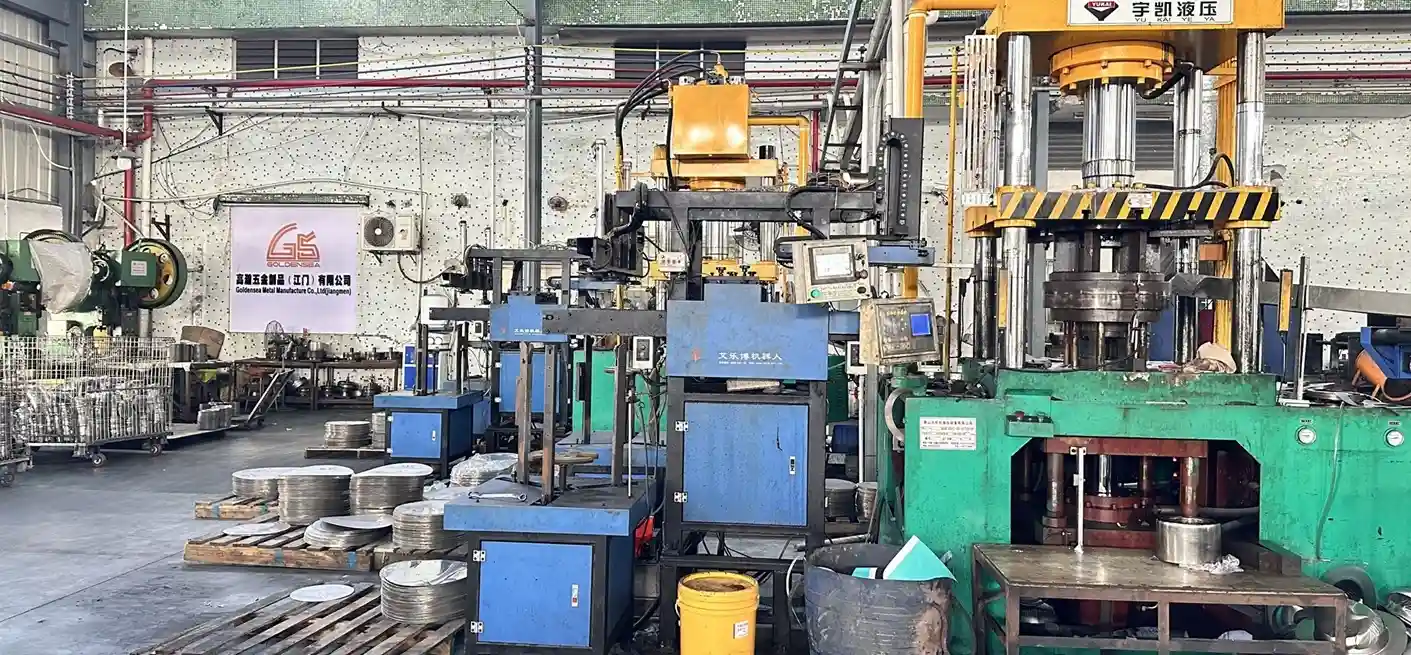
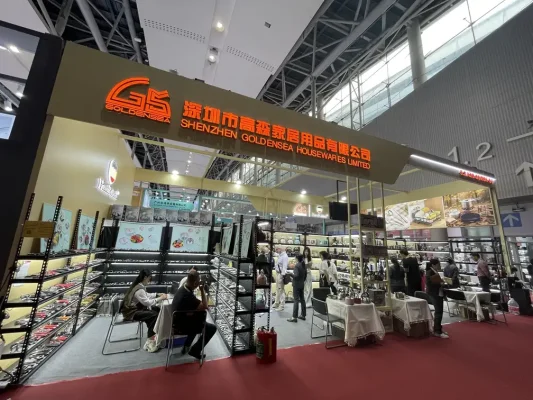
A polished office tour, a supplier badge, or a single workshop image should never replace document checks. Conversely, an address difference is not automatically a problem when it is transparently explained as a sales office, group company, or export arrangement.
3. Use a live walkthrough to verify the production flow
Request a live video call or arrange a site visit that follows the process relevant to your product. For stainless steel cookware, buyers should be able to see more than a finished-goods showroom. Depending on the project, useful evidence may include raw material or prepared components, body forming, edge treatment, polishing, handle or lid assembly, cleaning, inspection, packing, and work-in-progress storage.
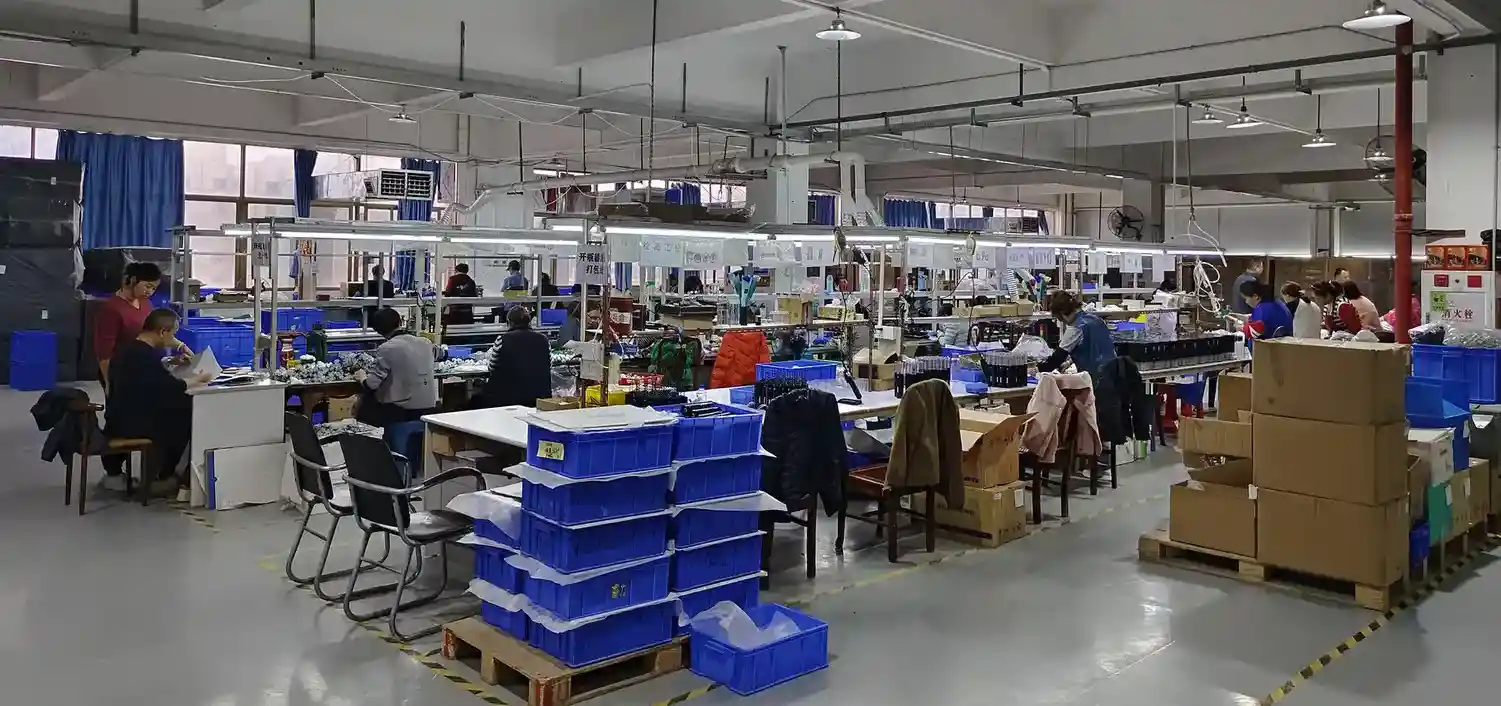
Ask the supplier to show the relevant production area in real time and explain how the quoted cookware moves between stations. A walkthrough supports, but does not replace, entity and document checks. It helps buyers distinguish in-house stages from work handled by established partners and identify who controls the related quality checks.
4. Check catalog, equipment, and process consistency
A supplier’s catalog should make sense alongside the equipment and processes it presents. A specialist in stainless steel saucepans, casseroles, frying pans, and cookware sets will normally show a coherent range of body shapes, handle systems, lids, finishes, and packaging options. A very broad catalog is not proof that a supplier is a trader, but it should prompt a buyer to ask which products are made at which site.
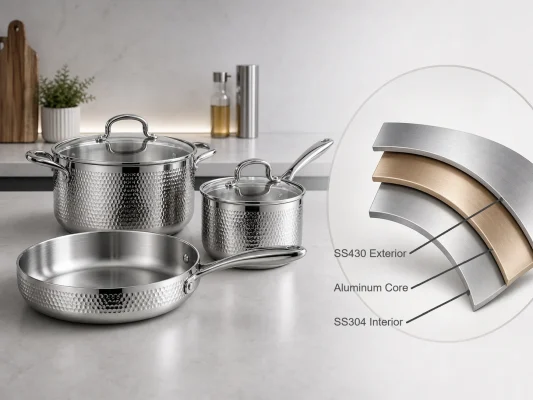
For a tri-ply project, confirm that the supplier can discuss the food-contact stainless steel layer, aluminum core, magnetic exterior, body construction, forming method, thickness range, edge treatment, and induction-ready requirements. Buyers sourcing from the Jiangmen region can also review our Jiangmen stainless steel cookware manufacturing guide for regional context.
5. Test the quotation and sample process
A capable supplier should be able to ask useful questions before giving a final quotation: target market, cookware type, dimensions, material structure, lid and handle choice, finish, logo method, packaging, quantity, and any compliance or inspection requirement. A very quick price that ignores these decisions may be a preliminary estimate, not a reliable production quotation.
During sampling, compare the supplier’s written specification with the physical sample. Record the approved body shape, material statement, finish, handle, lid, logo placement, packing method, and acceptable tolerances. A buyer does not need every detail on the first call, but the critical requirements should be captured before bulk production starts.
6. Cross-check export and shipment documents
Before shipment, compare the contracting party, invoice issuer, packing list, shipper, and bill of lading or waybill details. An export agent or group company can be legitimate, especially when a factory uses a separate export entity. The buyer should ask for a clear explanation whenever the names differ, then retain the approved relationship and document flow in the order file.
Apply the same consistency check across the purchase order, final specification, commercial documents, packed cartons, and shipment records. It gives the buyer a traceable record from the agreed product to delivery.
7. Close the loop with samples, inspection, and records
Supplier verification should not end after a factory tour. Before bulk production, confirm the golden sample, final specification sheet, artwork, carton marks, inspection scope, and any required reports. During pre-shipment inspection, compare sampled goods with the approved sample and records rather than relying on a general statement that the goods are acceptable.
This final step makes the verification practical. It tests whether the supplier can repeat the product, packaging, and quality level that the buyer actually approved.
Red Flags That Need Context
Some sourcing signals are worth investigating but should not be treated as automatic proof of a problem. A city office may belong to a manufacturer with a separate industrial plant. A factory may use a group company or export agent for shipping. A trader may have a strong quality team and long-term factories that suit a mixed order. Likewise, a factory can outsource selected components such as glass lids, handles, coating, or packaging.
The practical red flag is not one difference on its own. It is an inability or unwillingness to explain differences between the legal entity, factory address, product claims, sample source, and shipment documents. Buyers should ask focused questions, document the answers, and avoid making decisions from a single screenshot, certificate name, or catalogue page.
Extra Checks for Tri-ply Stainless Steel Cookware
Tri-ply stainless steel cookware requires more verification than a generic cookware photo because performance and cost depend on the construction buyers actually receive. Ask how the stainless steel layers and aluminum core are specified, how body shape and thickness are controlled, and how handles, lids, surface finishes, logos, and packaging are approved. The supplier should be able to connect these choices to the sample and to the production flow.
For a premium private-label line, it is also useful to confirm whether the factory can support the product range you plan to sell, including frying pans, saucepans, casseroles, and cookware sets. Explore Goldensea’s tri-ply stainless steel cookware range when reviewing the product types and configuration options relevant to your program.
Buyer Verification Checklist
| Request or Record | What the Buyer Should Check |
|---|---|
| Business license and Unified Social Credit Code | Exact legal name, registration details, business scope, and the relationship to the sales contact. |
| Factory address and audit information | Whether the legal entity and site correspond to the factory claimed for the order. |
| Live walkthrough or visit notes | Relevant equipment, work-in-progress, process sequence, and responsible production contacts. |
| Quotation and specification sheet | Material, dimensions, construction, lid, handle, finish, logo, packaging, quantity, and target market. |
| Approved sample and inspection plan | What will be compared before bulk production and before shipment. |
| Invoice, packing list, and transport documents | Whether the commercial and shipping entities match the agreed supplier structure or have a documented explanation. |
How Goldensea Supports Verifiable Tri-ply Projects
Goldensea is a China-based OEM/ODM cookware manufacturer specializing in tri-ply stainless steel cookware for global B2B buyers, private-label brands, wholesalers, and distributors. For suitable projects, our team can discuss the factory scope, target cookware structure, sample requirements, packaging, logo options, quality checks, and documents needed for the buyer’s market. Learn more about custom cookware and OEM/ODM options before preparing your project brief.
Frequently Asked Questions
Does a business license prove that a cookware supplier is a direct factory?
No. A business license helps confirm the registered entity and can show useful business-scope information, but it does not prove who controls every production process. Buyers should compare it with the factory address, audit information, live walkthrough, product evidence, sample process, and commercial documents.
Are trading companies always a poor choice for cookware sourcing?
No. A trading company can be useful for mixed-category orders, consolidation, and projects that need one commercial coordinator. The buyer should ask which factory produces each key product, who controls samples and quality, and which entity will appear on the contract and shipment documents.
How can I verify a cookware factory without visiting China?
Ask for a real-time video walkthrough, business registration information, current audit details where relevant, product-specific equipment evidence, sample records, and shipment-document explanations. Remote verification is stronger when the supplier shows the actual process for your quoted product and answers questions about production responsibility clearly.
Why might the factory name and exporter name be different?
A manufacturer may use a sales company, group company, or export agent to issue commercial documents or arrange shipment. That can be legitimate when the relationship is transparent. Buyers should request the explanation in writing and confirm that the contract, invoice, packing list, and shipment records follow the agreed arrangement.
What should I confirm before approving a tri-ply cookware sample?
Confirm the cookware size, construction, material statement, body thickness, finish, lid, handle, logo, packaging, target market, and inspection requirements. The approved sample should match a written specification so the buyer can compare bulk production with the product that was actually accepted.
Further Reading
- National Enterprise Credit Information Publicity System for checking Chinese business registration information by name or Unified Social Credit Code.
- Our open-source China Cookware Manufacturer & Industrial Clusters Research for further regional and supplier-evaluation context.
Verify Your Next Cookware Supplier Before Sampling
The best supplier decision is based on a consistent chain of evidence: the right product fit, a clear entity and factory relationship, a visible production process, a controlled sample, and documents that tell the same story. Send Goldensea your target cookware type, material structure, quantity, market, logo, packaging, and inspection requirements. We can discuss a suitable tri-ply cookware sourcing scope and OEM/ODM project path before sampling or bulk production.
Contact Goldensea to discuss your cookware sourcing project

Mei is a dedicated Sales Specialist at Goldensea with over 10 years of experience in the B2B kitchenware industry. Possessing deep technical knowledge of manufacturing and sourcing, she has successfully helped global clients navigate complex supply chain challenges and develop suitable cookware solutions.
Connect with Mei on LinkedIn or reach out for professional kitchenware advice.