
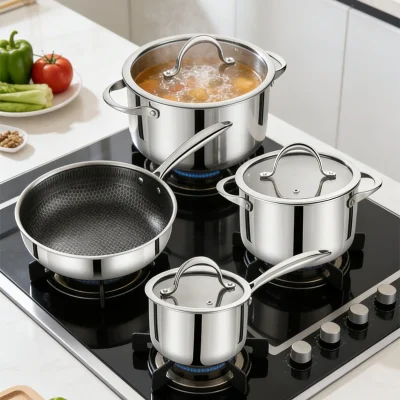
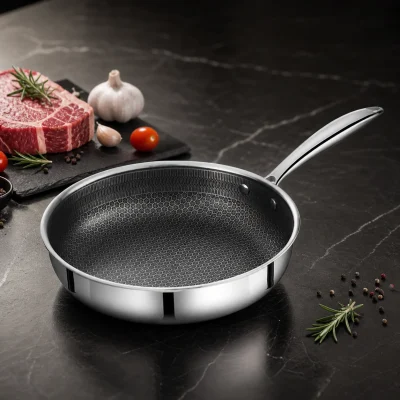
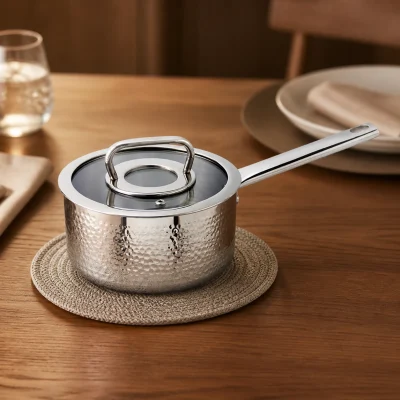
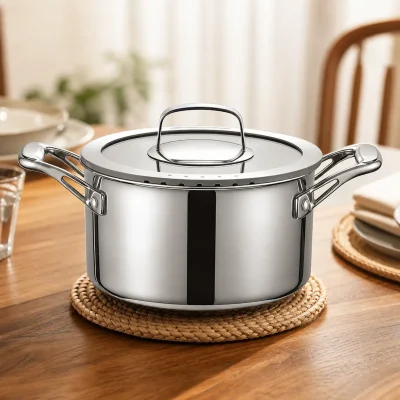
Choosing a stainless steel cookware manufacturer in China should not start with the lowest unit price. For most sourcing teams, the harder job is separating a suitable production partner from a long supplier list. For importers, private label brands, wholesalers, retail buyers, and HoReCa procurement teams, the factory you choose will affect product structure, sample quality, compliance documents, packaging control, and how closely bulk goods match the approved sample.
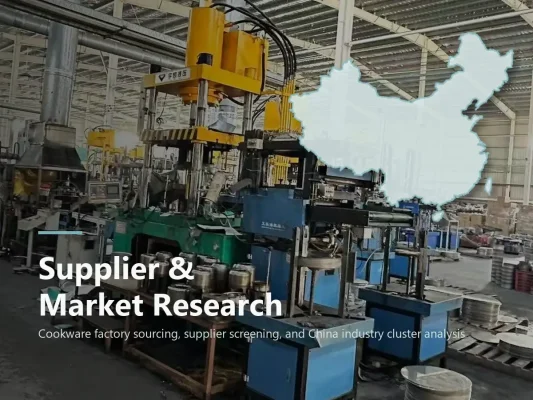
This guide sets out a practical review process before sampling or bulk orders. It focuses on the checks that usually decide whether a supplier is suitable: product specialization, factory identity, material structure, production process, quality control, food-contact document support, MOQ, lead time, and RFQ preparation. For related sourcing research, visit the Supplier & Market Research hub.
Key Takeaways
- Match the factory to the product first. A supplier built around tri-ply stainless steel cookware is not the same as one focused on aluminum non-stick pans or thin-gauge promotional cookware.
- Check who actually controls production. The factory address, business entity, audit documents, invoice party, and shipment records should tell the same story.
- For tri-ply cookware, confirm the food-contact stainless steel layer, aluminum core, magnetic stainless steel exterior, body thickness, rim design, handle type, lid option, and packaging method before sample approval.
- Compliance documents must match the target market and the actual product. A logo or certificate screenshot is not enough for serious import review.
- A useful RFQ gives the factory enough detail to quote realistically. Vague requests often lead to low initial prices, repeated sample changes, and unexpected packaging or tooling costs.
What Is a Stainless Steel Cookware Manufacturer in China?
A stainless steel cookware manufacturer in China is a factory or manufacturing group that produces pots, pans, casseroles, saucepans, steamers, and cookware sets using stainless steel sheets, clad materials, or assembled stainless steel components. For sourcing teams, the key question is not whether a supplier can show cookware photos. It is whether the supplier controls the production steps needed for your target product.
Direct factories usually have a focused product range and manage forming, polishing, assembly, inspection, and packaging through their own facilities or a stable production network. Trading companies may be useful for small mixed-category orders, but they often depend on subcontracted factories for core manufacturing. The right model depends on your project, but for OEM or ODM stainless steel cookware, buyers need to know where the real production decisions are made.
Step 1: Match the Factory with Your Product Type
China’s cookware supply chain is regional. Different clusters tend to specialize in different materials, processes, and price levels. Before comparing quotations, check whether the supplier’s location, catalog, and equipment fit the cookware structure you want to buy.
| Buyer Need | Factory Fit to Look For | Red Flag |
|---|---|---|
| Tri-ply stainless steel cookware | Experience with clad material, deep drawing, polishing, handle assembly, and induction-ready structure control | The catalog is mostly thin stainless steel items, aluminum non-stick pans, or unrelated kitchen goods |
| Private label cookware set | OEM/ODM support, packaging development, set combination planning, sample control, and specification records | The supplier quotes only a unit price and cannot discuss packaging, inserts, or set structure |
| Retail or e-commerce supply | Stable carton specification, barcode and label control, inner protection, and pre-shipment inspection records | No clear packaging validation or shipment inspection process |
| HoReCa or professional kitchen supply | Durable body thickness, stable handles, repeat-order consistency, and practical replacement planning | The discussion stays at appearance and price, with little detail on weight, thickness, or handle strength |
For regional background, buyers can review the China Cookware Manufacturer and Industrial Clusters Research. Use it as a starting point, then verify each supplier’s actual facility, documents, and product history.
Step 2: Verify Factory Identity
A supplier may call itself a manufacturer, but the operating structure still needs to be checked. Ask for the legal company name, factory address, business license, export entity, and available audit records. The aim is simple: know who makes the goods, who invoices the order, and who takes responsibility if bulk production does not match the sample.
Practical checks include:
- Compare the factory address on the business license with the address shown on audit reports, invoices, packing lists, and shipment documents.
- Review whether the product catalog is focused on stainless steel cookware or spread across many unrelated categories.
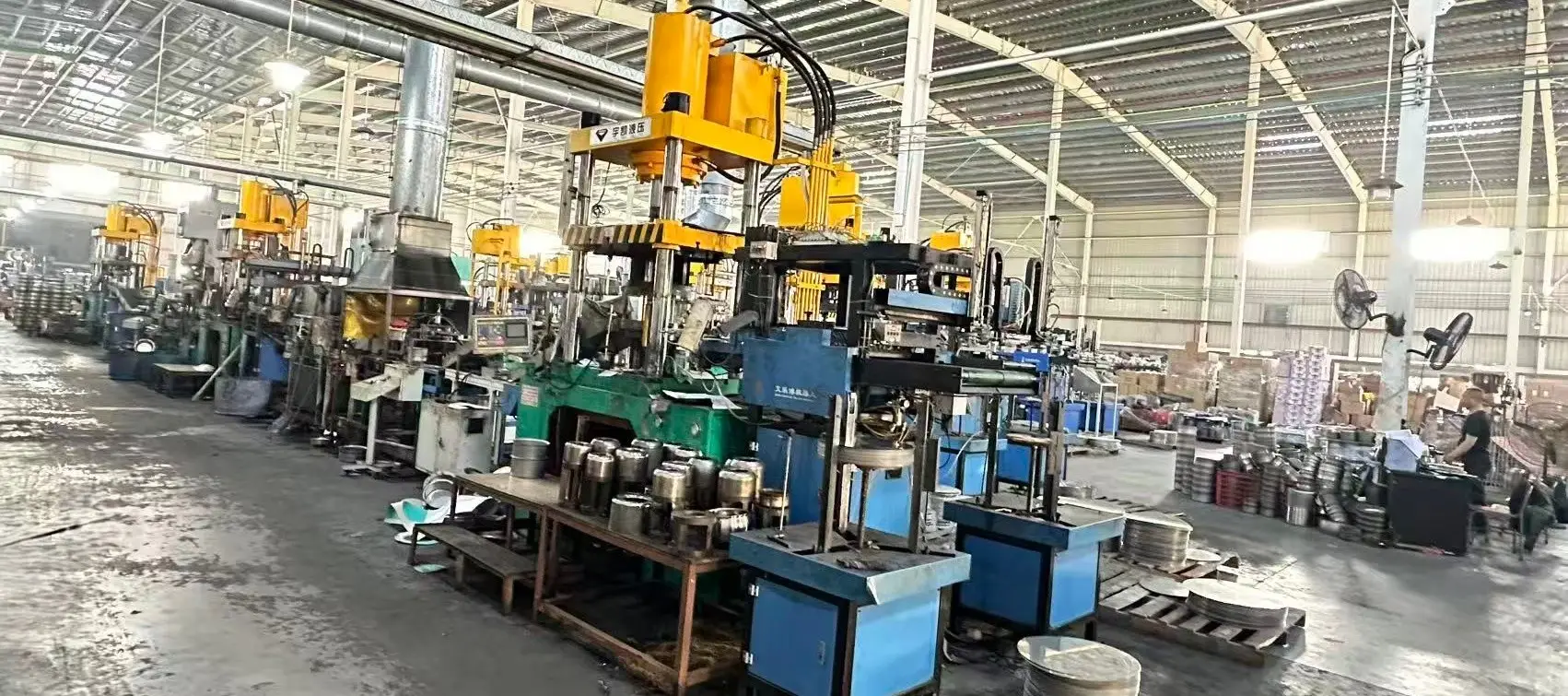
- Ask for a live video walkthrough of the forming, polishing, assembly, inspection, and packaging areas.
- Check whether the sales team can explain material structure, thickness options, tooling, packaging, and QC steps without sending every technical question to another party.
Trading companies are not automatically a bad choice. They can help with consolidation and small multi-category orders. But when a project involves tri-ply structure, private label packaging, tooling, or strict sample control, direct factory access usually gives the buyer better visibility and fewer communication gaps.
Step 3: Check Material and Construction Capability
“Stainless steel cookware” can mean several different structures. It may be single-wall stainless steel, impact-bonded bottom cookware, full-clad tri-ply cookware, or a multi-ply construction. These choices affect heat distribution, weight, price, induction compatibility, and the market position of the finished product.
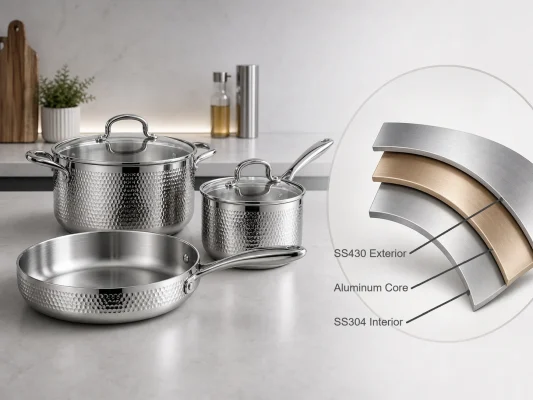
For tri-ply stainless steel cookware, a common structure is:
- Inner layer: food-contact stainless steel, commonly specified as SS304 or 18/10 depending on the buyer’s market and specification.
- Middle layer: aluminum core for faster and more even heat transfer.
- Outer layer: magnetic stainless steel, commonly SS430, for induction compatibility.
Ask the factory to confirm the grade, thickness range, body weight, base flatness, rim design, surface finish, and whether the product is full-clad or bottom-bonded. If two suppliers quote very different prices, these details often explain the gap better than the sales pitch does.
Step 4: Audit Production and QC Process
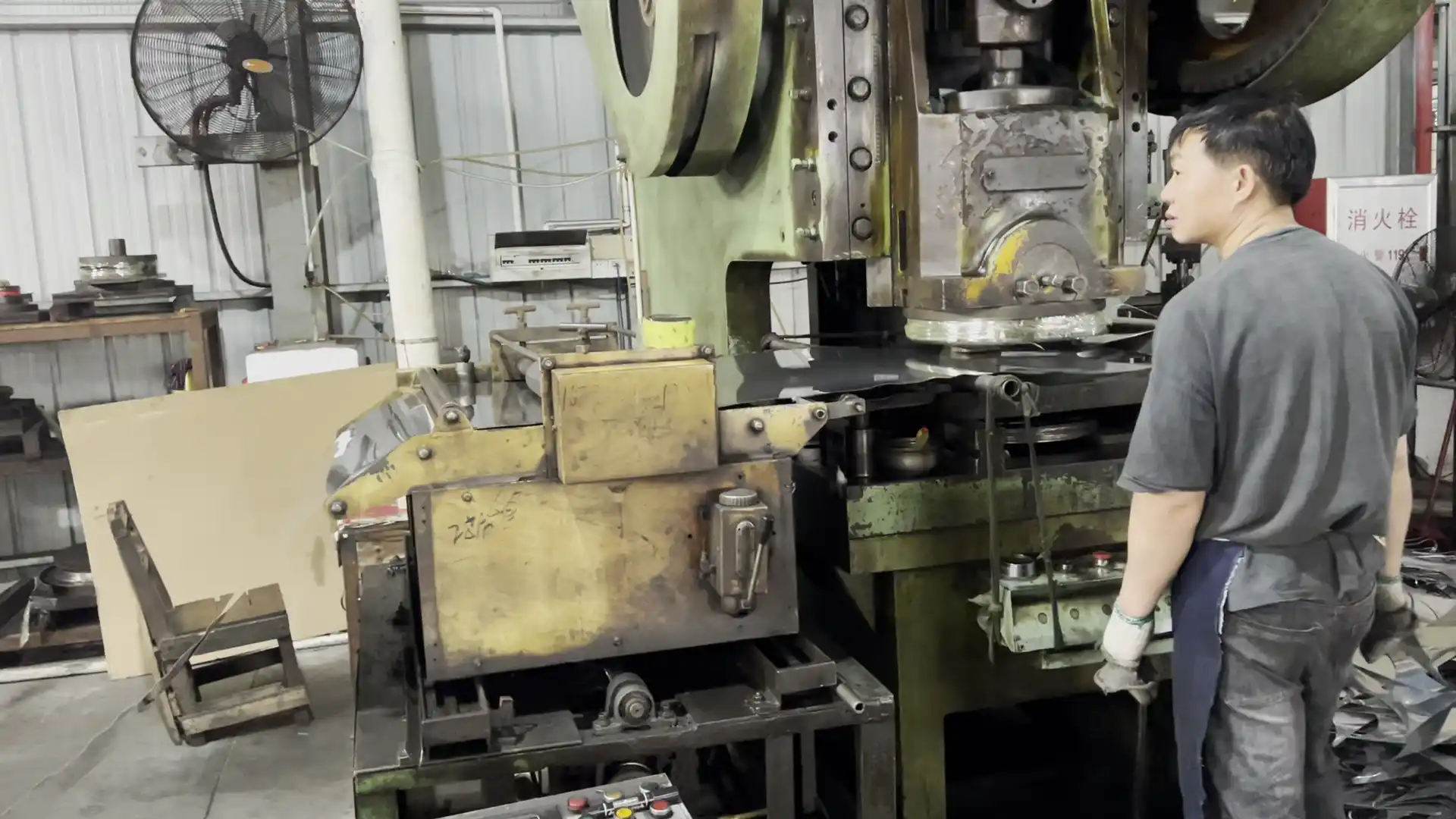
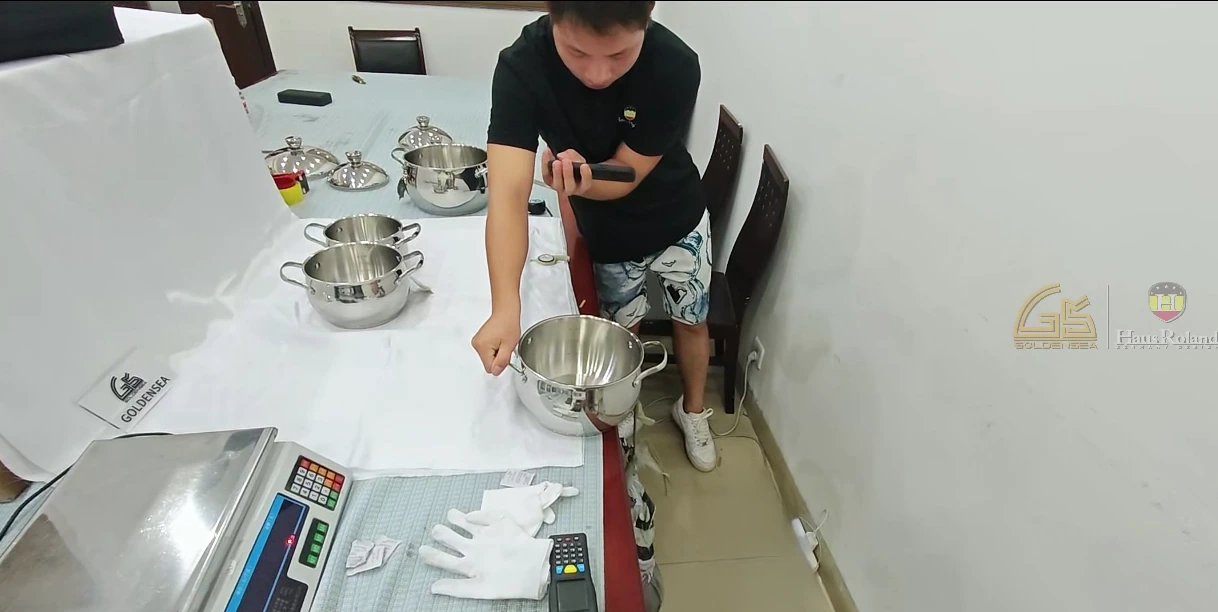
A capable cookware factory should have a repeatable process from material preparation to final packing. For stainless steel cookware, the main steps usually include circle cutting, body forming, edge trimming, surface polishing, handle installation, lid matching, cleaning, packaging, and pre-shipment inspection.
During a factory review, focus on the controls that affect the finished goods:
- Incoming stainless steel or clad material records.
- Body thickness, diameter, capacity, and weight tolerance.
- Base flatness and induction compatibility.
- Handle welding, riveting, or mounting strength.
- Surface finish defects, polishing residue, scratches, and color variation.
- Retail box dimensions, barcode labels, inner protection, master carton strength, and loading records.
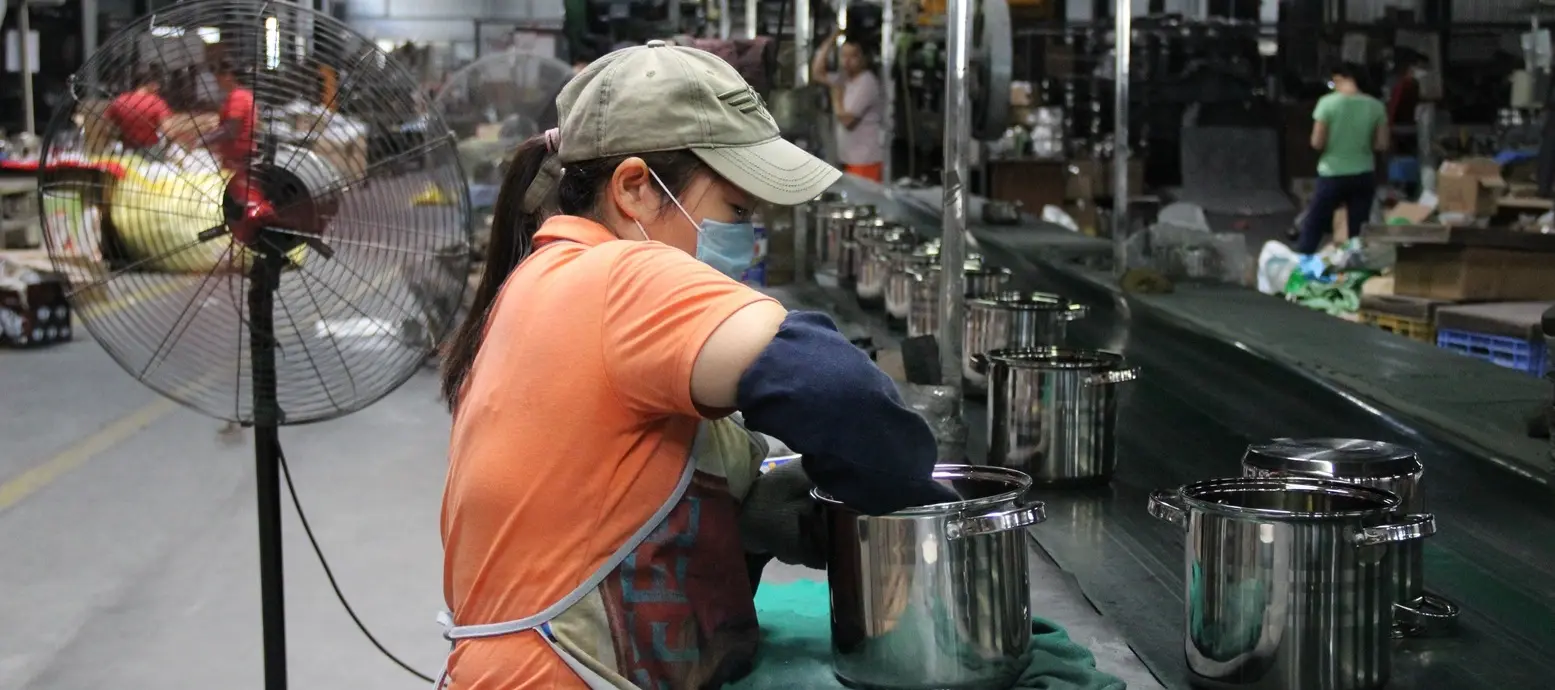
For retail and online channels, inspection should not stop at the shine of the cookware body. Carton size, barcode accuracy, inner protection, and shipment documentation can also decide whether the order arrives in sellable condition. References such as ISO 9001 quality management, ISTA packaged-product testing, and cookware safety standards can help buyers frame the right questions, but the agreed inspection scope still needs to match the actual product and sales channel.
Step 5: Review Compliance Documents
Compliance requirements depend on the destination market, food-contact surface, coatings, handles, lid seals, and packaging. Stainless steel cookware buyers commonly ask about FDA-related food-contact review, LFGB or European food-contact testing, ISO 9001 quality management records, amfori BSCI social audit information, migration test reports, and third-party inspection records.
Do not treat a logo, badge, or short certificate as enough evidence. Review the complete report or audit summary and check:
- Report holder and factory name.
- Factory address and product description.
- Test date and relevance to your product scope.
- Laboratory or audit body information.
- Whether the tested item matches your cookware material, coating, handle, lid, and intended market.
For US food-contact questions, buyers can start from the FDA food-contact substances resources. For European metal food-contact guidance, the EDQM metals and alloys guidance is a useful reference. Social compliance can be reviewed through systems such as amfori BSCI, while quality management systems are often discussed under ISO 9001 quality management.
Step 6: Compare MOQ, Sample and Lead Time
MOQ is shaped by production reality. Material slitting, cookware size, body thickness, handle choice, lid type, surface finish, logo method, packaging artwork, carton structure, and mold status all affect the minimum quantity a factory can run efficiently.
When comparing quotations from cookware manufacturers in China, ask each supplier to separate:
- Sample cost and sample lead time.
- MOQ by SKU, size, color, packaging design, and set combination.
- Tooling or mold fee, if a new shape or handle is required.
- Bulk production estimate after deposit, artwork confirmation, and sample approval.
- Packaging MOQ and whether the project uses generic packaging, sticker branding, or a full custom color box.
A very low MOQ can be useful for a trial order, but it may also mean generic packaging, limited customization, or higher unit cost. A higher MOQ may be reasonable when the buyer needs custom box printing, exclusive handle design, or a full cookware set program.
Supplier Evaluation Checklist
| Check Item | What to Ask | Why It Matters |
|---|---|---|
| Supplier type | Are you the factory, exporter, or trading company? | Clarifies pricing, communication, and quality responsibility. |
| Product focus | Which stainless steel cookware types do you make or control directly? | Prevents mismatch between catalog claims and real production capability. |
| Material structure | What are the inner layer, core, outer layer, thickness, and body weight? | Determines performance, cost, induction compatibility, and market positioning. |
| OEM/ODM support | Can you support custom size, handle, lid, logo, finish, packaging, and set combination? | Shows whether the factory can support private label development beyond a stock item. |
| Quality control | What inspections are done before sample approval and before shipment? | Reduces the risk of bulk goods differing from the approved sample. |
| Compliance | Which food-contact reports, audit records, and quality documents can you provide for this product? | Helps buyers prepare for target-market compliance review. |
| Packaging | What box type, inner protection, carton strength, barcode control, and drop-test support are available? | Protects product appearance and reduces logistics damage. |
| RFQ clarity | What information do you need for an accurate quote? | Prevents vague quotes and repeated sample revisions. |
Why Goldensea Fits Tri-ply Stainless Steel Cookware Projects
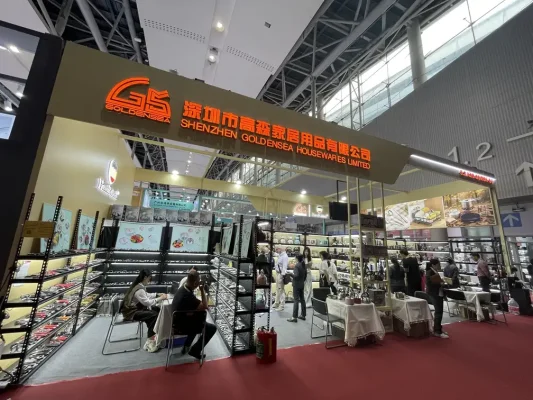
Goldensea / GS Kitchenware is a China-based OEM/ODM cookware manufacturer specializing in tri-ply stainless steel cookware for global B2B buyers, private label brands, wholesalers, distributors, retailers, and HoReCa procurement teams. Its Jiangmen manufacturing base supports stainless steel cookware production, sample development, packaging preparation, and export-oriented project communication.
During supplier review, buyers may see different names across brand communication, factory records, export documents, and shipment paperwork. Before a bulk order, confirm the quotation entity, factory address, sample records, invoice information, and shipment documents with the sales team so the project file stays consistent.
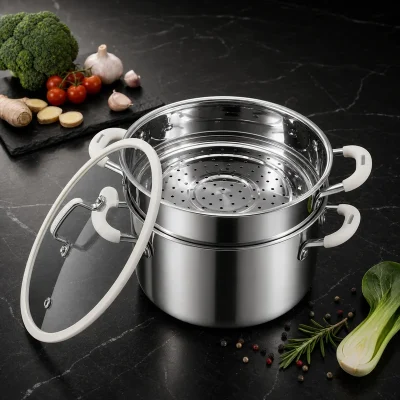
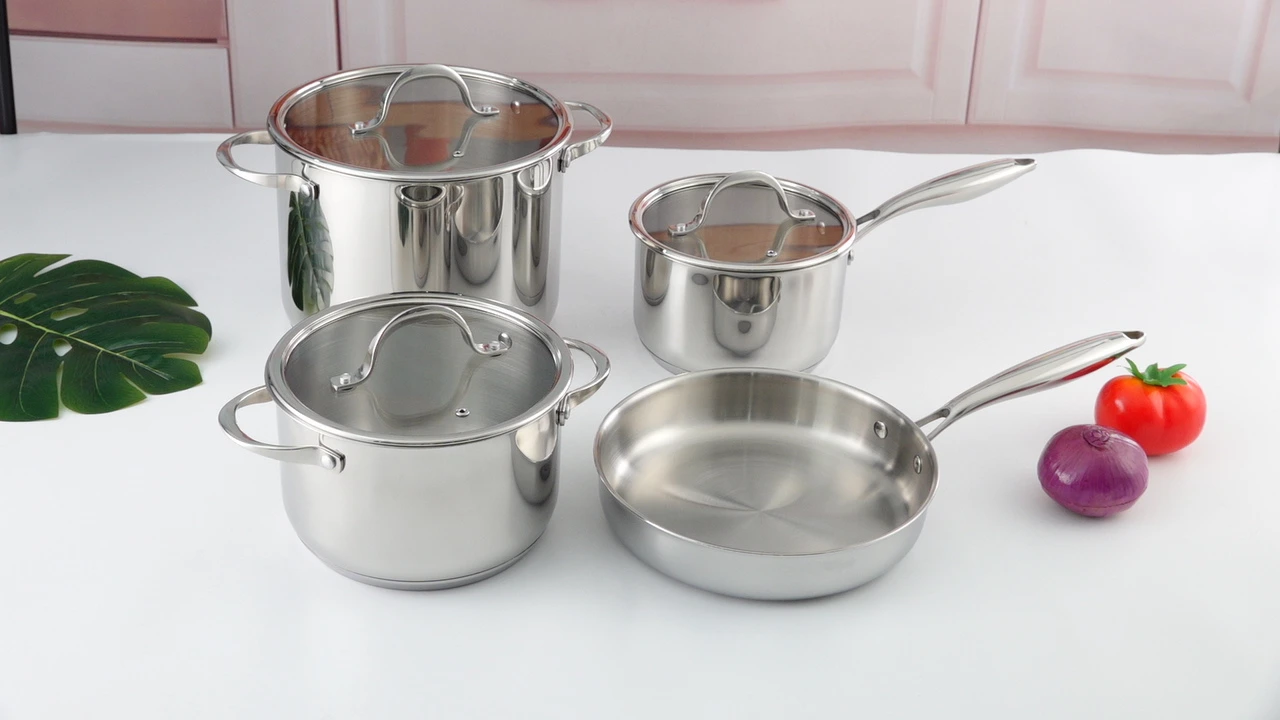
For tri-ply stainless steel cookware projects, Goldensea can discuss product structure, sample development, logo options, handle and lid selection, surface finish, packaging planning, and document support based on the buyer’s target market and product scope. The main product direction is tri-ply cookware built around SS304 / aluminum / SS430 construction, including cookware sets, frying pans, saucepans, casseroles, and steamers.
Buyers can explore the tri-ply stainless steel cookware range, review OEM and ODM custom cookware options, or read the Jiangmen stainless steel cookware manufacturing guide for more regional sourcing context.
What to Include in Your RFQ
Before contacting a stainless steel cookware manufacturer in China, prepare a clear RFQ. A useful RFQ should include:
- Product type: cookware set, frying pan, saucepan, casserole, steamer, or other item.
- Material structure: for example, SS304 / aluminum / SS430 tri-ply construction.
- Size, capacity, thickness, weight target, and stove compatibility.
- Handle, lid, knob, rim, interior finish, exterior finish, and logo preference.
- Target market and compliance documents needed.
- Estimated quantity by SKU and expected launch timeline.
- Packaging type, artwork status, barcode needs, and shipping requirement.
If you are still comparing product structures, read Goldensea’s stainless steel cookware quality inspection guide and kitchenware certification checklist before sample approval.
Frequently Asked Questions
How do I know if a China cookware supplier is a real factory?
Ask for the legal company name, business license, factory address, audit documents, and a live video walkthrough of production areas. Compare the address across license, invoice, audit report, and shipment documents. A focused catalog and technical answers about materials, molds, polishing, and QC are also useful indicators.
What is a suitable region in China for stainless steel cookware sourcing?
It depends on the product. Jiangmen and Xinhui in Guangdong are established options for stainless steel and tri-ply cookware projects. Other regions may be better for aluminum non-stick, cast iron, or budget stainless steel. Match the product structure with the supplier’s real production ecosystem before comparing prices.
What MOQ should I expect for stainless steel cookware?
MOQ varies by product, size, material, packaging, and customization. Existing molds and standard packaging usually allow more flexible planning than new tooling or fully custom color boxes. For accurate pricing, provide quantity by SKU, target packaging, logo method, and destination market.
Can a factory support private label stainless steel cookware?
Yes, if the factory has OEM/ODM support for logo application, packaging, handle and lid options, surface finish, set combination, and sample approval. Confirm what is done in-house, what is outsourced, and which changes require new tooling or higher MOQ.
Which compliance documents should cookware buyers request?
Common documents include food-contact test reports, supplier declarations, ISO 9001-related quality records, and social audit information such as BSCI when required by the buyer’s channel. The exact documents depend on the target market, cookware structure, coating, handles, lids, and packaging.
What should I send to Goldensea for a quotation?
Send your target cookware type, size, material structure, quantity, market, packaging requirement, logo plan, and any compliance documents needed. If you already have reference samples, drawings, or a retail price target, include them so the quotation can match your product positioning.
Conclusion
The right stainless steel cookware manufacturer in China should fit your product type, target market, compliance needs, and order model. Before comparing prices, verify the factory identity, material structure, production process, QC system, packaging plan, and document support. That work gives your team a clearer basis for sample approval and bulk production decisions.
Planning a tri-ply stainless steel cookware project? Contact Goldensea with your target size, quantity, market, packaging, and certification requirements to discuss OEM/ODM support and request a tailored quotation.

Mei is a dedicated Sales Specialist at Goldensea with over 10 years of experience in the B2B kitchenware industry. Possessing deep technical knowledge of manufacturing and sourcing, she has successfully helped countless global clients navigate complex supply chain challenges and find the perfect culinary solutions.
Connect with Mei on LinkedIn or reach out for professional kitchenware advice.