
Updated: August 13, 2026
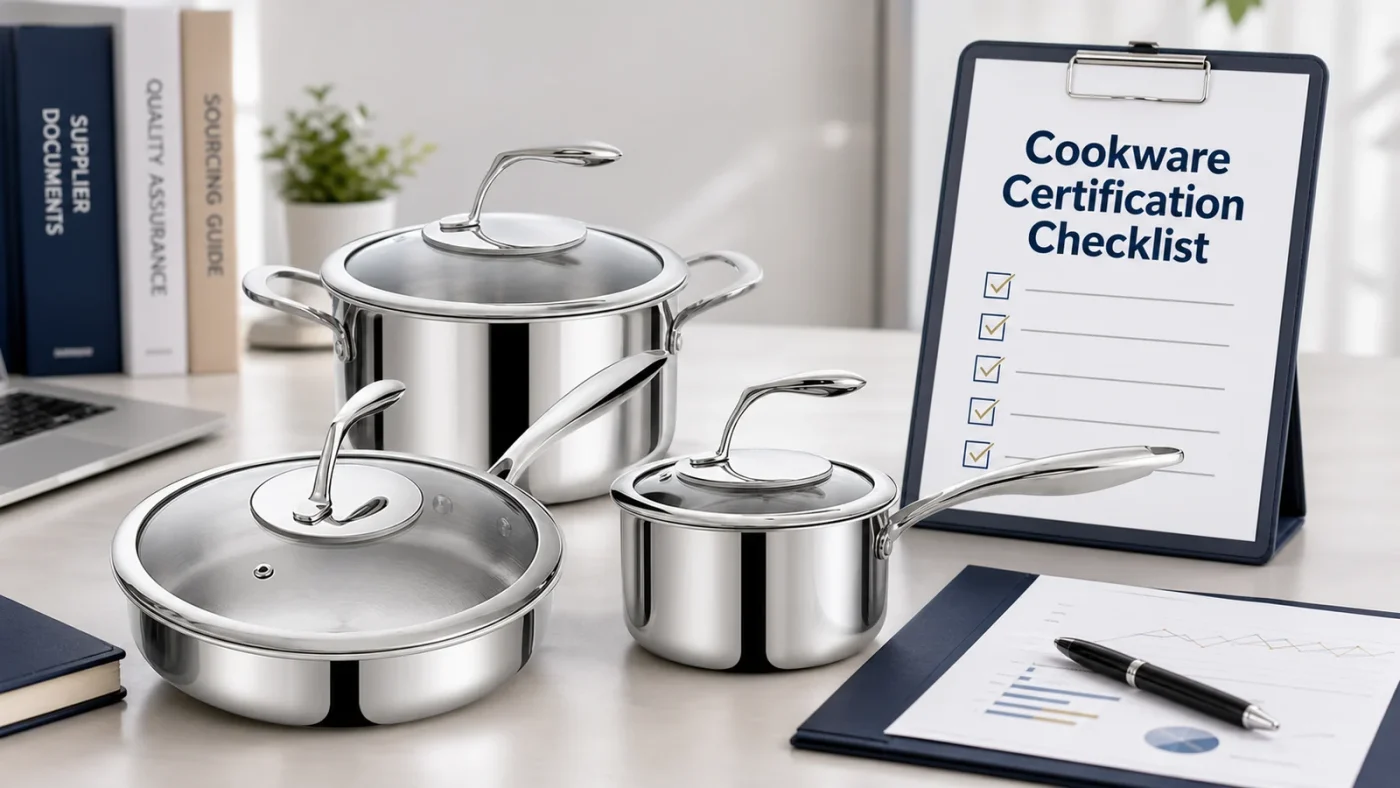
This kitchenware certification checklist for B2B cookware importers helps importers, wholesalers, private label brands, distributors, retail buyers, and HoReCa procurement teams review food contact materials, supplier documents, test reports, and target-market compliance risks before sourcing cookware. Certification requirements may vary by product material, food-contact parts, destination market, and importer-side rules. For stainless steel cookware buyers, the key is not only asking whether a supplier has an “FDA” or “LFGB” report, but confirming whether the report scope matches the actual cookware, lid, handle, coating, packaging, and order specification.
Key Takeaways
- Certification requirements depend on the target market, product material, food-contact parts, and importer requirements.
- Importers should check the test report scope, not only the certificate name or supplier claim.
- A test report, Declaration of Compliance, ISO 9001 certificate, social audit, and CE marking serve different purposes and are not interchangeable.
- Stainless steel cookware buyers should confirm the SS304 food-contact surface, lid, handle, coating, and packaging documents.
- FDA-related, LFGB, EU food contact material, SABER, Japan, and Australia/New Zealand requirements should be reviewed by target market.
- Final testing and documents should be confirmed before sample approval and bulk production.
B2B Sourcing Toolkit: You can access and copy a customizable version of this document from our open-source FDA/LFGB Cookware Certification Checklist on GitHub Pages.
What Is a Kitchenware Certification Checklist?
A kitchenware certification checklist is a buyer-side document review process for food-contact materials, target-market rules, supplier test reports, product components, and packaging claims. For cookware importers, it helps confirm whether the documents match the actual product before sample approval or bulk production.
Why Certification Matters for B2B Cookware Importers
For B2B cookware sourcing, certification and compliance documents affect more than product labels. They may influence customs clearance, retail channel approval, distributor onboarding, brand risk, product returns, claims handling, and the timing of bulk shipment. A missing or mismatched test report can delay a launch even when the product itself looks acceptable.
Cookware importers should confirm compliance requirements early in the sourcing process, especially when the order involves stainless steel, aluminum core structures, nonstick coating, silicone parts, tempered glass lids, retail packaging, or private label claims. Where laboratory testing is required, buyers should ask for relevant reports from an accepted third-party lab and confirm that the tested sample and report scope still match the final product before approving a sample or placing a bulk order.
For a broader product sourcing framework, see our tri-ply stainless steel cookware guide for B2B buyers.
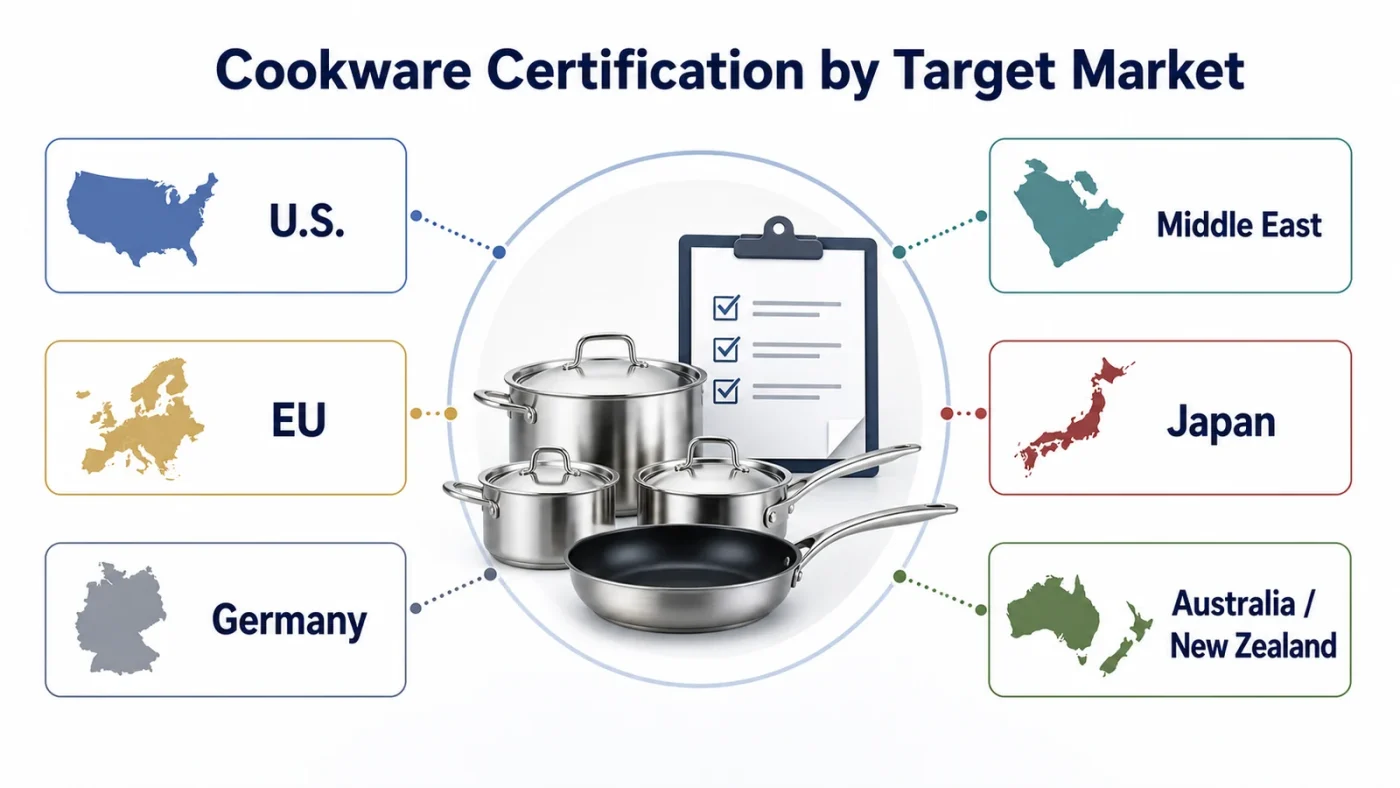
Common Certifications and Compliance Documents by Target Market
The table below is a practical starting point, not legal advice. Requirements may vary by product category, material, food-contact use, importer role, and local market updates. Buyers should confirm the latest requirements with their importer, testing lab, certification body, or compliance advisor.
| Target Market | Buyers Should Check | Common Documents | Risk Point |
|---|---|---|---|
| U.S. | Food contact material compliance | FDA-related test report / 21 CFR reference where applicable | Report must match material, food-contact part, and use condition |
| EU | EC 1935/2004, GMP under EC 2023/2006, and applicable material-specific or destination-country rules | Supporting documentation, a Declaration of Compliance where required, and relevant laboratory evidence | Metal and alloy requirements may differ by destination Member State; do not treat CE as the main food-contact proof for cookware |
| Germany | EU framework plus applicable German requirements and buyer or channel standards | LFGB-related testing or documentation where applicable | LFGB is a German legal framework, not a universal certificate for every cookware component or future order |
| Saudi Arabia | Product registration and conformity path confirmed by product classification or HS code | SABER registration and product conformity documents where applicable | SABER is a platform and conformity process; the importer should confirm the route for the final product category |
| Japan | Food sanitation and labeling requirements | Japan-specific test or declaration where applicable | Local language, labeling, and importer requirements matter |
| Australia / New Zealand | Applicable product-safety, food-contact, and labeling requirements | Evidence confirmed with the importer for the final material, use, and sales channel | Do not assume one fixed cookware certificate applies to every product or destination |
Do Not Treat Every Document as a Product Certificate
A laboratory report, a Declaration of Compliance, an ISO 9001 certificate, and a social audit answer different questions. A laboratory report covers the submitted sample and stated test conditions. A Declaration of Compliance connects the product with the applicable requirements and supporting records. ISO 9001 relates to the supplier’s quality management system, while BSCI or a similar social audit reviews working conditions. None of these documents automatically covers every cookware model, component, or future batch.
CE marking is not a general food-contact certificate for ordinary non-electric cookware. Ask which documents apply to the final SKU, bill of materials, intended use, and destination market.
For U.S. projects, start with the FDA guidance on food types and conditions of use. For EU projects, check the European Commission’s food-contact materials overview. When checking a laboratory, review its ISO/IEC 17025 scope and use the ILAC directory to find the relevant accreditation body. Saudi importers can confirm the applicable SABER route through SASO. Final checks should still be based on the product, destination, and importer’s responsibilities.
Certification Checklist for Stainless Steel Cookware
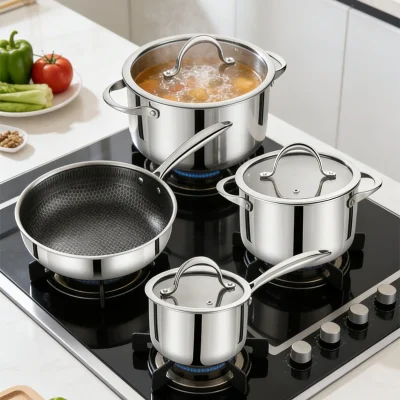
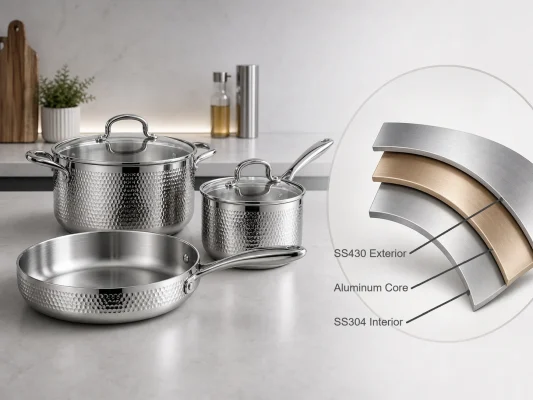
For stainless steel cookware buyers, the compliance file should match the actual product structure. This is especially important for Triply Stainless Steel Cookware, where different layers and components serve different purposes.
| Cookware Part | What to Check | Why It Matters |
|---|---|---|
| Inner surface | SS304 / 18-10 food-contact layer | Directly touches food |
| Aluminum core | Not food-contact, but should match product specification | Affects heat distribution and product positioning |
| Outer layer | SS430 magnetic stainless steel | Affects induction compatibility |
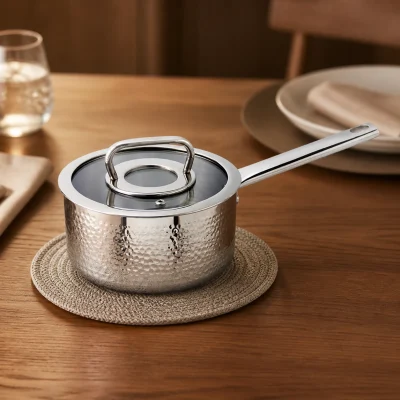
| Lid | Glass / stainless steel / silicone parts | Different materials may need different checks |
| Handle | Stainless steel / silicone / coating | Heat resistance and material safety may matter |
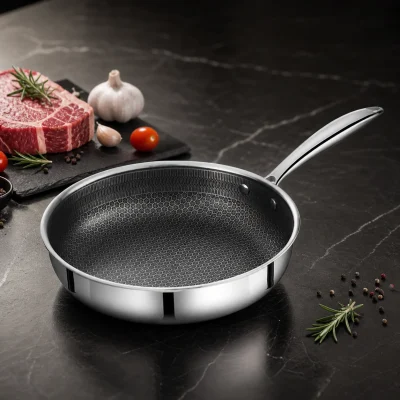
| Coating | Nonstick / ceramic / uncoated surface | Coated items need extra claim and testing control |
| Packaging | Labeling, warnings, origin, product claims | Affects import and retail compliance |
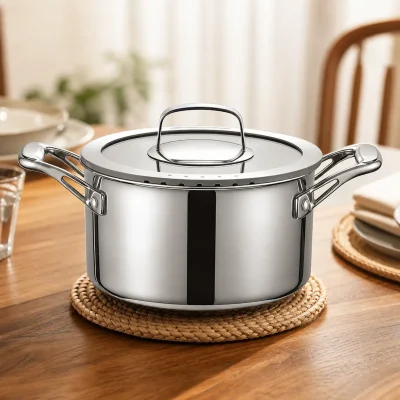
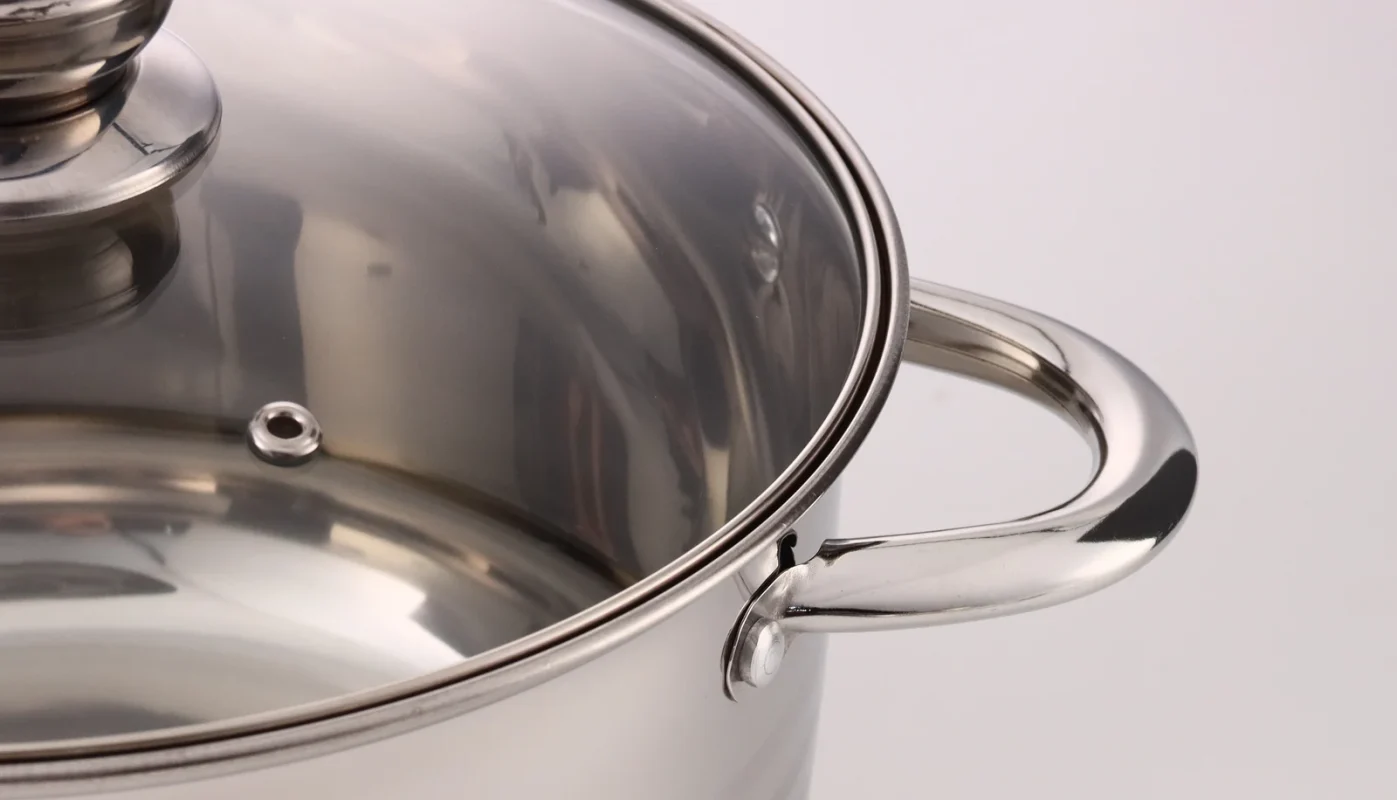
The lid, rim, handle attachment, and vent details should also be reviewed because these parts may involve different materials, heat-resistance expectations, and buyer documentation requirements.
How to Review a Supplier’s Test Report
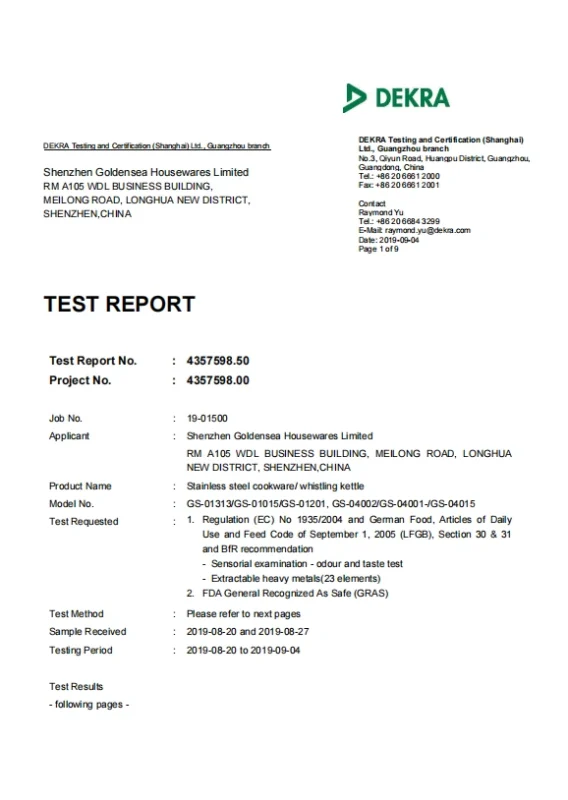
Importers should avoid relying only on claims such as “FDA certified,” “LFGB certified,” or “food grade.” A test report is useful only when its scope matches the current product, material, target market, and order specification. Buyers should check whether the report covers the actual food-contact surface, lid, handle, coating, silicone part, glass part, or packaging material involved in the project.
| Report Field | Buyer Should Confirm |
|---|---|
| Applicant / manufacturer | Does it match the supplier or product source? |
| Product description | Does it match cookware, lid, handle, coating, or packaging? |
| Material | Does it list stainless steel, coating, plastic, silicone, or glass correctly? |
| Test standard | Is it suitable for the target market? |
| Report date and current relevance | Does the tested sample still match the current order? Do not judge relevance by the issue date alone. |
| Lab information | Can the laboratory identity and report number be verified through an independent channel? |
| Test conditions | Do the food type or simulant, time, temperature, cycles, units, limits, and intended use match the project? |
| Accredited scope | Is the relevant method or testing field included in the laboratory’s ISO/IEC 17025 accredited scope? |
| Change status | Have the material, component supplier, coating or color, factory, use condition, market, or claims changed since testing? |
| Sample photo / model | Does it match the quoted item? |
| Report scope | Does it cover the actual food-contact part and claimed material? |
Need a step-by-step review process? See how to check a cookware supplier’s test reports before ordering, including how to verify the laboratory, tested sample, and report scope.
What to Confirm Before Sample Approval
Before approving a cookware sample, buyers should align the product and compliance scope in writing:
- Product size and capacity
- Material structure
- Food-contact surface
- Lid and handle material
- Coating or uncoated claim
- Logo and packaging
- Required test reports
- Target market
- Third-party inspection needs
What to Confirm Before Bulk Order
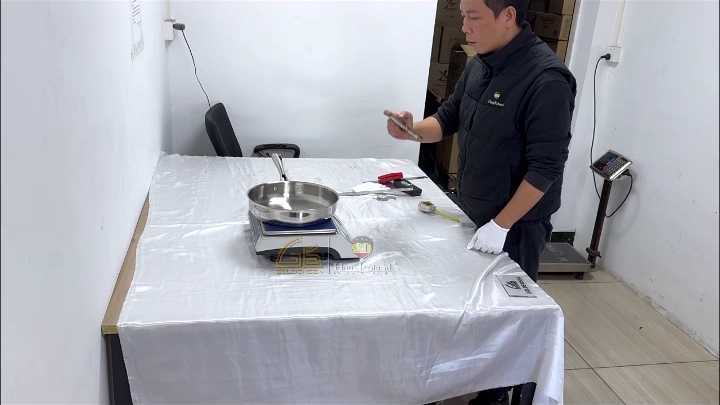
Before bulk production, importers should confirm the golden sample, final specification sheet, test report and document scope, packaging artwork, carton mark or shipping mark, inspection standard, AQL or third-party inspection requirements if needed, production lead time, and shipment documents.
If AQL sampling is used, define the lot, inspection level, defect categories, and acceptance criteria in writing; AQL inspection controls batch acceptance but does not replace product-specific compliance evidence.
Before placing a bulk order, use our stainless steel cookware quality checklist to compare production requirements with the approved sample, specifications, workmanship, packaging, and pre-shipment inspection criteria.
Common Compliance Mistakes in Cookware Sourcing
- Only checking the certificate name instead of the report scope.
- Using an old report for a new material or new product.
- Ignoring lids, handles, silicone, coating, or packaging materials.
- Treating CE as food-contact compliance proof for cookware.
- Not confirming the target market before sampling.
- Changing material or coating after sample approval.
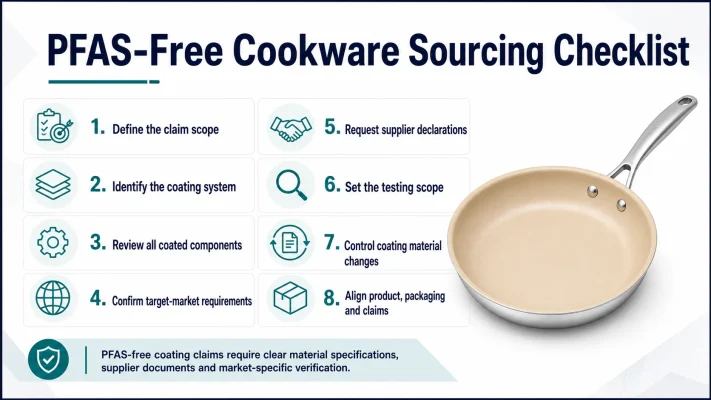
- Making PFAS-free, non-toxic, or eco claims without support documents.
- Not aligning product description, packaging claims, and test reports.
How Goldensea Supports B2B Cookware Buyers
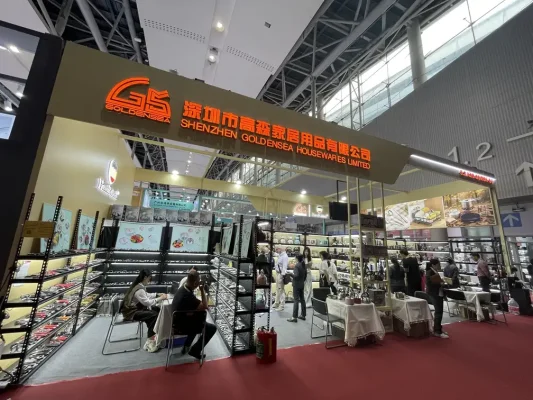
Goldensea / GS Kitchenware supports B2B buyers with tri-ply stainless steel cookware sourcing, OEM/ODM customization, supplier documentation preparation, sample confirmation, and third-party inspection coordination based on project requirements.
To discuss a project, buyers can share the target market, cookware type, material structure, quantity, packaging, logo, and certification requirements. Our team can then review the sourcing scope and discuss suitable documentation before sampling or bulk production.
Explore our custom cookware and OEM/ODM options, or contact Goldensea to discuss your cookware project.
FAQ
What certifications do cookware importers usually need?
Requirements depend on the target market, cookware material, food-contact parts, and importer requirements. Buyers commonly review FDA-related documents for the U.S., EU food contact material documents, LFGB reports for Germany where applicable, SABER-related documents for Saudi Arabia, and market-specific files for Japan or Australia/New Zealand.
Is FDA certification required for stainless steel cookware?
Buyers should be careful with the phrase “FDA certification.” For cookware, the practical question is whether the food-contact material and test report are suitable for the intended U.S. market use. Importers should confirm the applicable 21 CFR references, test scope, and documentation with their lab or compliance advisor.
What is the difference between FDA and LFGB for cookware?
FDA-related compliance is commonly reviewed for the U.S. market. LFGB is a German legal framework, so buyers should ask for LFGB-related testing or documentation for the German project where applicable, rather than treating it as a universal product certificate. The required evidence still depends on the material, product structure, intended use, destination, and buyer channel.
Should buyers check the test report or only the certificate name?
Buyers should check the test report, not only the certificate name. The report should match the product description, material, model, sample photo, test standard, lab information, and food-contact parts. A certificate name alone may not prove that the current cookware order is covered.
Do lids, handles, coatings, and packaging need separate checks?
They may need separate checks depending on material and target market. Glass lids, silicone rings, coated surfaces, plastic parts, labels, and packaging claims can have different documentation needs. Buyers should confirm all food-contact and claim-related parts before approving samples or packaging artwork.
What information should buyers send before requesting certification documents?
Buyers should send the target market, cookware type, material structure, coating or uncoated surface, lid and handle materials, quantity, logo method, packaging format, retail claims, and any importer or channel requirements. This helps the supplier prepare relevant documents and avoid mismatched reports.
Request Cookware Certification Support Before Sampling
Send Goldensea your target market, cookware type, material structure, quantity, packaging, logo, and certification requirements. Our team can help review the project scope and discuss suitable OEM/ODM cookware documentation before sampling or bulk production.
Contact Goldensea to discuss your cookware sourcing project

Mei is a dedicated Sales Specialist at Goldensea with over 10 years of experience in the B2B kitchenware industry. Possessing deep technical knowledge of manufacturing and sourcing, she has successfully helped countless global clients navigate complex supply chain challenges and find the perfect culinary solutions.
Connect with Mei on LinkedIn or reach out for professional kitchenware advice.