Triply Stainless Steel Cookware Categories
Explore cookware category pages for private label, wholesale, importer, retail, and HoReCa sourcing programs.

Understand food-contact compliance, supplier documents, quality inspection, and pre-shipment control for tri-ply stainless steel cookware sourcing.
Discuss Your Quality Checklist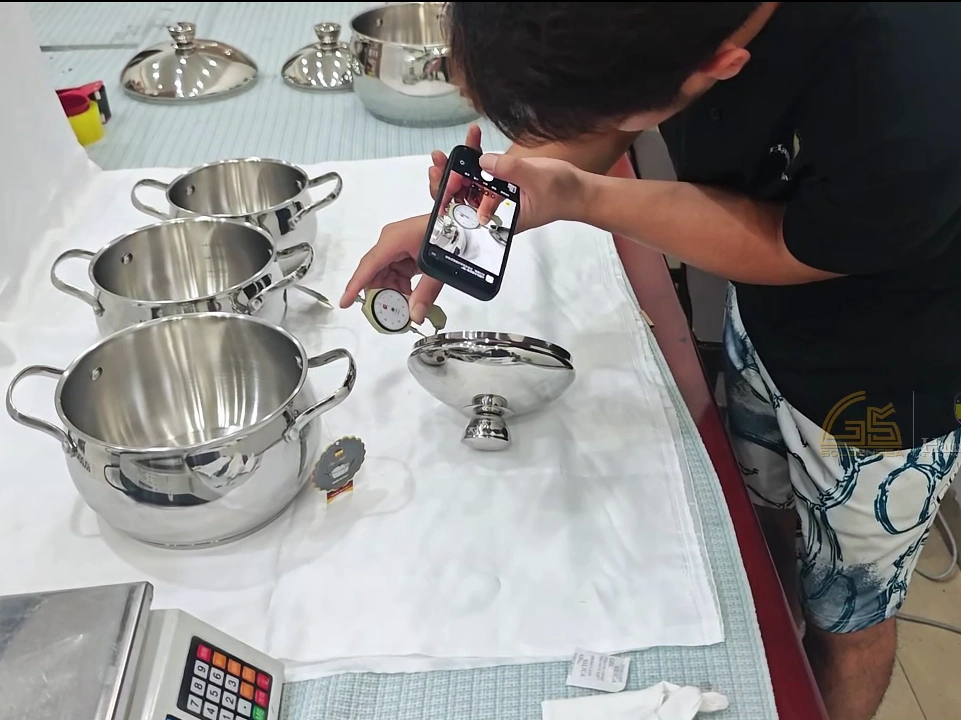
Certification documents and quality inspection procedures help importers, wholesalers, private label brands and HoReCa buyers reduce cookware sourcing risk before bulk production. This page brings together Goldensea’s guides on food-contact compliance, FDA and LFGB test report review, stainless steel material checks, sample evaluation, production inspection and pre-shipment quality control for tri-ply stainless steel cookware projects. Buyers can use these articles to prepare quality checklists, review supplier documents, confirm inspection points, discuss third-party testing or inspection requirements, and connect compliance planning with OEM/ODM or wholesale order decisions.
Explore practical B2B guides on certification documents, supplier test-report review, bulk-order quality inspection, and PFAS-free cookware sourcing.
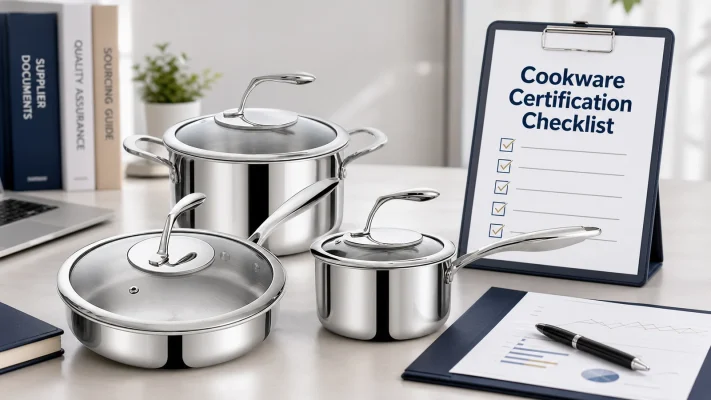
Kitchenware certification checklist for B2B importers: check FDA, LFGB, food contact materials, test reports, and supplier documents before sourcing cookware.
Use the Certification Checklist
Learn how to verify a cookware supplier’s test reports, laboratory scope, tested sample, materials, standards, conditions, and results before placing a bulk order.
Review Supplier Test Reports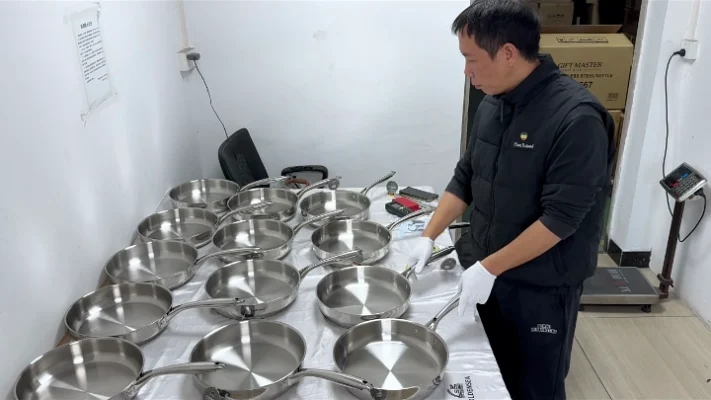
Learn how to check stainless steel cookware quality before bulk order, from approved samples and tri-ply structure to packaging, compliance documents, and pre-shipment inspection.
Use the Quality Inspection Checklist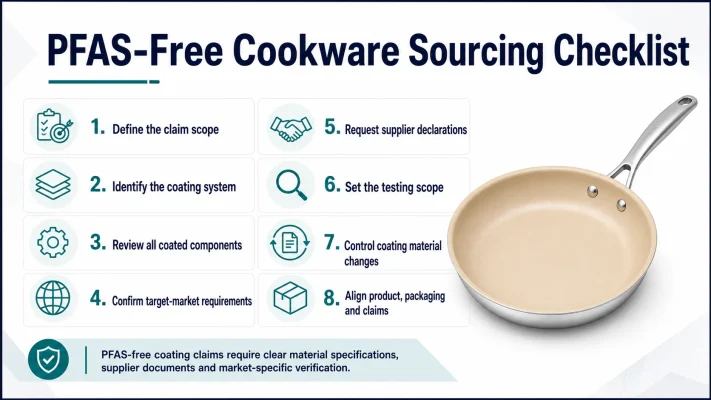
A practical B2B guide to PFAS-free cookware sourcing, coating verification, supplier documents, sample control, and stainless steel product planning.
Explore PFAS-Free SourcingFor B2B cookware sourcing, certification and inspection should be planned before bulk production, not checked only before shipment. The points below help buyers connect market compliance, approved samples, material checks and final inspection into one practical quality control process.
Different target markets may require different food-contact documentation, test standards and importer records. Buyers should confirm whether the cookware project needs FDA-related food-contact support, LFGB testing, material declarations, stainless steel grade confirmation or packaging compliance documents. The supplier should understand the target market before quoting, because compliance needs can affect material selection, testing schedule, lead time and total project cost. For private label programs, the buyer should also confirm whether certificates, test reports or factory documents need to match the brand, importer or product model.
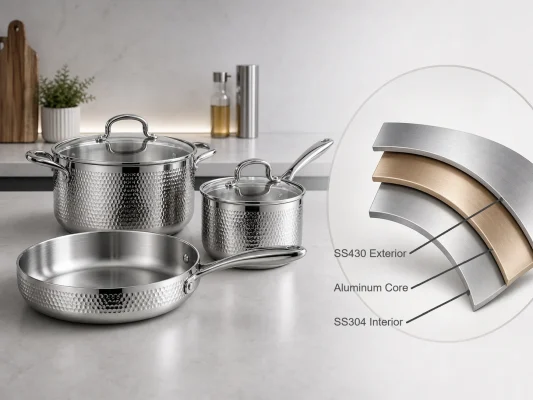
A certification document is useful only when the buyer understands what it covers. Importers should check the product name, material, test item, issuing laboratory, test date, standard reference and whether the report applies to the actual cookware structure being ordered. For tri-ply stainless steel cookware, buyers may need to confirm the SS304 food-contact interior, aluminum core, SS430 induction exterior, handle material, lid material and any coating or surface treatment. If the report is too old, too general or not linked to the product being sourced, ask for clarification before approving the order.
The approved sample should become the reference for bulk production and inspection. Buyers should record the cookware size, total thickness, weight tolerance, handle position, rivet or welding quality, lid fit, edge finish, polishing level, logo position, packaging method and carton markings. Photos, measurement notes and signed sample records help both sides avoid disputes. If the buyer changes material, finish, handle, lid or packaging after sampling, the quality checklist should be updated before mass production starts.
Quality control is strongest when inspection happens at several stages. For stainless steel cookware, useful checkpoints include raw material confirmation, forming, impact bonding or clad structure checks, polishing, handle assembly, lid fitting, logo application, packaging and final carton inspection. Before shipment, buyers should check appearance, dimensions, bottom flatness, induction performance, handle strength, lid fit, barcode or carton labels and packaging protection. For larger orders, third-party inspection or AQL sampling can be discussed before production.
Share your target market, cookware structure, order quantity, and inspection requirements. Goldensea can help review certification needs, sample evaluation points, packaging test requirements, and third-party inspection options for your tri-ply cookware project.
Discuss Your Quality Checklist Explore OEM/ODM Capabilities