

Tri-ply stainless steel cookware is a popular choice for private label brands, importers, wholesalers, distributors and HoReCa buyers who need durable cookware with stable heat performance and premium market positioning. For B2B sourcing, the key question is not only whether a pot or pan looks polished, but how the material structure affects cooking performance, induction compatibility, product cost, packaging, certification requests and long-term customer satisfaction.
This guide explains what tri-ply cookware is, how the SS304 / aluminum / SS430 structure works, and what buyers should confirm before requesting samples or bulk quotations. It is written for sourcing teams planning OEM stainless steel cookware, private label cookware sets, wholesale product lines or professional kitchen supply programs.
Key Takeaways
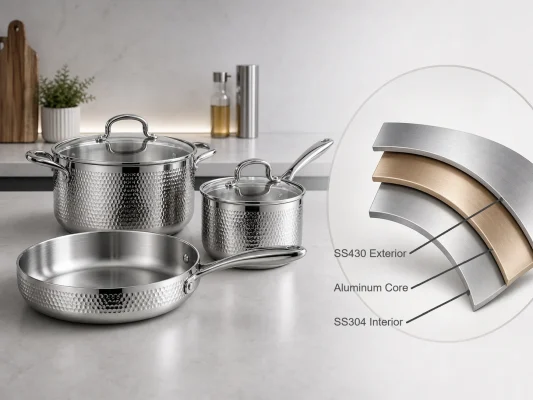
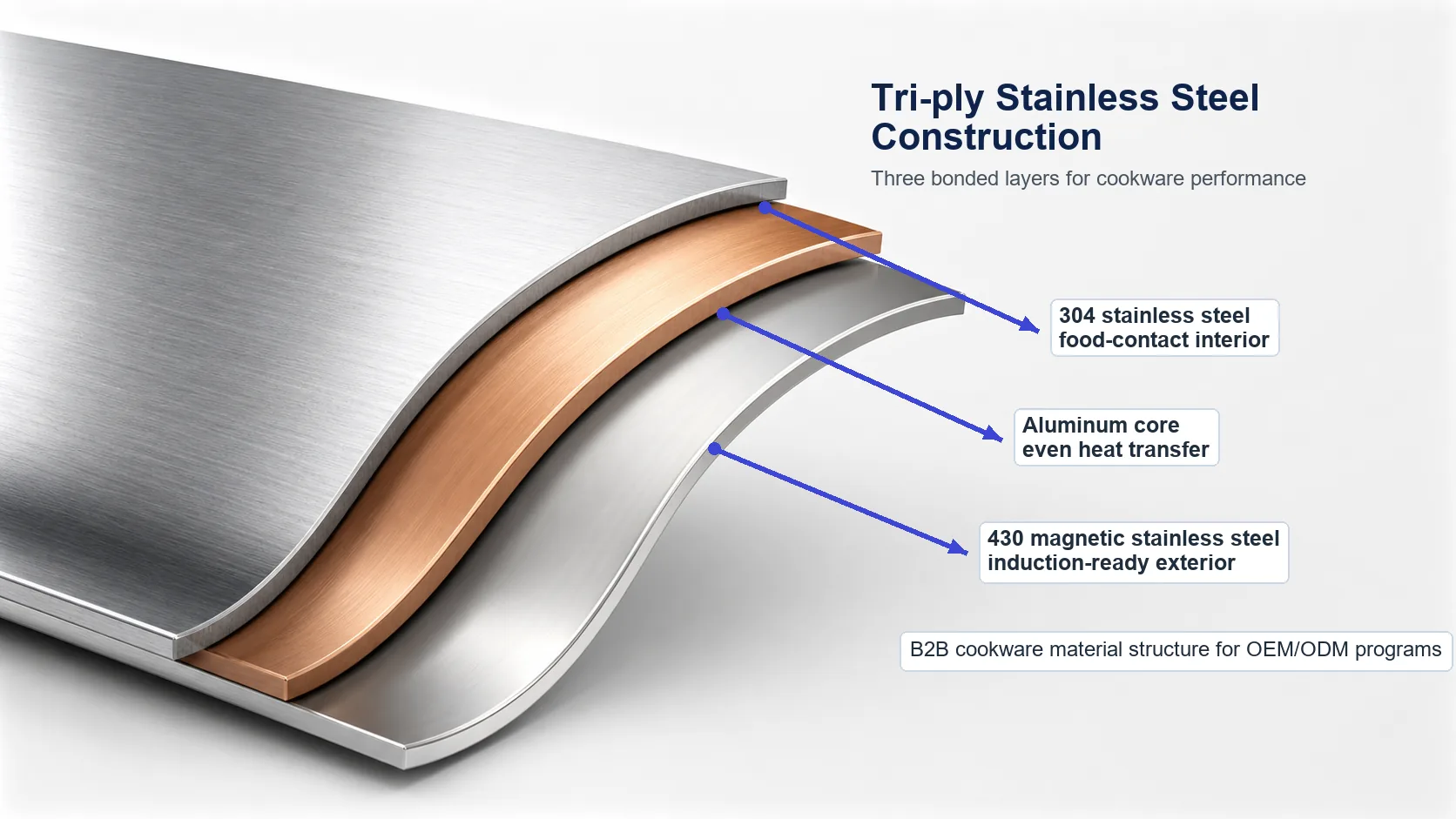
- Tri-ply cookware usually combines an SS304 food-contact interior, an aluminum core and an SS430 magnetic stainless steel exterior.
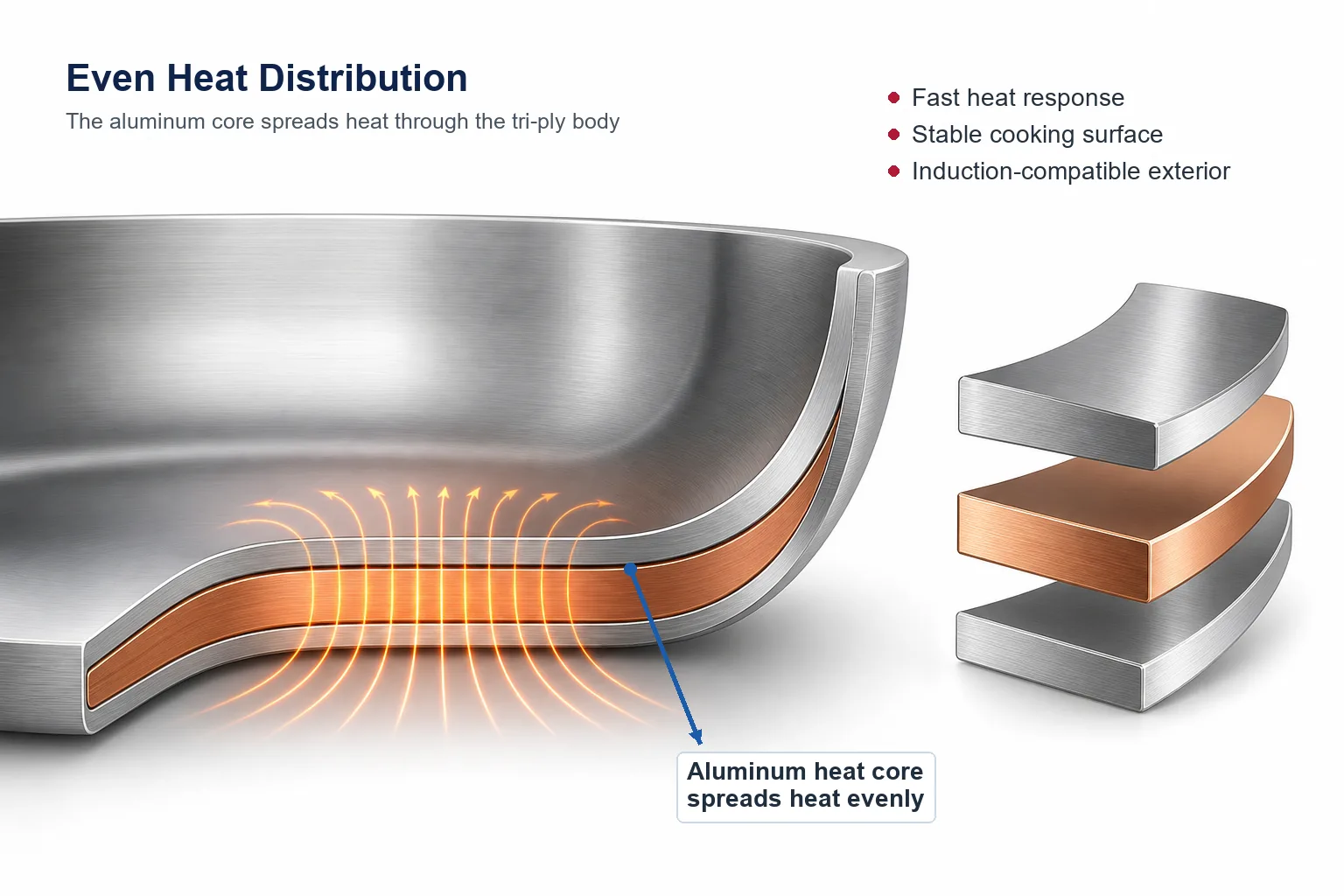
- The aluminum core helps spread heat more evenly, reducing hot spots compared with single-wall stainless steel cookware.
- The SS430 exterior supports induction compatibility, which is important for many retail, e-commerce and professional kitchen markets.
- B2B buyers should confirm thickness, cookware type, set combination, handle and lid options, surface finish, packaging and testing requirements before sampling.
- Goldensea supports private label and OEM/ODM tri-ply cookware projects, including logo, packaging, lid, handle, thickness, finish and cookware set customization.
Technical Reference: Check out our open-source Tri-ply Cookware Technical Knowledge Base on GitHub for full material breakdowns and thermal conductivity charts.
What Is Tri-ply Stainless Steel Cookware?
Tri-ply stainless steel cookware is cookware made from three bonded layers: food-grade stainless steel inside, an aluminum core, and magnetic stainless steel outside. This structure combines stainless steel durability, aluminum heat conductivity and an induction-ready exterior for B2B cookware sourcing.
Unlike ordinary single-wall stainless steel cookware, tri-ply cookware is engineered as a layered body. Each layer has a specific role. The inner stainless steel layer contacts food, the aluminum core transfers heat, and the outer magnetic stainless steel layer helps the cookware work on induction cooktops. For buyers building premium cookware lines, this structure can support a stronger product story and more reliable performance than entry-level stainless steel options.
For more background on material selection and cookware line planning, buyers can also read our complete guide to tri-ply stainless steel cookware for B2B buyers.
How Tri-ply Cookware Is Built
A typical tri-ply cookware body uses three bonded metal layers. The exact specification can vary by product type and buyer requirement, but the common structure for induction-ready cookware is SS304 / aluminum / SS430.
- Inner layer: SS304 / 18-10 stainless steel. This layer forms the cooking surface. It is commonly selected for food-contact use because it offers corrosion resistance, hygiene and a non-reactive cooking surface.
- Core layer: aluminum. Aluminum transfers heat faster than stainless steel and helps spread heat through the cookware body.
- Outer layer: SS430 / 18-0 magnetic stainless steel. This exterior layer provides magnetic properties for induction compatibility and helps protect the outside of the cookware.
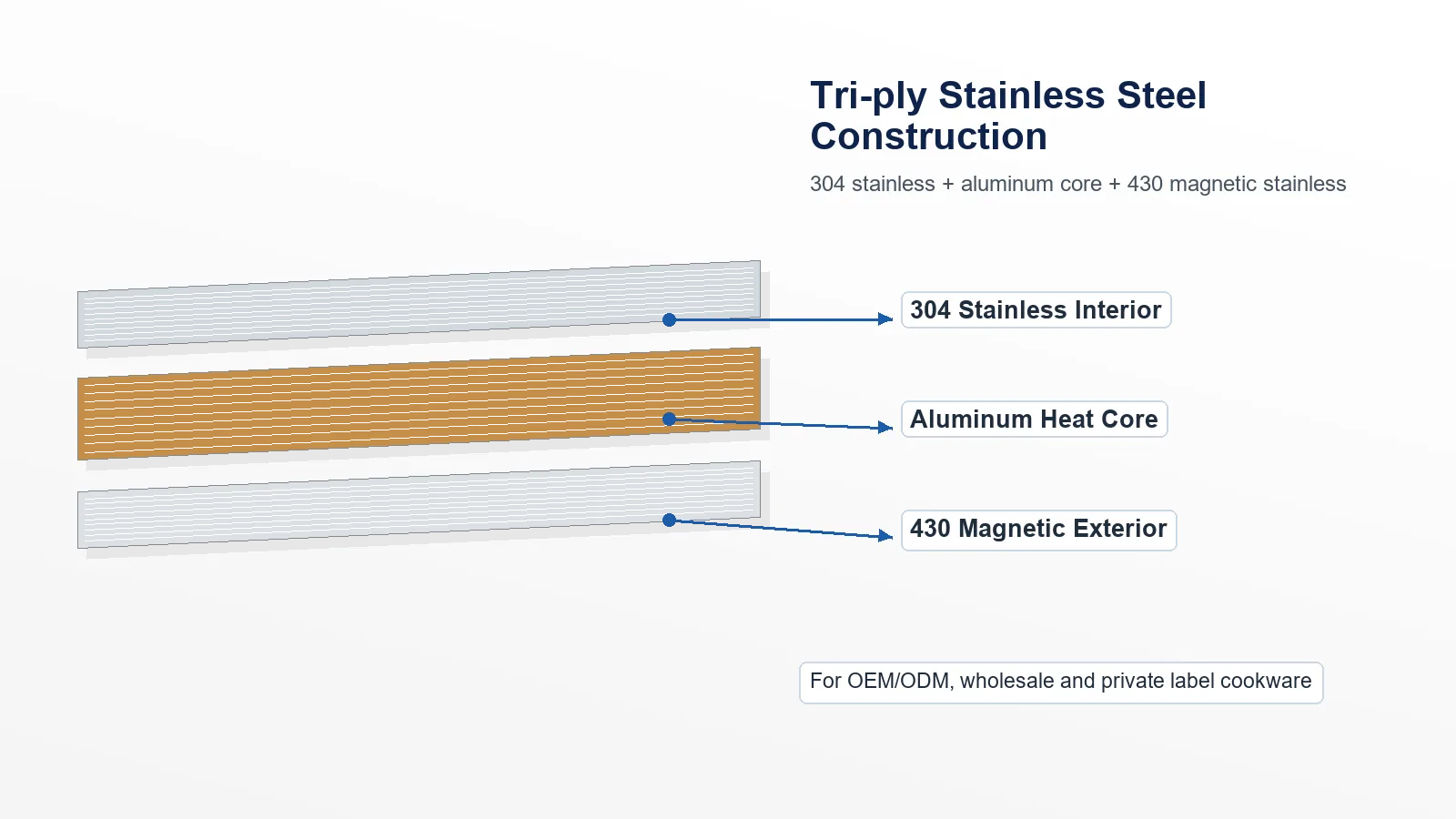
For B2B buyers, this structure should be confirmed clearly during RFQ communication. The same product name can hide different constructions, so importers should ask suppliers to specify the inner layer, core layer, outer layer, total body thickness and whether the construction is full-body clad or only base-bonded.
Why the Aluminum Core Matters
Stainless steel is valued for durability and a clean cooking surface, but it is not as fast at conducting heat as aluminum. The aluminum core in tri-ply stainless steel cookware helps move heat across the base and sidewall more evenly. This can reduce hot spots and create more stable cooking performance compared with basic stainless steel cookware.
For B2B buyers, the aluminum core is not just a technical feature. It affects how the product can be positioned in the market. Premium retail cookware sets, professional kitchen supply lines and private label cookware programs often need a stronger performance story than entry-level stainless steel products can offer.
When evaluating samples, buyers should compare heat performance together with product weight, wall thickness, handle comfort and lid fit. A well-built tri-ply product should feel consistent with the target price range and channel positioning.
Why SS304 and SS430 Are Used Together
In tri-ply cookware, SS304 is mainly chosen for the cooking surface, while SS430 is often used on the exterior to support induction compatibility.
SS304 / 18-10 stainless steel is commonly used as the food-contact interior because it offers good corrosion resistance and a clean cooking surface. SS430 / 18-0 stainless steel contains magnetic properties, which makes it useful for the exterior of induction-ready cookware. Using both materials allows the cookware to balance food-contact performance, induction compatibility and cost control.
This distinction matters in sourcing conversations. Buyers should not only ask whether the product is stainless steel. They should ask which stainless steel grade is used on the interior, which grade is used on the exterior, and whether the cookware has been tested for the target stovetop and market requirements.
Tri-ply vs Regular Stainless Steel Cookware
Tri-ply cookware is not always the lowest-cost option, but it is often a better fit for mid-to-premium private label, wholesale and professional cookware lines. The table below summarizes the practical sourcing differences.
| Cookware type | Structure | Heat distribution | Induction compatibility | Typical market position | Best for B2B buyers |
|---|---|---|---|---|---|
| Single-wall stainless steel cookware | One main stainless steel body | Limited, with higher hot spot risk | Depends on steel grade and base design | Entry-level or cost-sensitive lines | Buyers prioritizing low unit cost over premium performance |
| Encapsulated bottom stainless steel cookware | Stainless steel body with a bonded heat base | Better at the base, less through the sidewall | Often possible when the base is magnetic | Mid-range, cost-controlled products | Buyers who need acceptable heating at a controlled cost |
| Fully clad tri-ply stainless steel cookware | Bonded SS304 / aluminum / SS430 layers through the body | More even heat across base and sidewall | Supported by magnetic SS430 exterior | Mid-to-premium retail, wholesale and professional lines | Private label brands, distributors and HoReCa buyers seeking stronger performance and positioning |
Encapsulated bottom cookware can be a practical choice for cost-sensitive programs. However, full-body tri-ply cookware offers a clearer performance advantage when buyers need better heat distribution through the entire cookware body and a more premium product message.
What B2B Buyers Should Check Before Sourcing Tri-ply Cookware
Before requesting samples or a bulk quotation, buyers should prepare a clear specification. A complete RFQ helps the factory evaluate feasibility, quote more accurately and reduce sampling revisions.
- Material structure: Confirm whether the structure is SS304 / aluminum / SS430 and whether it is full-body tri-ply or another construction.
- Body thickness: Common tri-ply cookware thickness is often around 2.0-2.5mm. Wider custom ranges can be discussed depending on product type, cost target and positioning.
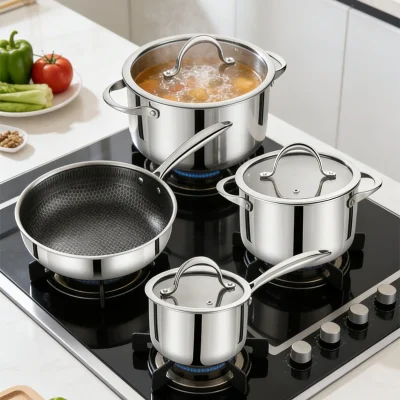
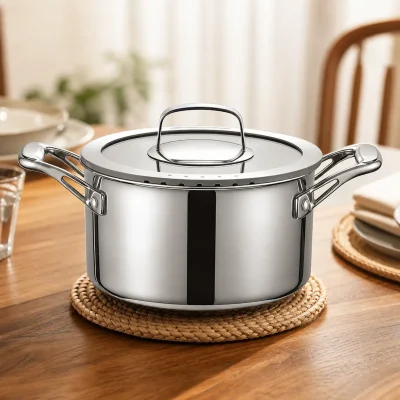
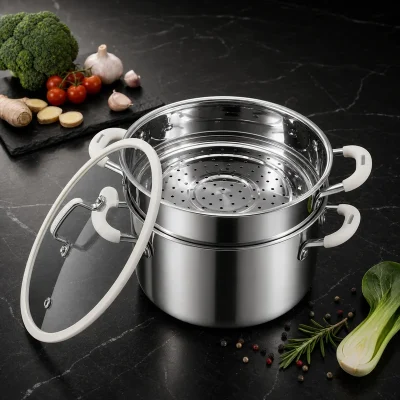
- Product type: Define whether the project needs fry pans, saucepans, casseroles, stock pots, steamers or cookware sets.
- Set combination: For cookware sets, plan 5PC, 6PC, 7PC, 9PC or 10PC combinations based on channel, shelf space and target price.
- Handle option: Compare cast stainless steel, hollow handle, silicone handle, color handle or other custom handle designs.
- Lid option: Choose glass lids, stainless steel lids or mixed lid solutions according to market preference and cost target.
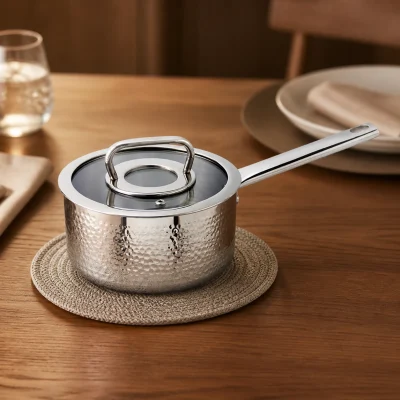
- Surface finish: Confirm mirror, satin, hammered, PVD color or other finish requirements early in the sampling process.
- Logo and branding: Specify bottom stamping, laser etching, packaging logo and other private label needs.
- Packaging: Discuss mailer box, color gift box, luxury gift box, export carton and drop-test needs before bulk production.
- Certification and testing: FDA, LFGB, ISO9001 and BSCI are commonly requested in B2B cookware sourcing. Buyers should confirm the required documents for their target market and product scope.
- MOQ and lead time: Goldensea commonly discusses MOQ around 500 pcs or 500 sets, depending on product and customization. Regular bulk production is often discussed around 60-70 days after deposit and artwork confirmation, but the final schedule depends on product type, packaging and order details.
Buyers preparing a new project can review Goldensea’s OEM/ODM custom cookware solutions to understand available customization options.
Best Applications for Tri-ply Cookware Lines
Tri-ply stainless steel cookware is especially useful when buyers need cookware that supports both performance and product differentiation. It can fit multiple B2B channels when the specification is matched to the market.
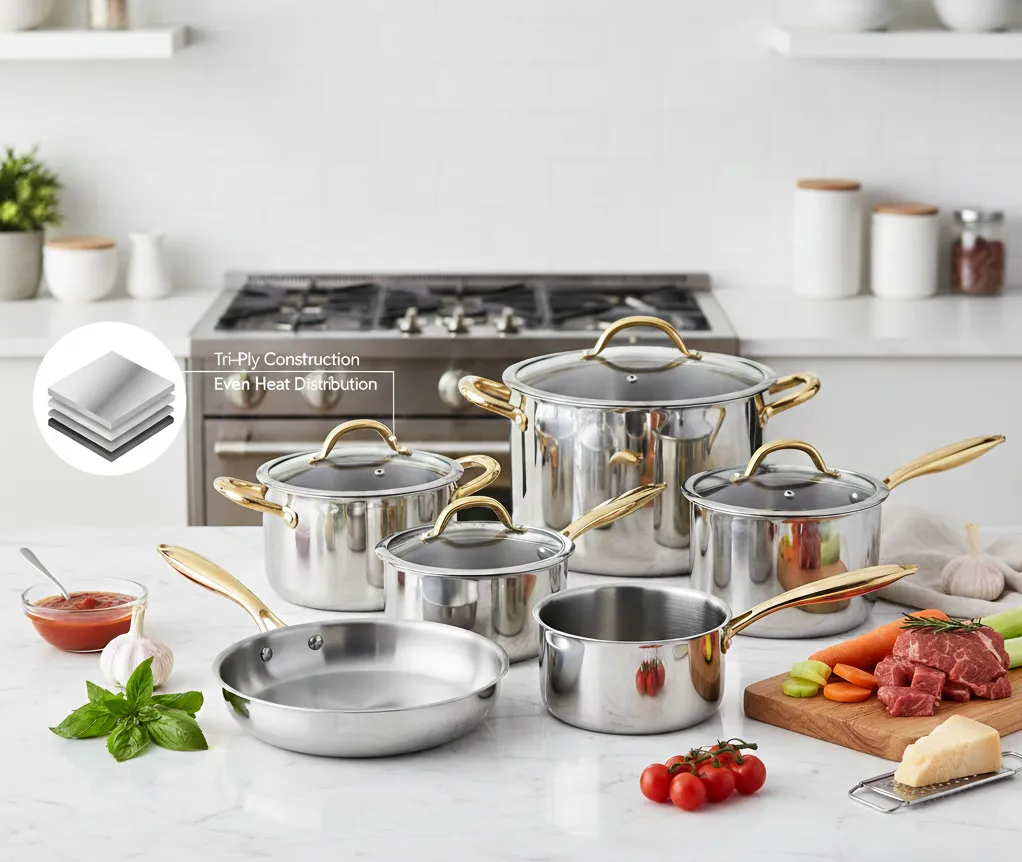
- Private label cookware brands: Tri-ply construction supports a premium stainless steel cookware line with a clear material story.
- Importers and wholesalers: Stable specifications for cookware sets, frying pans, saucepans and casseroles can support repeat bulk sourcing.
- Retail chains and e-commerce brands: Finish, packaging, handle color, lid design and set combinations can help create shelf and listing differentiation.
- HoReCa and restaurant supply: Durability, even heat distribution and induction compatibility are useful when products need to withstand repeated use.
Explore Goldensea’s tri-ply stainless steel cookware category for current product examples.
Common Mistakes When Buying Tri-ply Cookware
Only comparing the lowest unit price
A lower price may come from a different material structure, thinner body, simpler handle, cheaper packaging or less demanding finishing. Buyers should compare specifications side by side before treating two quotations as equal.
Not confirming the actual material structure
The term stainless steel cookware is too broad for B2B sourcing. Buyers should confirm the inner stainless steel grade, aluminum core, exterior steel grade and whether the cookware body is fully clad or only base-bonded.
Ignoring body thickness and weight
Thickness affects cost, weight, heat performance and perceived quality. A product that is too light may not match premium positioning, while an overly heavy product may create shipping, usability or channel concerns.
Forgetting target market certification or testing requirements
Certification needs should be discussed before sampling and packaging confirmation. Buyers should identify the target market early so the supplier can help align materials, documents and testing expectations.
Choosing handle, lid and packaging too late
Handle, lid and packaging choices can affect tooling, sample approval, artwork, carton size and lead time. Confirming these details late can delay quotation accuracy and bulk production planning.
Product Details Buyers Should Not Overlook
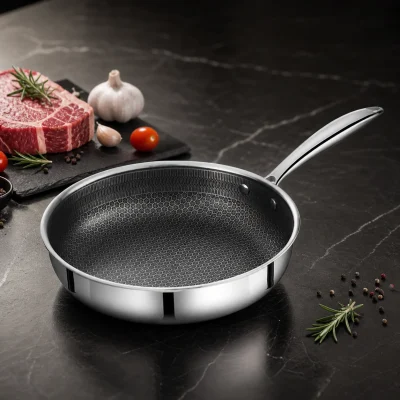
When reviewing samples, buyers should inspect more than the overall shape. Interior surface design, rivet connection, rim finishing, handle attachment and visible workmanship details can all influence product positioning and customer feedback.

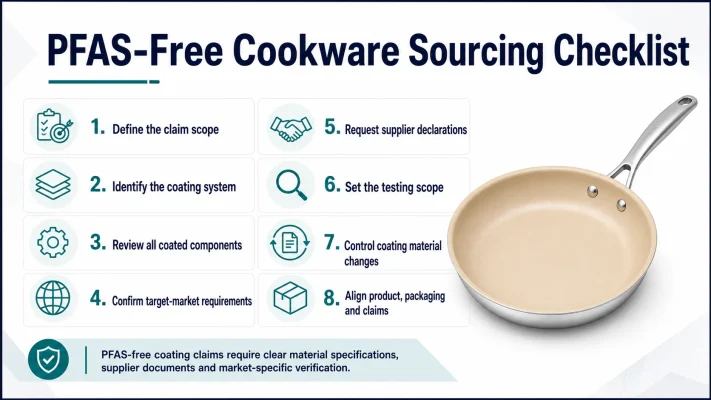
For example, a frying pan sample should be checked for interior surface consistency, rivet finishing, rim smoothness and handle stability. These details are especially important for private label buyers who need repeatable quality across bulk production.
Why Source Tri-ply Stainless Steel Cookware from Goldensea
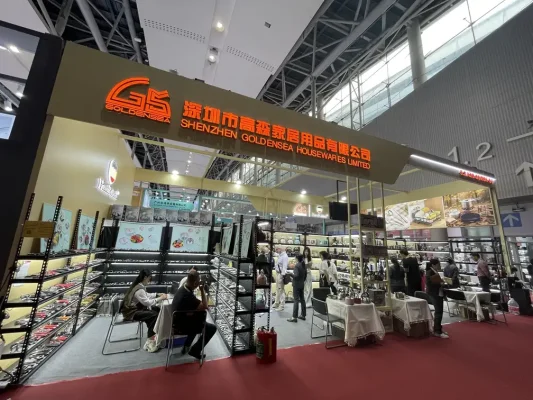
Goldensea / GS Kitchenware is a China-based OEM/ODM cookware manufacturer specializing in tri-ply stainless steel cookware for global B2B buyers. Founded in 2005, Goldensea supports importers, wholesalers, private label brands, distributors and HoReCa buyers with cookware product development and bulk sourcing support.
Our manufacturing base is located in Jiangmen, Guangdong, China. For tri-ply cookware projects, Goldensea can discuss private label needs, lower MOQ project planning, custom packaging, logo application, material structure, body thickness, handle options, lid options, surface finish and cookware set combinations.
Buyers can also discuss commonly requested B2B documentation and testing needs, including FDA, LFGB, ISO9001 and BSCI related requirements, based on target market and product scope. For a tailored quotation, send your cookware type, size, quantity, market, packaging and certification requirements through the Goldensea contact page.
FAQ
What is tri-ply stainless steel cookware?
Tri-ply stainless steel cookware is cookware made from three bonded layers: a stainless steel cooking surface, an aluminum core and a magnetic stainless steel exterior. This construction helps combine durability, heat distribution and induction compatibility for B2B cookware sourcing.
Is tri-ply stainless steel cookware suitable for induction cooktops?
Tri-ply cookware is often suitable for induction when the exterior layer uses magnetic stainless steel such as SS430. Buyers should still confirm the exact outer layer, product structure and stovetop compatibility for each SKU before placing an order.
What is the difference between SS304 and SS430 in tri-ply cookware?
SS304 is commonly used as the food-contact interior because it offers corrosion resistance and a clean cooking surface. SS430 is often used as the magnetic exterior layer to support induction compatibility and outer-body durability.
What thickness should B2B buyers choose for tri-ply cookware?
Many tri-ply cookware projects use body thickness around 2.0-2.5mm, but the best choice depends on product type, price range, weight target, market positioning and channel requirements. Custom thickness can be discussed during OEM/ODM project planning.
Can Goldensea support private label tri-ply cookware projects?
Yes. Goldensea supports private label tri-ply cookware projects with logo options, custom packaging, lid and handle choices, surface finish, material structure, body thickness and cookware set combinations. Buyers can send target specifications for a tailored quotation.
Conclusion
The value of tri-ply cookware comes from the way its three layers work together, not simply from the word stainless steel. SS304 supports the cooking surface, aluminum improves heat distribution, and SS430 helps create an induction-ready exterior.
For B2B buyers, the next step is to turn this structure into a clear RFQ. Include material structure, thickness, induction requirements, cookware type, set combination, handle, lid, surface finish, packaging and certification needs. Send your target cookware type, size, quantity, market, packaging and certification requirements to Goldensea for a tailored OEM/ODM quotation.

Mei is a dedicated Sales Specialist at Goldensea with over 10 years of experience in the B2B kitchenware industry. Possessing deep technical knowledge of manufacturing and sourcing, she has successfully helped countless global clients navigate complex supply chain challenges and find the perfect culinary solutions.
Connect with Mei on LinkedIn or reach out for professional kitchenware advice.