
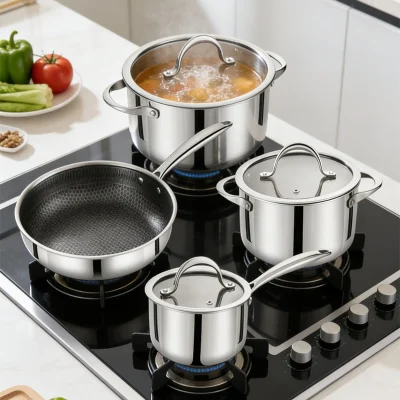
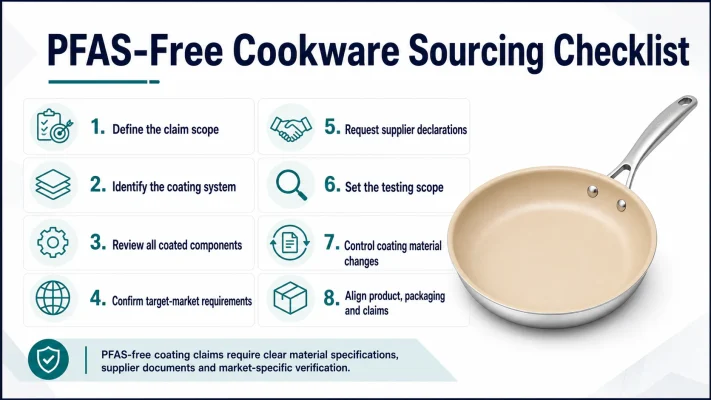
When comparing private label, OEM, ODM and contract manufacturing for a cookware project, start with the product you want and the support you need. Private label describes whose brand is on the product; OEM and ODM describe design responsibility; contract manufacturing covers the work commissioned from a manufacturing partner. These terms can overlap within one project.
Before requesting quotes, decide what can come from an existing product, what needs to change, and which decisions your team will make. For brand owners, importers, distributors and retail buyers sourcing stainless steel cookware, this makes supplier quotes easier to compare.
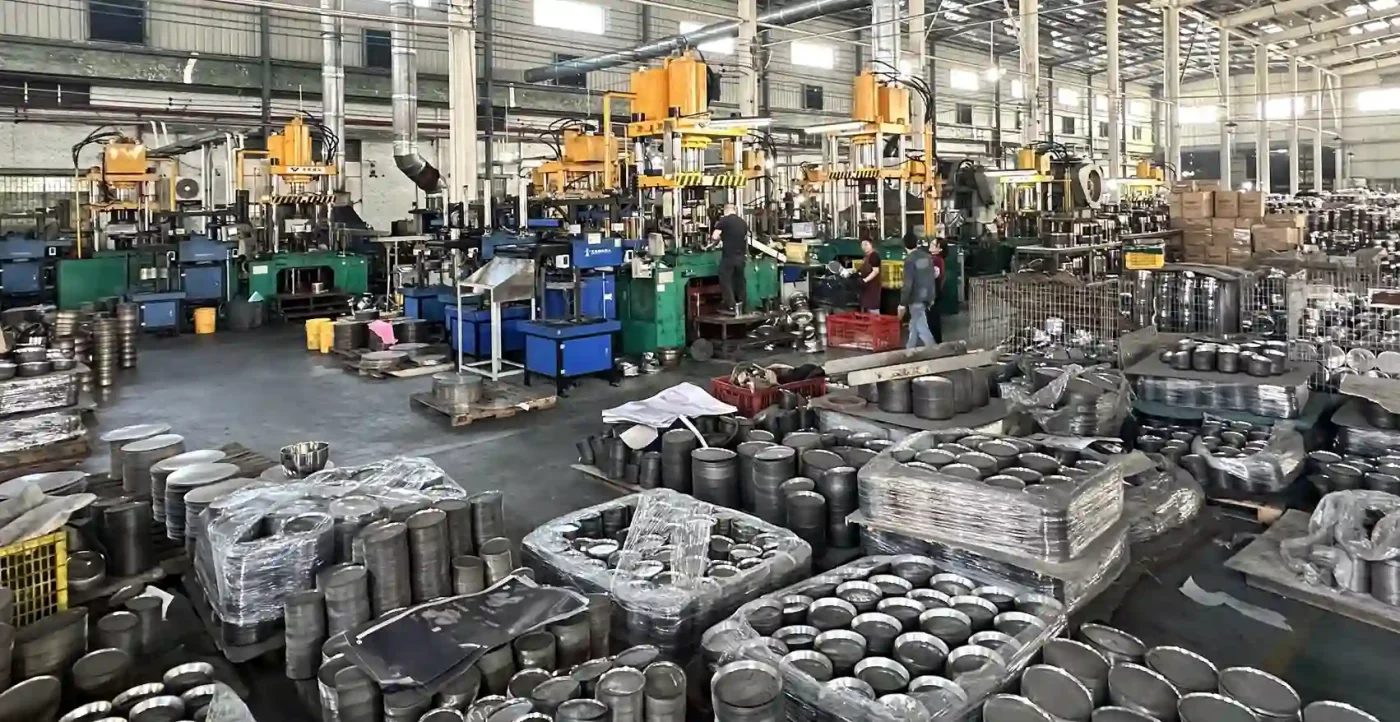
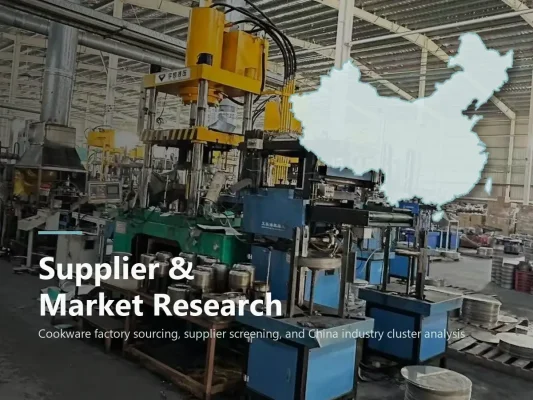
Cookware production equipment and work in progress at Goldensea’s factory.
Key Takeaways
- A private-label range can use your design, a supplier’s platform or a product developed together.
- An existing cookware body can be combined with selected custom parts. New body tooling may be needed if the available shapes cannot meet your requirements.
- Budget for the first order: production, packaging and any separate engineering, sample, tooling or testing charges.
- Put tooling ownership and any exclusive sales rights in writing before paying development fees.
Private Label, White Label, OEM, ODM and Contract Manufacturing Compared
These are working definitions for cookware sourcing. Ask each supplier what its offer includes before using the terms to compare quotations.
| Term | What it describes | What to confirm separately |
|---|---|---|
| Private label cookware | Cookware sold under the buyer’s or retailer’s brand; design participation can vary. | Development scope, specification control, ownership and exclusivity. |
| White label cookware | Usually a standard supplier product branded for multiple buyers, with limited customization. | Available options, shared product features and supply conditions. |
| OEM cookware | The buyer leads or controls the design/specification; the supplier provides agreed engineering and production. | Whether drawings and specifications are complete, who handles engineering and who approves changes. |
| ODM cookware | The supplier contributes the design platform or development; the buyer selects, adapts or co-develops it. | Design deliverables, approval rights, licences and dedicated development. |
| Contract manufacturing | A partner performs production and related services within an agreed scope. | Whether engineering, procurement, tooling, testing and packaging are included. |
Private Label and White Label: Branding and the Product Starting Point
PLMA’s definition centers on products sold under a retailer’s brand. Design ownership is a separate question. A 2013 homeware retailer prospectus, for example, describes private-label products made through OEM or ODM arrangements (printed pages 99–100).
Shopify describes white label as a shared standard product and private label as involving more buyer-specific requirements. Cookware suppliers may use the terms more broadly. Ask which parts of the product remain shared and which are dedicated to your order.
OEM and ODM: Who Leads Design and Engineering?
In this guide, OEM means the buyer leads or controls the design and specification. Engineering assessment needs drawings, dimensions, materials and performance requirements; a reference photograph alone leaves technical questions open.
ODM can involve a supplier’s platform, adaptation or joint development. Agree who prepares drawings and approves specifications, and check what the supplier’s use of OEM or ODM includes.
Where Contract Manufacturing Fits
A contract manufacturer may also provide engineering, procurement, prototypes, tooling and packaging. West Bend’s cookware service, for example, includes engineering, prototypes and tooling.
Existing Tooling, Partial Customization or Full Custom Development?
Start with an Existing Cookware Body
Existing tooling can reduce new body development. Ask whether the supplier means a body tool, component tools or a complete product configuration. A body may already be available while the handle, lid or packaging still needs work.
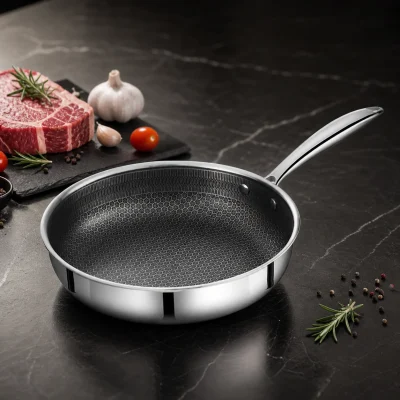
A buyer might choose an existing clad frying-pan body and compatible handle, then add a laser-engraved logo, instructions and a retail box. Record differences from the catalog sample and confirm stock and scheduling separately.
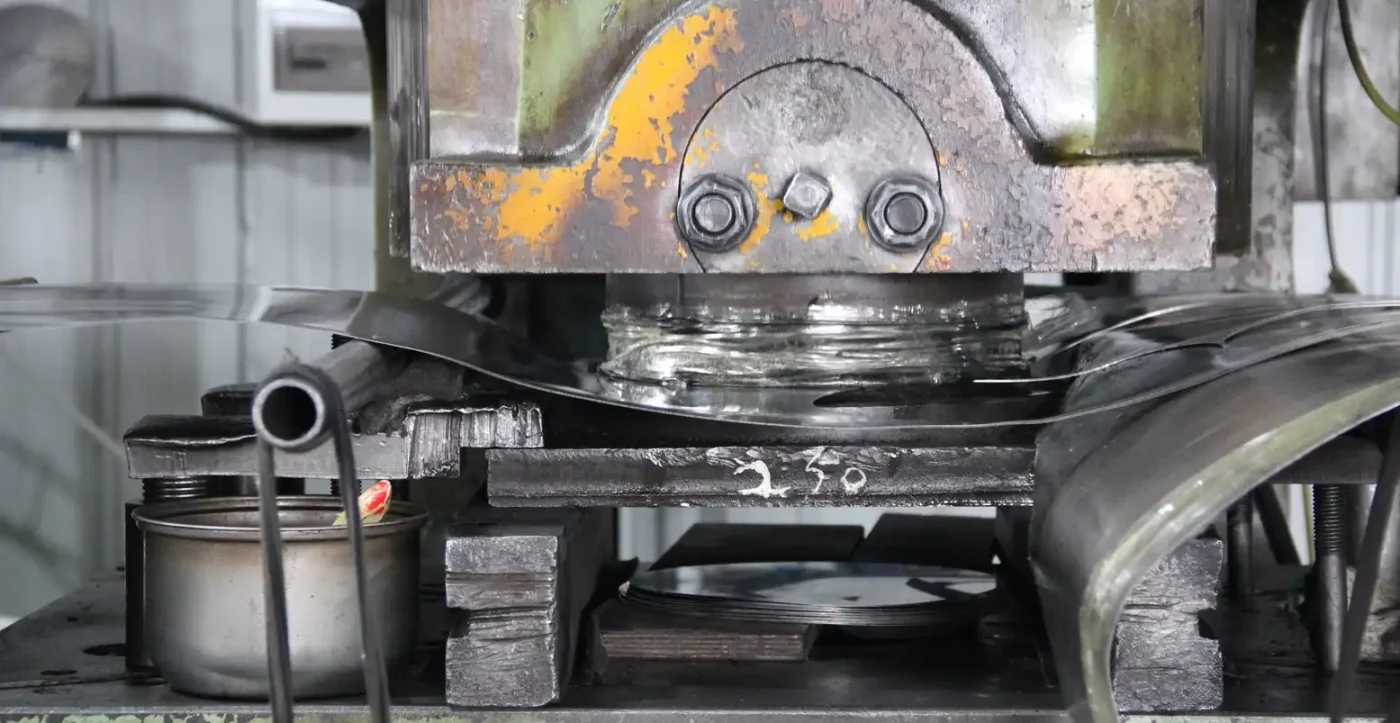
Cookware body-forming equipment and tooling.
Customize Handles, Lids, Finishes and Packaging
A change that looks small can involve several interfaces. Another handle may require different attachment spacing or clearance. A lid change can affect fit, materials and packing. A new finish needs an appearance reference and a review of relevant product claims.
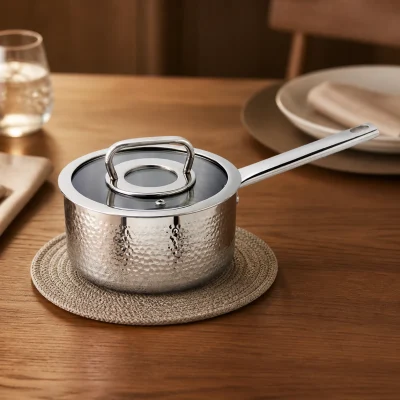
An existing saucepan body could be paired with a dedicated handle and branded packaging. Check the handle’s attachment, clearance and fit, plus any new tools and tests.
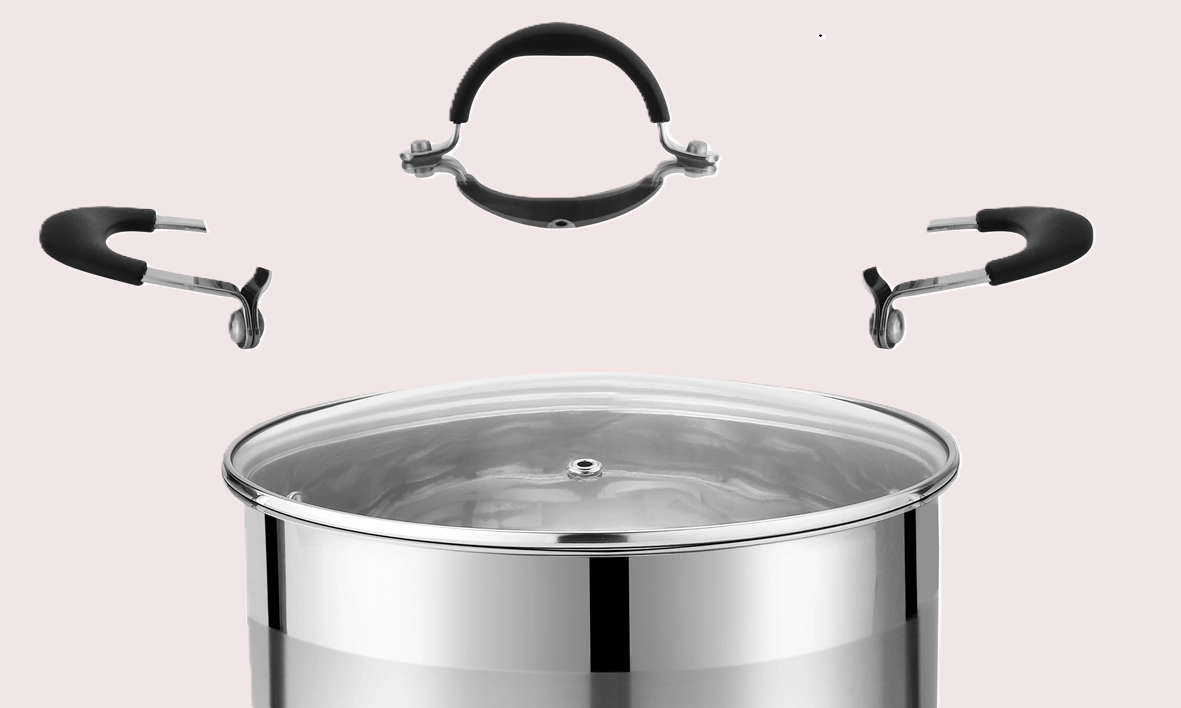
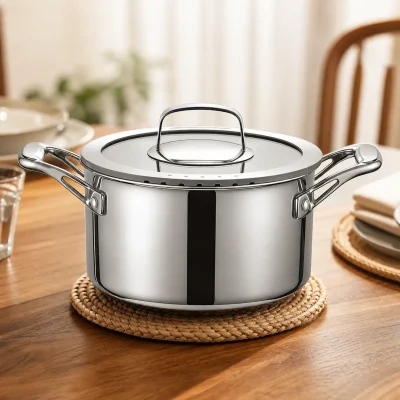
Handle and lid components are separate configuration items. Their connections, materials and fit need confirmation for the final cookware assembly.
Develop a New Shape or Product System
New development may be appropriate when existing platforms cannot meet the required shape, function or product identity. Define the body profile, diameter, depth, rim, material construction, connections and weight target. A dedicated body can still use established handles or lid knobs.
| Path | Buyer input | Supplier work to confirm | Approval basis |
|---|---|---|---|
| Existing platform | Chosen configuration, branding and market requirements. | Confirm availability, compatibility and order-specific changes. | Final configuration and artwork, with catalog-sample differences recorded. |
| Partial customization | Specified changes and required outcomes. | Interface assessment, new/modified components, tools and validation. | Revised specification and sample showing agreed changes. |
| New development | Drawings or product brief, constraints and performance targets. | Who handles design and engineering; what prototypes, tooling and production checks are needed. | Approved design revision and production-intent configuration. |
How Your Scope Affects MOQ, Samples, Lead Time and Cash
Confirm What the MOQ Applies To
Ask what the minimum order quantity (MOQ) applies to: each shape, size, SKU, finish, packaging version or complete set. Can different sizes share an order threshold? Do handles, lids or packaging have separate minimum purchases? Shopify’s MOQ explanation describes how setup, materials and fixed costs can contribute to these requirements.
Packaging deserves its own check. Confirm the set contents, piece-count convention, languages, artwork revision, protection and carton dimensions. Ask about box/insert tooling, minimum purchases and unused packaging. A lower cookware quantity may still require a larger packaging commitment.
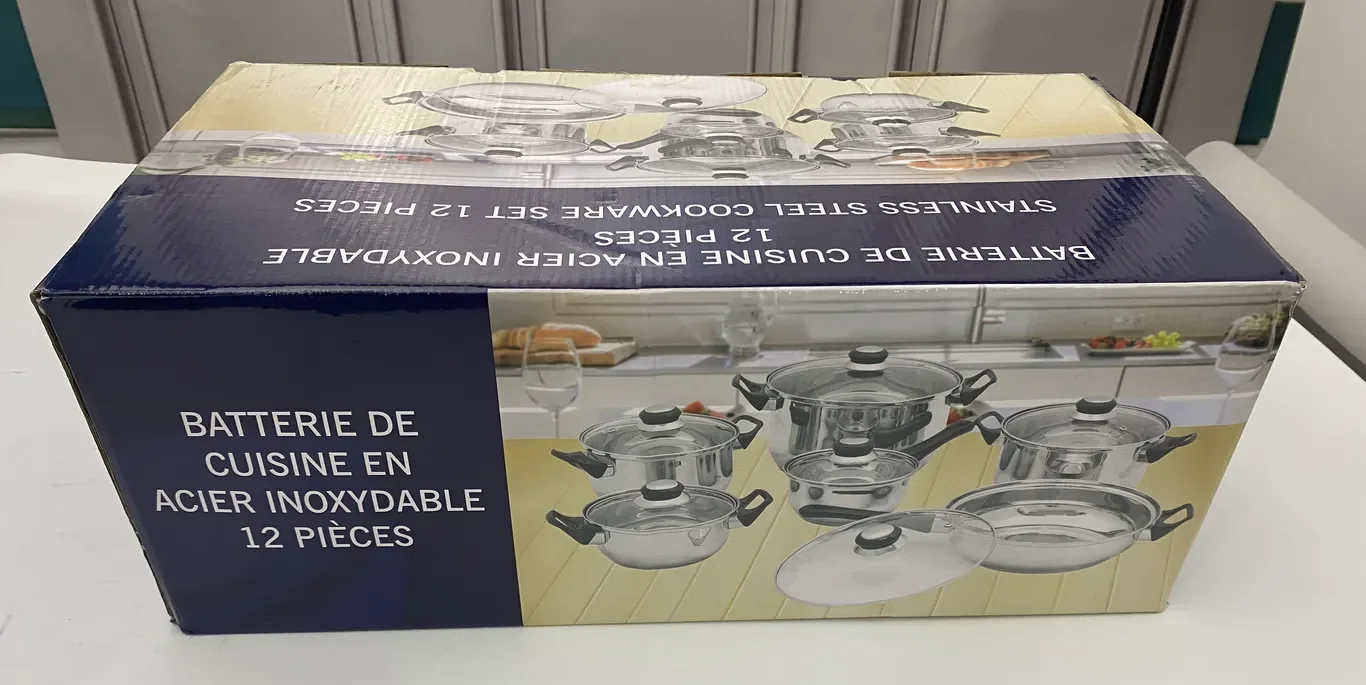
A retail box for a stainless steel cookware set.
Separate Development Charges from Production Pricing
Request separate engineering, tooling, sample, testing, packaging and production charges. Identify what each includes and whether any amount is already built into the unit price. Refunds or order credits need written conditions and milestones.
Compare the first-order cash commitment: startup payments, production and packaging payments, plus delivery and inventory preparation. Avoid counting included charges twice. If you fund excess components or boxes, establish who holds them and what happens after a cancellation or design change. Staged deliveries and staged payments are separate arrangements.
Know Which Sample You Are Approving
| Sample | Purpose | What it does not confirm |
|---|---|---|
| Existing / catalog sample | Assess an established product’s construction and workmanship. | May differ from the order’s materials, components or packaging. |
| Development / customized sample | Review proposed changes, appearance, dimensions and interfaces. | May not use final production tooling or processes. |
| Pre-production / production-intent sample | Review the final configuration under agreed production conditions. | Does not establish that every bulk unit meets requirements. |
| Approved reference / golden sample | Provide the agreed physical comparison reference. | Does not replace written specifications, testing or batch inspection. |
An approved pre-production sample can also serve as the golden sample; it does not necessarily require another round of sampling. Record the sample ID, specification revision, date, manufacturing location, known differences from bulk production, approver and unresolved items. Both parties should keep an identifiable approved reference.
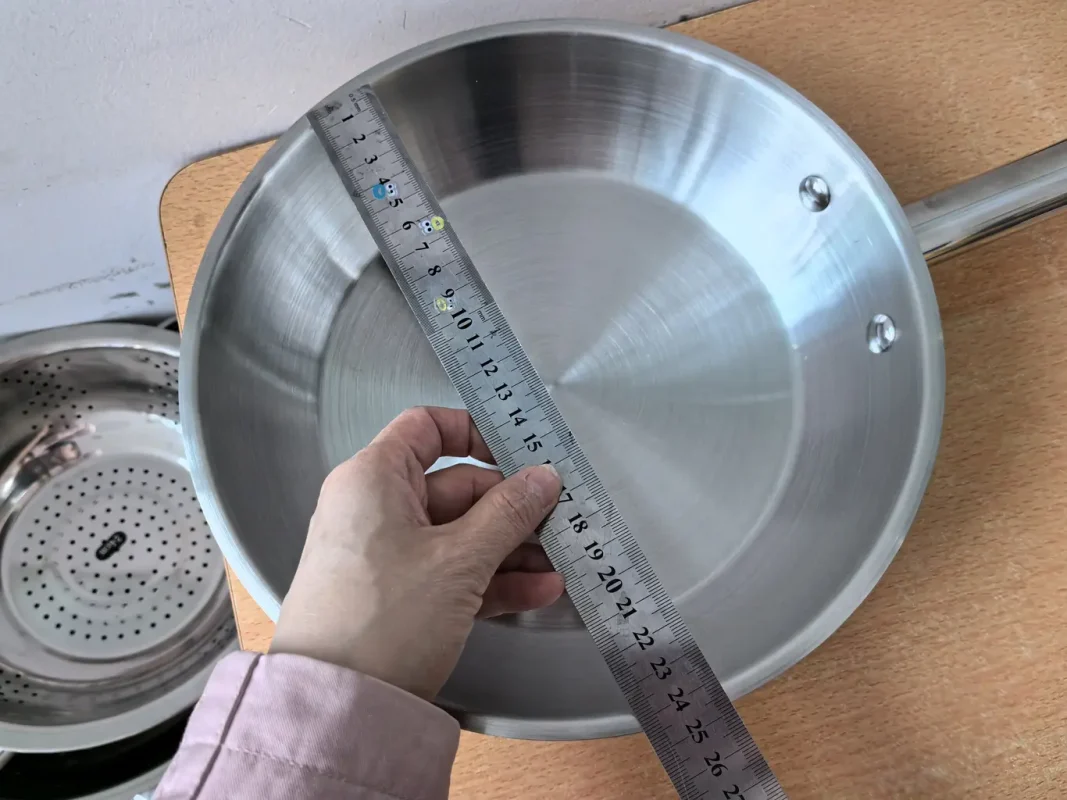
Checking a frying pan’s rim diameter. Dimensional checks are one part of comparing a sample with its written specification.
Before approving production, use a cookware quality checklist before a bulk order to align the sample, written specification and inspection criteria.
Define the Start and End of the Lead Time
- Development: requirements, engineering review, samples, revisions and final approval.
- Production: required approvals and commercial conditions, procurement, scheduling, inspection and packing.
- Market launch: shipment, import, receiving checks, warehousing and channel preparation.
Some activities overlap. Ask what triggers the quoted period, what its endpoint is, and which buyer approvals or material purchases must happen first. Compare dates against the same milestones.
Who Owns the Tooling, Design and Exclusive Rights?
Existing IP and Newly Developed Work
List what each party brings to the project and what will be created. For an existing body with a new handle, separate the body platform, handle design, manufacturing information and buyer’s brand assets. WIPO’s supplier-agreement guidance addresses ownership, use, confidentiality and end-of-relationship arrangements.
Physical Tooling, Design Files and Usage Rights
A physical tool, its design files and associated intellectual property are different objects. Specify the tools covered, ownership, location, maintenance, permitted use and return conditions. Establish which drawings or technical files will be delivered and whether you can modify or share them.
WIPO distinguishes assignment from licensing: assignment transfers ownership; a licence permits use under agreed conditions. Before paying, clarify whether a charge buys development services, tools, usage rights or a stated combination. NDA terms address confidentiality, while ownership and access require their own arrangements.
Exclusivity and Production Transfer
Define exclusive product features, territory, channels, duration and purchase conditions. For a future supplier change, confirm access to usable files, tools and legitimate production rights. Moving a tool also requires assessment at the receiving factory. These are commercial discussion points; their legal effect depends on the agreement and applicable law.
Which Setup Fits Your Cookware Project?
An Emerging Brand Validating a Product Line
Evaluate an established platform if it meets your market and product requirements and you lack a complete technical package. Concentrate development on differences buyers will value. If a required function needs a different body or interface, resolve that engineering requirement before committing to branding and packaging.
A Brand That Needs Supplier-Led Design
If you know the cookware sizes, features and target price but need help developing the design, an ODM platform or joint development may fit. The supplier develops the design from your brief, while your team approves the proposed specifications. Agree which drawings and files you will receive and what rights you have to use or adapt the design.
An Established Brand with a Defined Design or New Category
A completed technical package may suit buyer-led OEM or contract manufacturing. A category extension may suit existing tooling with selected changes. Assess each project separately: brand age does not determine development depth.
West Bend reports that its Cutco cookware collaboration used existing tooling. The example shows how an established brand can build a cookware range on an existing manufacturing base.
A Retailer Building a Private-Label Range
Confirm the range as well as each pan: sizes, set contents, handle appearance, packaging languages and replenishment requirements. Document shared components and revision control across SKUs. Select a supplier whose proposed design and manufacturing responsibilities match the support your team actually needs.
What to Confirm in Your Cookware RFQ
Ask suppliers to address these eleven points in your RFQ (request for quotation), with costs and responsibilities clearly identified.
- Project basis: existing product, modified platform or new development? Who leads the design: your team, the supplier or both?
- Design and documents: who prepares and updates drawings and specifications, handles engineering questions and records approvals?
- Tooling and components: which bodies, parts and tools exist, need modification or require development?
- Manufacturing: which operations are done in-house, and which components or processes are outsourced? Which source or production-location changes require written approval?
- MOQ: per size, SKU, finish or set? Do components or packaging have separate minimums?
- Charges: itemize development, tooling, samples, testing, packaging and production. Identify included costs and any refund or order-credit conditions.
- Samples: specify purpose, differences from bulk production, approval criteria and how approved reference samples will be recorded and retained.
- Rights: confirm tool and design ownership, file access, usage and transfer rights, plus any exclusivity limits or conditions.
- Timing: what starts and ends the lead time, and which approvals or purchases come first?
- Quality and changes: confirm target-market requirements, testing responsibility, inspections, acceptance criteria, defect handling and product or process changes needing approval.
- Continuity: what happens to drawings, tools, production rights, unused components and packaging if production ends or moves?
ASQ’s quality-plan guidance covers written responsibilities, specifications, inspection, acceptance and change procedures. Include these in the order documents, even when you choose an established supplier product.
When a handle, lid, coating or material changes, review the cookware supplier’s test reports against the final SKU and target market. Not every change requires all tests to be repeated; assess which tested properties are affected. The brand owner or importer also needs to confirm its own responsibilities in the destination market.
Frequently Asked Questions
Is private label cookware the same as OEM cookware?
No. Private label describes whose brand is on the cookware. In this guide, OEM means the buyer leads or controls the design and specification. A private-label range can therefore use an OEM arrangement, an ODM platform or a product developed together.
Can an ODM cookware project be exclusive?
Exclusivity can be negotiated for an ODM project, but it is not established by the name. Define whether it covers a design, component, product configuration, territory or channel, and specify its duration and purchase conditions.
Do I need new tooling for private label cookware?
Not necessarily. A private-label project may use existing body and component tooling, with branding or packaging changes. A new handle, body shape or connection can require additional tools or modifications.
Does paying for tooling give me ownership of the design?
A tooling payment does not, by itself, tell you who owns the design. Before paying, check whether the charge covers development services, physical tools, design rights or a combination.
Which model has the lowest MOQ or fastest lead time?
There is no reliable ranking based on the program name alone. Existing platforms may reduce development work, but actual MOQ and timing depend on the supplier’s proposal, material availability, production schedule and your required changes.
What sample should I approve before mass production?
Approve a sample that represents the agreed production materials, tools, processes and final configuration. Record any known differences from bulk production and unresolved issues. An approved pre-production sample may become the golden sample, which both parties retain with the written specification.
Discuss Your Cookware Project Scope
Goldensea manufactures tri-ply stainless steel cookware and works with global B2B buyers on OEM/ODM and private-label projects. Send your target market, cookware sizes, estimated quantities and any existing drawings, along with the changes you want to make.
See our Custom Cookware options for materials, handles, lids, finishes, logo and packaging. Request a proposal covering the required changes, samples, quantities, testing and lead time for your project.

Rae Bao is a kitchenware product development and sales professional at Goldensea with over 10 years of industry experience. She focuses on new product planning, packaging development, and customer communication, helping translate market ideas and product requirements into practical kitchenware programs.
Connect with Rae on LinkedIn or contact Goldensea to discuss a kitchenware product development project.